
Top 10 Web Scraping APIs in 2026: Expert Picks & Rankings
Take a Quick Look
Discover the 10 best web scraping API services for 2026, compared by success rate, anti-bot bypass, pricing, and real-world benchmarks. Find your ideal data extraction tool.
🔥 Limited-Time Offer! Save extra 10% off on your first monthly plan with code: Anitdetect10
Sign upTop 10 Web Scraping APIs in 2026: Expert Picks & Rankings
The web scraping market surpassed $1 billion in 2025 and is projected to reach $2.23 billion by 2030 (Mordor Intelligence). With anti-bot systems guarding nearly every major website, a simple HTTP client can't cut it. A true web scraping API does the heavy lifting: rotating proxies, rendering JavaScript, solving CAPTCHAs, and evading Cloudflare, DataDome, and more—so you get clean data with a single request. We’ve scoured independent benchmarks, developer feedback, and product specs to bring you the 10 best web scraping APIs for 2026.
Evaluation Criteria: How We Picked the Top 10
Top 10 Web Scraping APIs in 2026: Expert Picks & Rankings product interface and feature overview.
We built this ranking on two independent third‑party tests: the Scrape.do 11‑provider benchmark that hit seven protected domains (Amazon, Indeed, Zillow, etc.) and the Proxyway Web Scraping API Report 2025 that tested 12 providers against 15 heavily guarded sites. Each product was evaluated across seven dimensions:
- Success rate on real‑world targets under identical conditions
- Anti‑bot bypass capabilities (Cloudflare, DataDome, PerimeterX, etc.)
- JavaScript rendering quality and speed
- Proxy network size, geo‑coverage, and ethical sourcing
- Pricing transparency (pay‑per‑success vs. credit packs)
- Compliance certifications (GDPR, SOC2, ISO 27001)
- Developer experience: onboarding speed, documentation, SDKs
All scores are backed by publicly available data, not vendor claims alone.
The Top 10 Web Scraping APIs in 2026

Top 10 Web Scraping APIs in 2026: Expert Picks & Rankings product interface and feature overview.
Below is a quick‑reference comparison of the leading products. The detailed reviews follow.
| Tool | Best For | Starting Price | Free Tier | Benchmark Success (avg.) |
|---|---|---|---|---|
| Bright Data | Enterprise scale & AI training | $0.75/1K successful req. | No free tier (but pay‑only‑for‑success) | 98.44% (Scrape.do test) |
| Scrape.do | Speed‑sensitive & predictable cost | $0.002/request | 1,000 free credits | 98.19% |
| Oxylabs | High‑volume, custom infrastructure | Custom quotes | Not publicly free | High (enterprise benchmark) |
| Zyte | Structured extraction & smart crawling | Starts at $100/month | Free trial | Reliable (multiple tests) |
| ScrapingBee | AI‑powered, simple “point‑and‑shoot” | 1,000 free credits | Yes, 1,000 credits | ~97% (various reports) |
| ScraperAPI | Budget‑friendly, unprotected sites | $49/month (plus overages) | 5,000 free requests | Lower on protected sites |
| Smartproxy (Decodo) | Mid‑market value & ease of use | $50/month (plus overages) | 3‑day free trial | Not published |
| ZenRows | Moderate‑protection workloads | $49/month (plus overages) | 1,000 free requests | Not published |
| scrapestack | Real‑time, scalable REST API | Free (100 req/month), paid from $19.99/month | 100 req/month | Not published |
| Scraping Fish | Ethical, pay‑per‑request simplicity | $2 for 1,000 requests | No free tier (low‑cost packs) | Not published |
1. Bright Data – Best Overall Web Scraping API
Bright Data delivered a 98.44% average success rate in Scrape.do’s independent 11‑provider test, the highest recorded. It achieved 100% on Indeed, Zillow, Capterra, and Google, with Zillow responses arriving in just 2.1 seconds. The platform’s 400M+ residential IPs across 195 countries, 437+ pre‑built scrapers, and pay‑only‑for‑success billing (from $0.75/1K requests) make it the enterprise gold standard. Fortune 500 companies and AI labs rely on its 99.99% uptime SLA and full compliance suite (GDPR, CCPA, ISO 27001, SOC 2).
Pros: Largest proxy network, highest benchmarked success, pre‑built scrapers for major platforms, bills only on delivery.
Cons: Premium pricing for simple sites; not the cheapest for low‑protection targets.
2. Scrape.do – Best for Speed & Predictable Costs
Scrape.do focuses on raw speed and simple pricing. In the same benchmark, it scored 100% on 5 of 6 standard domains, averaged under 5 seconds per response, and pulled Google results in 1.6 seconds. A single REST endpoint accepts parameters like render=true, super=true, and output=markdown. With 110M+ IPs and a flat $0.002/request (first 1,000 free), it’s ideal for latency‑sensitive workloads where every millisecond counts.
Pros: Sub‑5s average latency, dead‑simple integration, transparent per‑request cost, generous free tier.
Cons: Not as feature‑rich for structured extraction; some tricky anti‑bot patterns may require the “super” mode.
3. Oxylabs – Best for Large‑Scale, Custom Infrastructure
Oxylabs provides a massive proxy backbone (residential, mobile, datacenter) plus AI‑powered anti‑bot tools. Their Web Scraping API and SERP Scraper API are built for organizations that want raw building blocks rather than a fully managed service. In‑house developers get fine‑grained control over selectors and data modeling, while the platform handles blocking, rendering, and geo‑routing at extreme volumes.
Pros: Enormous scalability, advanced block avoidance, one roof for proxies & scraping APIs.
Cons: Can be expensive for smaller teams; still requires developer‑side coding for extraction logic.
4. Zyte – Best for Structured Extraction & Smart Crawling
Zyte (formerly Scrapinghub) offers a family of tools: Zyte API for fetching and rendering, Smart Proxy Manager for automatic IP rotation, and Smart Crawler for automated web crawling. Its strength lies in delivering clean, structured data from JavaScript‑heavy sites without manual parser maintenance. The mature ecosystem includes a community of Spider developers and robust documentation.
Pros: Strong at handling dynamic front‑ends, automated extraction templates, reliable long‑running crawls.
Cons: Solid technical expertise required to maximize the platform; managed services come at a premium.
5. ScrapingBee – Best for AI‑Enhanced, Developer‑Friendly Scraping
ScrapingBee abstracts away proxies, headless Chrome, and anti‑bot challenges. Its standout feature is AI‑powered extraction: you provide JSON rules or natural language prompts (“return all product titles and prices as JSON”), and the API returns the data. Native integrations with ChatGPT, Claude, and Cursor make it a favorite for teams building AI‑assisted scraping pipelines. With 1,000 free credits and no credit‑card required, onboarding is frictionless.
Pros: AI extraction accelerates development, excellent documentation with tutorials for tricky scenarios, generous free tier.
Cons: General‑purpose approach; may struggle with extremely aggressive bot detection if not configured correctly.
6. ScraperAPI – Best for Budget‑Conscious Teams on Low‑Protection Sites
ScraperAPI prides itself on simplicity: send a URL, get HTML. Automatic proxy rotation, CAPTCHA handling, and retries come standard. It’s a solid choice for internal tools, prototypes, or scraping largely unprotected websites. Pricing starts at $49/month, but costs can climb on high‑volume workloads or heavily defended targets.
Pros: Extremely easy to integrate, broad language support, good starting point for quick projects.
Cons: Can falter on Cloudflare‑protected or JavaScript‑heavy pages; no managed data‑delivery pipeline.
7. Smartproxy (Decodo) – Best Value for Mid‑Market Scraping
Smartproxy’s Decodo suite bundles affordable residential and datacenter proxies with a well‑rounded scraping API. It’s aimed at growing teams that want reliable, legitimate proxy networks and simple scraping tools without enterprise price tags. The dashboard is clean, and a 3‑day free trial lets you test before committing.
Pros: Balanced price‑performance, easy onboarding, good proxy quality for moderate needs.
Cons: Scraping features lack the depth of dedicated enterprise APIs; no true managed service layer.
8. ZenRows – Best for Moderate‑Protection Workloads
ZenRows specializes in making moderately protected sites accessible without complex setups. Its rotating proxies, headless browser rendering, and anti‑bot toolkit handle most common blocking patterns. The 1,000‑request free tier helps you validate the API before scaling.
Pros: Straightforward integration, good for sites with standard anti‑bot measures, accessible support.
Cons: Not benchmarked to the same level as the top four; success rates may drop on heavily fortified targets.
9. scrapestack – Best for Real‑Time, Scalable REST API Access
scrapestack provides a lightweight but powerful REST API that manages millions of proxy IPs, browsers, and CAPTCHAs behind the scenes. It supports 100+ global locations, JavaScript rendering, concurrent requests, and smart retries. With a free plan (100 requests/month) and paid tiers from $19.99/month, it’s a dependable option for developers who need a fast, no‑frills scraping endpoint. The infrastructure handles over 1 billion requests per month with 99.9% uptime, trusted by more than 2,000 companies.
Pros: Straightforward REST API, broad geo‑coverage, strong uptime SLA, free entry tier.
Cons: Less advanced anti‑bot bypass than the top‑tier competitors; limited pre‑built extraction templates.
10. Scraping Fish – Best for Ethical, Pay‑Per‑Request Simplicity
Scraping Fish stands out for its ethical IP sourcing and radically transparent pricing. All requests go through a cluster of real browsers with JavaScript rendering and rotating proxies—including ethically sourced mobile IPs (never compromised devices). You pay exactly $0.002 per request, with no credits, no hidden fees, and no minimum commitment. Request packs start at $2, and a dashboard lets you monitor usage in real time. It’s an ideal API for data scientists and small businesses that want a clean, honest scraping tool.
Pros: Ethically sourced proxies, no confusing credit systems, low‑cost entry point, full browser rendering.
Cons: Smaller proxy pool than the giants; limited to basic extraction (you need to parse the returned HTML yourself).
Web Scraping API vs. Anti‑Detect Browser: When You Need Both

Top 10 Web Scraping APIs in 2026: Expert Picks & Rankings product interface and feature overview.
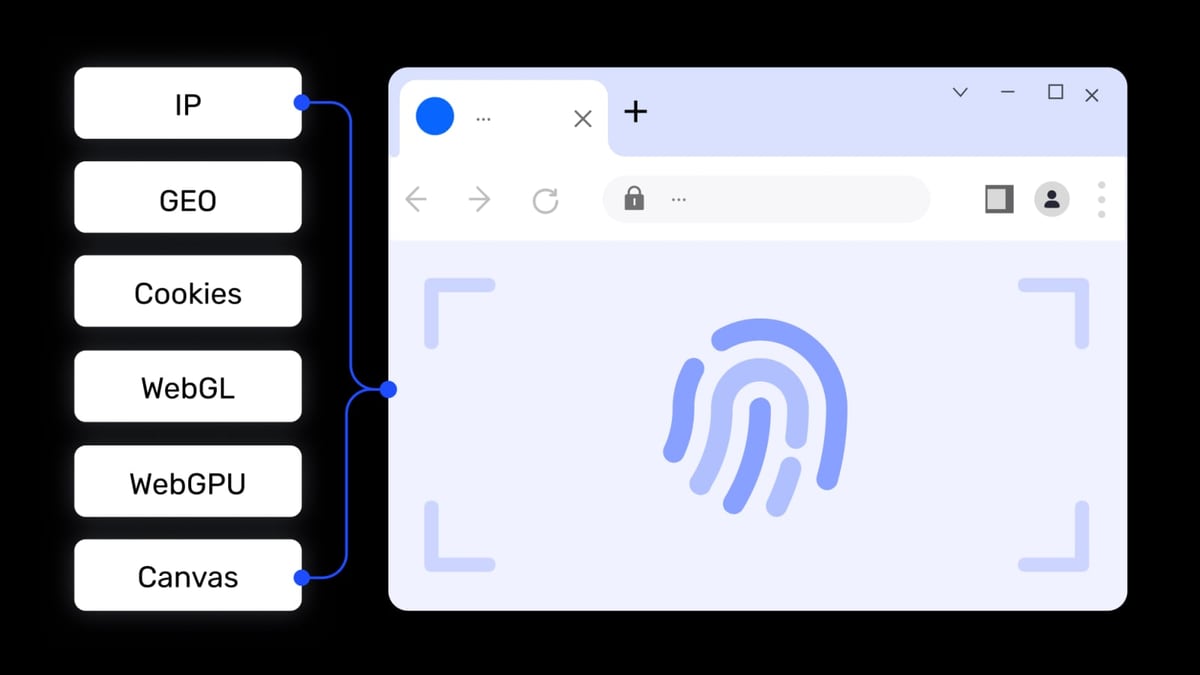
A web scraping API automates data collection at scale, but some workflows demand interactive, logged‑in sessions—think scraping a social media dashboard after authentication, or managing multiple e‑commerce seller accounts. In these cases, an anti‑detect browser like AdsPower becomes a powerful complement. It creates isolated browser environments with unique digital fingerprints (Canvas, WebGL, WebRTC, etc.), letting you run Selenium, Puppeteer, or Playwright scripts without triggering account bans. This is not a scraping API itself, but a critical layer for tasks where a simple API call can’t maintain a persistent, human‑like session.
For a complete guide on combining fingerprint intelligence with multi‑account workflows, see our AdsPower fingerprint integration walkthrough.
Related reading
- AdsPower vs VMLogin vs Genlogin: Anti-Detect Browser Comparison - Compare AdsPower, VMLogin, and Genlogin on fingerprinting, automation, pricing, and team features. Find the best anti-detect browser for multi-account management.
- TikTok for Business Review: Features, Costs & Real User Insights - Unbiased TikTok for Business review exploring ad formats, targeting, pricing, and real user feedback. Learn its strengths, limitations, and whether it fits your brand.
- Hidemyacc Review: Is This Anti-Detect Browser Worth It? - Evidence-based Hidemyacc review covering features, pricing, real-world fingerprint tests, pros & cons, and alternatives. Find out if it's right for your multi-accounting needs.
Sources and further reading
- 11 Best Web Scraping APIs and Tools in 2026 - Compare the best web scraping APIs, parsers, browser tools, and crawlers for production scraping. See where Scrapfly, BeautifulSoup, Playwright, Scrapy, and more fit in the stack.
FAQ
What is a web scraping API?
It’s a hosted service that handles the entire pipeline—proxy rotation, CAPTCHA solving, JavaScript rendering, and body extraction—so you send a URL and receive clean data (HTML, JSON, or CSV) without managing infrastructure.
How is a web scraping API different from a proxy?
A proxy only routes your traffic through a different IP; you still have to write the scraper, handle blocks, and parse the data. A web scraping API solves all of that in one endpoint. Many providers (like Bright Data) offer both, but the API is the full stack.
Is web scraping legal?
Legality depends on jurisdiction, target website terms of service, and the data’s end use. Always consult a legal professional, respect robots.txt, and choose providers with robust compliance certifications.
How do I choose the right scraping API for my project?
Match the tool to your primary challenge: need highest success on protected sites → Bright Data; latency‑sensitive jobs → Scrape.do; AI‑assisted extraction → ScrapingBee; ethical, no‑commitment pricing → Scraping Fish. Test with a free tier and run your own benchmark on the sites you actually target.
Can I use a free web scraping API in production?
Free tiers (e.g., scrapestack 100 req/month, ZenRows 1,000 requests) are great for testing, but production pipelines require paid plans for higher concurrency, better anti‑bot tools, and guaranteed uptime.
Conclusion: Pick the API That Matches Your Data Gravity
The best web scraping API in 2026 isn’t a single name—it’s the one that fits your workload. Bright Data remains the enterprise benchmark leader, Scrape.do wins on speed, and ScrapingBee brings AI‑powered convenience. Meanwhile, budget‑conscious teams find a sweet spot with ScraperAPI or scrapestack, and ethical scraping gets a champion in Scraping Fish.
Remember that no tool is an island. For interactive scraping that requires logged‑in sessions or multi‑account management, pairing your API with an anti‑detect browser like AdsPower fills the gap. And if your team is scaling API integrations, platforms like AdsPower help organize documentation and keep everyone aligned.
Start with a free trial from two or three providers, test against your target sites, and let real data—not marketing copy—guide your decision.