
Puppeteer Pricing: What It Really Costs in 2026
Take a Quick Look
Puppeteer is free and open source. Compare real costs of Puppeteer AI, cloud browser services, proxies, and anti-detect browsers for multi-account work.
🔥 Limited-Time Offer! Save extra 10% off on your first monthly plan with code: Anitdetect10
Sign upPuppeteer Pricing: What It Really Costs in 2026
"Puppeteer pricing" is a confusing search because the name points to at least three different things. There is the open-source Node.js library that controls Chrome or Firefox, an AI agent platform for healthcare, and a handful of cloud browser and automation services that wrap Puppeteer in a paid product.
This guide sorts them out. You will see what is genuinely free, what the paid tools actually charge, and which hidden costs (proxies, compute, fingerprint management) usually decide the real budget.
Quick Answer: Is Puppeteer Free?
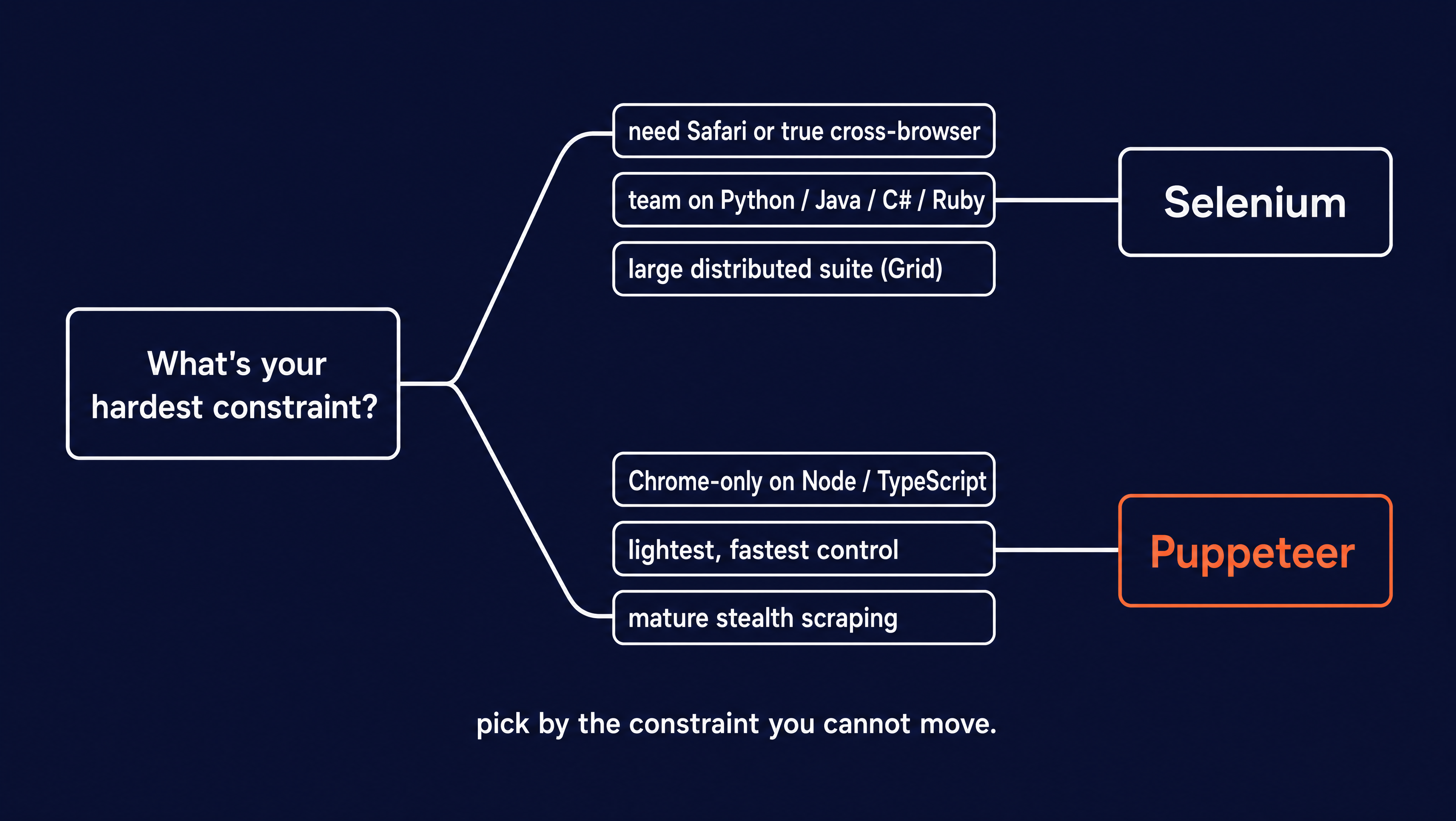
Puppeteer Pricing: What It Really Costs in 2026 - Quick Answer: Is Puppeteer Free?.
Yes. The Puppeteer library itself is free and open source. You install it with npm i puppeteer and it downloads a compatible Chrome build during installation. If you prefer to manage browsers yourself, npm i puppeteer-core installs the library without downloading Chrome.
So the software license costs $0. What costs money is everything around it: the machine that runs the browser, the proxies you route through, and any hosted service you use instead of running it yourself.
The Three Things Called "Puppeteer"
Puppeteer Pricing: What It Really Costs in 2026 - The Three Things Called "Puppeteer".
Before comparing prices, separate the products:
- Puppeteer (pptr.dev) — the open-source JavaScript library for controlling Chrome or Firefox over the DevTools Protocol or WebDriver BiDi. Free.
- Puppeteer AI (puppeteerai.com) — a HIPAA-focused AI agent platform for patient intake, scheduling, and triage. Paid, with plans around $1,350–$1,500 per month plus usage fees.
- Third-party "Puppeteer" listings — software directories sometimes list a paid "Puppeteer" product with plans starting near $1,500/month. These listings usually describe a commercial automation or AI service, not the npm library.
If you searched for "Puppeteer pricing" expecting a subscription page for the npm package, that page does not exist. The library is free.
What the Open-Source Library Actually Costs

Puppeteer Pricing: What It Really Costs in 2026 - What the Open-Source Library Actually Costs.
Running Puppeteer yourself means paying for infrastructure, not licenses. Typical line items:
| Cost item | What drives it | Typical range |
|---|---|---|
| Compute | VPS, container, or CI runner | $5–$100+/month |
| Browser downloads | Disk and bandwidth per install | Negligible to low |
| Proxies | Number of IPs and bandwidth | $1–$15+ per proxy/month |
| Anti-bot handling | CAPTCHA services, stealth plugins | Varies widely |
| Engineering time | Maintenance, debugging, updates | Usually the largest cost |
A single small scraping job on a $5 VPS can run for months without extra spend. A fleet of concurrent browsers with residential proxies and 24/7 uptime is a different budget entirely — often hundreds of dollars per month before you count developer hours.
Puppeteer AI Pricing (Healthcare Agents)

Puppeteer Pricing: What It Really Costs in 2026 - Puppeteer AI Pricing (Healthcare Agents).
If your search led you to Puppeteer AI, the pricing model is usage-based on top of a platform fee:
- Business plan: around $1,350–$1,500 per month for growing teams managing multiple workflows
- Enterprise: custom pricing for larger organizations
- Call usage: roughly $0.20 per minute
- Text messaging: roughly $0.05 per message
- One-time setup fee: around $4,000 on the Business tier
The platform includes analytics dashboards, HIPAA compliance with a BAA, EHR integrations, and API access. This is a healthcare operations tool, not a browser automation library, so do not compare its price to the npm package.
Cloud Browser and Automation Services
Several services sell hosted browser automation that uses Puppeteer or similar engines under the hood. Pricing models vary:
- Per browser hour — you pay for concurrency and session time
- Per API call or task — common for scraping and automation APIs
- Per seat — common for low-code automation builders
- Credit bundles — prepaid usage that expires
These services remove infrastructure work but add vendor lock-in and can get expensive at scale. Run the math on your expected monthly browser hours before committing.
The Hidden Cost Most Budgets Miss: Account Bans
If you use Puppeteer for multi-account work — managing several marketplace sellers, ad accounts, or social profiles — the biggest cost is not compute. It is losing accounts.
Automation frameworks control browsers, but they do not isolate identities. Running many accounts from one machine with one fingerprint pattern is a fast route to linked accounts and bans. That is why teams doing multi-account operations pair automation with an anti-detect browser that gives each profile its own fingerprint and proxy.
AdsPower is built for exactly this layer. It creates isolated browser environments with unique Canvas, WebGL, User Agent, and IP fingerprints, supports proxy integration, and exposes automation through RPA and a Local API. For teams already scripting with Puppeteer, this means the automation logic stays yours while profile isolation is handled separately. You can compare how it stacks up against alternatives in this AdsPower vs MuLogin vs Incogniton comparison, which covers pricing and free plans side by side.
If your workflow involves purchased accounts, the isolation rules matter even more — see this guide on how to use AccsMarket safely for the proxy and device-isolation basics.
How to Budget: A Simple Decision Framework
Use these questions to pick the right spend level:
- Is this a one-off script or a production system? One-off scripts rarely justify paid infrastructure. Production systems need monitoring, retries, and proxy management.
- How many concurrent browsers? Concurrency drives compute and proxy costs more than anything else.
- Do you need residential IPs? Residential proxies cost more than datacenter proxies but survive more anti-bot checks.
- Are you managing multiple accounts? If yes, budget for fingerprint isolation, not just browsers.
- Can you maintain it in-house? If not, a hosted service or a managed anti-detect platform may be cheaper than engineering time.
For a broader view of tool selection across storefronts and marketplaces, the cross-border e-commerce guide walks through multi-account operations and anti-association setup.
Free vs Paid: Where the Line Sits
| Approach | Upfront cost | Ongoing cost | Best for |
|---|---|---|---|
| Puppeteer on your own VPS | Low | Compute + proxies + your time | Developers with clear, stable targets |
| Hosted browser automation | Low | Per-hour or per-call fees | Teams without infrastructure skills |
| Anti-detect browser + automation | Low to moderate | Subscription per profile/seat | Multi-account operations |
| Puppeteer AI (healthcare) | Setup fee | Monthly platform + usage | Clinics and care teams |
Related reading
- How to Use AdsPower with Shopify: Multi-Store Setup Guide - Learn how to use AdsPower with Shopify: create isolated browser profiles, assign proxies, run multiple stores safely, and automate daily workflows.
- How to Use AdsPower with Decodo: Setup & Workflow Guide - Learn how to integrate Decodo proxies with AdsPower anti-detect browser. Step-by-step setup, proxy types, rotation, and troubleshooting for multi-accounting.
Sources and further reading
- Puppeteer - Puppeteer. build npm puppeteer package. Puppeteer is a JavaScript library which provides a high-level API to control Chrome or Firefox ...
- Puppeteer Pricing - Crozdesk - Jul 16, 2024 ... Puppeteer offers trial/premium subscriptions with paid plans starting from $1,500.00/month. Puppeteer doesn't offer any free plans, but a trial ...
- Pricing - HIPAA Compliant AI Agents | Puppeteer AI - Build your AI Agent to help with patient intake forms, scheduling appointments, waitlist backfilling, triage, and other patient-facing tasks via SMS, phone calls, or in-app.
FAQ
Is Puppeteer completely free?
Yes. The library is open source and free to install and use. You only pay for the infrastructure, proxies, and services you choose to run it on.
Why do some sites list Puppeteer at $1,500 per month?
Those listings usually refer to a commercial AI or automation product that shares the name, not the open-source npm package. Always check the URL and product description before assuming the price applies to the library.
What is the difference between puppeteer and puppeteer-core?
puppeteer downloads a compatible Chrome build during installation. puppeteer-core installs only the library, so you supply and manage the browser yourself. puppeteer-core is common in environments where you already control the browser version.
Do I need proxies with Puppeteer?
Not for every task. You need them when the target site rate-limits by IP, blocks datacenter ranges, or when you are running multiple accounts that must not share an IP.
Can Puppeteer handle multiple accounts safely on its own?
Puppeteer controls browsers; it does not manage identity isolation. For multi-account work you need separate profiles with distinct fingerprints and IPs, which is what anti-detect browsers provide.
How much should a small automation project budget?
A small project can start under $20 per month using a basic VPS and a few datacenter proxies. Budget more if you need residential proxies, high concurrency, or account isolation.
Conclusion
Puppeteer pricing starts at zero because the library is free. The real number depends on what you build around it: compute, proxies, maintenance time, and — for multi-account operations — identity isolation. Check which "Puppeteer" you are actually pricing, then budget for the surrounding stack rather than the software license. For teams running many accounts, the isolation layer is usually the line item that protects everything else you have paid for.