
Zyte Review 2026: Honest Look at Its Web Scraping API & Platform
Take a Quick Look
Evidence-based Zyte review covering web scraping API, pricing, setup, AI extraction, proxy rotation, and ideal users. See how it compares for large-scale data needs.
🔥 Limited-Time Offer! Save extra 10% off on your first monthly plan with code: Anitdetect10
Sign upZyte Review 2026: Honest Look at Its Web Scraping API & Platform
Finding a web scraping solution that works at scale without drowning in infrastructure headaches is a rare feat. Zyte (the company formerly known as Scrapinghub) promises to solve exactly that: an all-in-one platform where AI-driven extraction, intelligent proxy management, and cloud hosting merge into a single API call. This Zyte review digs into what the platform actually delivers, who benefits most, where it shines, and where it shows its rough edges—all based on available data, user sentiment, and internal platform capabilities.
What Is Zyte?
Zyte Review 2026: Honest Look at Its Web Scraping API & Platform product interface and feature overview.
Zyte is an end-to-end web data extraction ecosystem designed for businesses and developers who need to turn public web pages into structured data at scale. Rather than piecing together separate tools for proxies, headless browsers, and parsers, users can rely on Zyte’s unified API to handle everything from rotating residential IPs and rendering JavaScript to extracting clean JSON output.
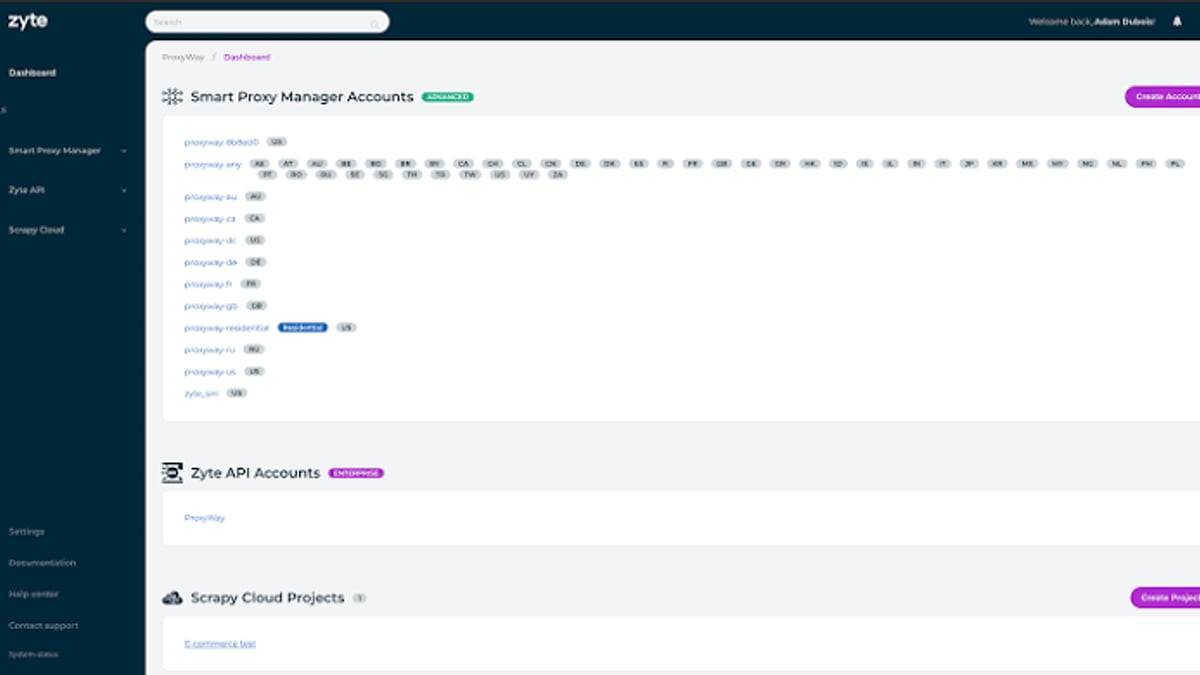
The platform is built on three pillars:
- Zyte API – An automated scraping endpoint with built-in anti-bot bypass, headless browsing, and AI-powered data extraction.
- Scrapy Cloud – Managed cloud hosting for Scrapy spiders, offering a streamlined way to deploy, schedule, and monitor web crawlers.
- Smart Proxy Manager – Intelligent proxy rotation that chooses the best IP strategy based on target site behavior, including automatic throttling and retry logic.
A fourth component, Zyte Data, provides a fully managed data delivery service for teams that prefer to outsource the entire pipeline from collection to final dataset. This span makes Zyte more than a toolkit; it’s a full-stack platform that aims to replace the DIY orchestra of proxies, scrapers, and parsers.
Who Should Use Zyte? Ideal User Profiles
Zyte Review 2026: Honest Look at Its Web Scraping API & Platform - supporting product research image 2.
Zyte is not a one-size-fits-all scraper. Its value becomes most apparent when you align it with the right use case.
1. Data-hungry business teams
For price monitoring, competitive intelligence, or market research that requires thousands to millions of public data points daily, the managed infrastructure saves engineering time. The platform’s ability to handle anti-bot countermeasures transparently means data analysts can focus on insights rather than bot detection.
2. Developers and data engineers building custom scrapers
If you’re already familiar with Scrapy, Scrapy Cloud acts as a force multiplier: no server maintenance, automatic scaling, and detailed dashboards. Even without Scrapy, the Zyte API’s simple POST requests lower the barrier for Python, Node.js, or any HTTP-client capable language.
3. Agencies and consultancies delivering data projects
Zyte’s managed data service (Zyte Data) allows agencies to sell high-quality datasets without building an in-house scraping department. The predictable per-request pricing also simplifies project costing.
When Zyte might be overkill: If you only need to extract a handful of static pages occasionally, a lightweight script with a standard proxy might suffice. Zyte’s value grows with the complexity of targets (JavaScript-heavy sites, aggressive bot blocking) and the volume of requests.
Key Features That Set Zyte Apart
Zyte Review 2026: Honest Look at Its Web Scraping API & Platform - supporting product research image 3.
Let’s break down the features that show up consistently in user feedback and technical documentation, not just marketing glossy.
AI-Powered Extraction That Learns Page Patterns
Instead of writing fragile XPath selectors for every site, Zyte API can automatically identify product details, articles, or job postings using machine learning models trained on web structure. You send a URL and ask for “product name, price, image”—the response comes back structured, even if the underlying page layout changes. This self-healing quality dramatically reduces maintenance, a fact cited positively in many G2 reviews where users highlight how extraction remains reliable over months.
Built-In Proxy Rotation as a First-Class Citizen
Smart Proxy Manager isn’t just a proxy list; it analyzes response patterns, bans, and CAPTCHAs in real time. It switches between residential IPs, data center IPs, and mobile IPs automatically. Because it’s deeply integrated, you don’t manage proxy sessions manually. This drastically improves success rates on targets that aggressively block scrapers—a common pain point visible in user feedback on Trustpilot, where customers note “able to bypass almost any target site.”
Scrapy Cloud for Production-Grade Spiders
Scrapy, the widely used open-source framework, gets a cloud home with Scrapy Cloud. You get job scheduling, periodic spiders, log monitoring, and data export pipelines without DevOps work. For teams that want full control over spider logic but no server overhead, it’s a sweet spot. The cloud interface includes real-time stats and integrates with Zyte’s proxy and extraction services.
Transparent Per-Request Pricing Structure
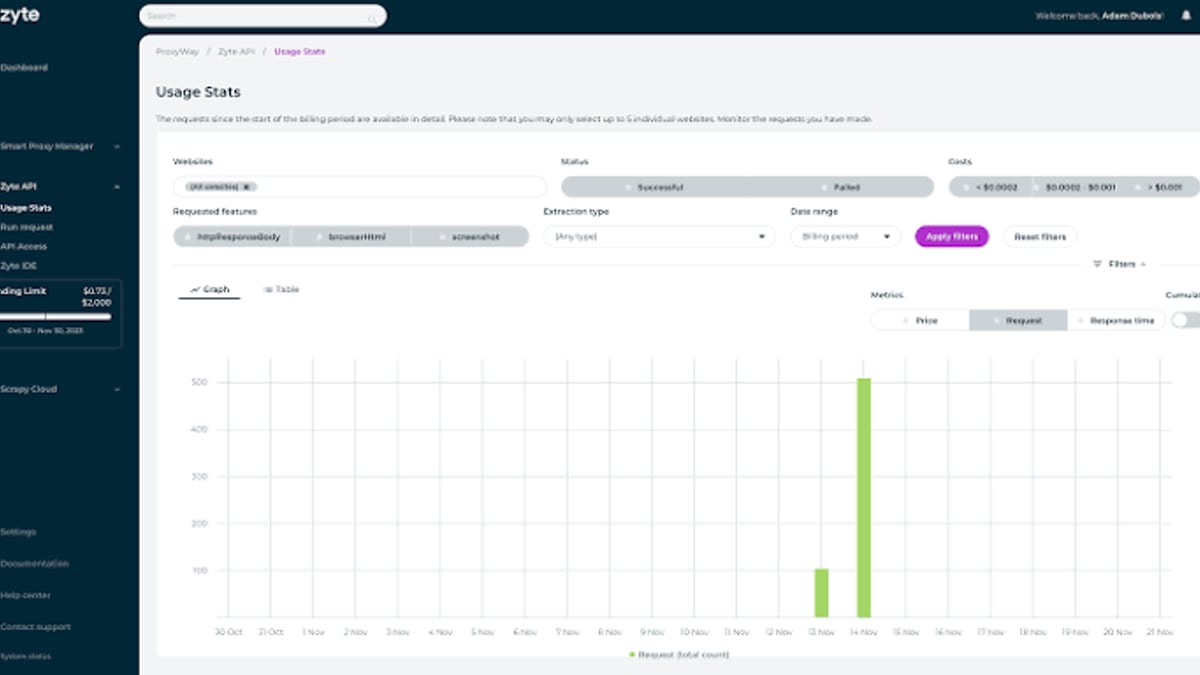
Rather than opaque subscription tiers, Zyte publishes a consumption-based model. The most prominent entry point is $0.06 per 1,000 successful responses for basic extraction. Costs scale with website complexity (JavaScript rendering, AI extraction, proxy premium) so you’re not paying heavy rendering fees on static pages. This lets you model costs directly against data volume—a transparency praised by data engineers who hate surprise bills.
Zyte Pricing: How Costs Scale with Complexity
Zyte Review 2026: Honest Look at Its Web Scraping API & Platform - supporting product research image 4.
Zyte’s pricing breaks down into layered components:
- Requests: Base cost starting at $0.06 per 1,000 simple requests.
- JavaScript rendering: Added fee per request when headless browsers are needed.
- AI extraction: Added per-request cost when structured data extraction is activated.
- Proxy usage: Baked into request pricing but varies with target complexity; residential proxies cost more than data center IPs.
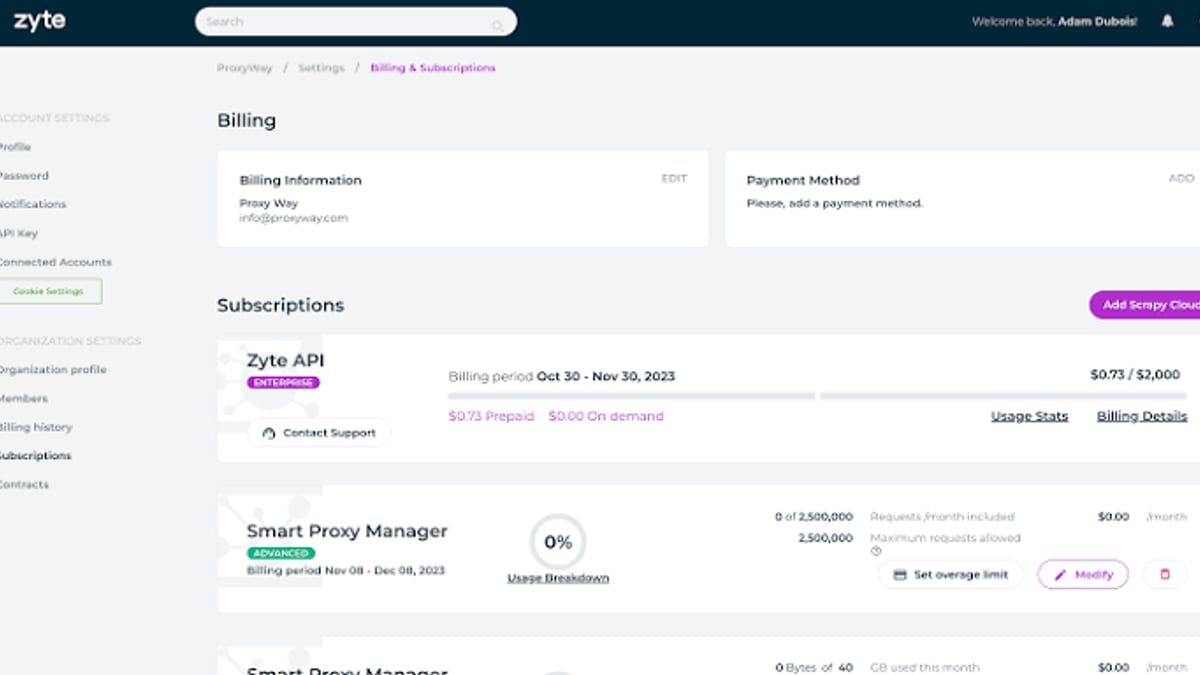
A useful rule of thumb: a moderately complex product page that needs rendering and AI extraction might cost around $0.20 per 1,000 requests, but high anti-bot targets using premium residential IPs push it higher. Zyte offers a cost calculator and a free trial quota to project expenses. For large-scale enterprise scraping, custom plans exist with dedicated support and volume discounts.
Because of this modular pricing, you can start small and only pay for the features you activate. This limits waste if you’re scraping static blogs versus dynamic e-commerce listings.
Setting Up Zyte: First Steps and Developer Experience
You don’t need to install Scrapy or configure proxy gateways to make your first request. The minimal workflow looks like this:
- Create a Zyte account and obtain an API key.
- Send a POST request to the Zyte API endpoint with the target URL and desired extraction options (e.g.,
"product": true). - Receive structured JSON with extracted fields, response status, and metadata.
Example code snippet (Python):
import requests

response = requests.post(
    "https://api.zyte.com/v1/extract",
    auth=("YOUR_API_KEY", ""),
    json={"url": "https://books.toscrape.com", "product": True}
)
data = response.json()
print(data["product"])
For Scrapy users, deploying a spider to Scrapy Cloud is done via the shub command-line tool or GitHub integration. The environment automatically picks up zyte-smartproxy middleware. Documentation is solid, though absolute beginners may find the number of options overwhelming at first. However, customer support—often praised in Trustpilot reviews—quickly fills those gaps.
Zyte Strengths and Limitations Based on Real-World Use
Strengths
- High success rates on tough targets: Users consistently report that Zyte’s proxy rotation and browser fingerprinting bypass even sophisticated anti-bot systems.
- Reduced maintenance: AI extraction adapts to layout changes, eliminating the need to rewrite selectors monthly.
- Scalability out of the box: Cloud infrastructure handles huge request volumes without queue management on your end.
- Developer-friendly APIs and SDKs: Clean REST endpoints and Python/Scrapy integrations lower integration time.
- Transparent costs: Per-request pricing prevents bill shock and aligns cost with usable data.
Limitations
- Cost can be high for low-volume but complex sites: If you only need 5,000 product pages a month from a hard-to-scrape site, the per-request fee might feel steep compared to a DIY proxy + headless browser setup.
- Learning curve for non-programmers: While the API is simple, business users often still need developer help to craft extraction schemas.
- Vendor lock-in on extraction logic: If you customize extraction heavily via Zyte’s AI hints, migrating to another platform may require rebuilding parsing rules.
- Occasional latency spikes: As with any proxy-based service, extremely aggressive target sites may introduce slight delays despite automatic retries.
How Zyte Compares to Alternatives
When evaluating the top proxy and web scraping platforms for 2026, Zyte occupies a unique middle ground between fully managed data services and do-it-yourself tools. Contrast it with a pure proxy network like the one in our Proxy Network Review, where you get IPs but must manage scraping logic yourself. Zyte bundles that intelligence.
Against Bright Data or Oxylabs (which offer similar “unlocker” technologies), Zyte differentiates through its deep Scrapy integration and AI extraction that learns page schemas. However, competitors sometimes offer larger proxy pools or more flexible residential pricing on massive volumes. The choice boils down to whether you value an integrated platform with native spider hosting and extraction AI over à la carte building blocks.
For teams that already use anti-detect browsers for managing multiple accounts—like AdsPower—Zyte’s headless browser rendering can complement those workflows, but they serve different primary purposes. Zyte excels at automated bulk extraction, while anti-detect browsers focus on manual or semi-automated account management. Combining both often forms a robust data collection stack.
Related reading
- Top 10 Social Media Platforms in 2026: Data-Driven Rankings - Our evidence-based ranking of the top 10 social media platforms in 2026, with user stats, growth trends, and business use cases to help you choose the right channels.
- Incogniton Review 2025: Features, Pricing & Honest Verdict - Evidence-based Incogniton review: see how this anti-detect browser handles multi-account management, fingerprinting, proxy setup, and whether it's right for you in 2025.
Sources and further reading
- Zyte Reviews (73): Pros & Cons of Working At Zyte - 73 Zyte reviews. A free inside look at company reviews and salaries posted anonymously by employees.
Frequently Asked Questions
Is Zyte suitable for small-scale scraping projects?
It can be, but it becomes cost-effective only when scraping complex, blocked, or JavaScript-heavy sites. For a few hundred static pages, a simple script with free proxies might suffice. Zyte shines when manual maintenance becomes unsustainable.
How does Zyte handle JavaScript rendering?
Zyte API automatically detects if a page requires JavaScript and spins up a headless browser instance. You pay an added rendering fee per request. The process is transparent; you just set "browserHtml": true in your request or let the automatic detection decide.
What is the difference between Zyte API and Scrapy Cloud?
Zyte API is a managed scraping endpoint: you send a URL and receive structured data without writing crawler logic. Scrapy Cloud is hosting for your own custom Scrapy spiders, giving full control over crawling rules and data pipelines. Many teams use both: Scrapy Cloud for complex logics and Zyte API for quick extractions.
Can Zyte bypass login walls and CAPTCHAs?
Zyte can fetch pages behind login walls if you provide credentials/cookies via the API. For CAPTCHAs, Smart Proxy Manager automatically retries with cleaner IPs, but it doesn’t solve image-based CAPTCHAs inherently. In practice, most users report very high success rates without manual CAPTCHA handling.
Does Zyte offer a free trial?
Yes, new accounts receive a free credit quota that lets you test the API and extraction quality before committing. This is the best way to evaluate success rates on your specific target sites.
Conclusion
Zyte earns its strong reputation—reflected in a 4.4-star average on G2 and consistent customer praise—by solving the most painful parts of large-scale web scraping: bot detection, JavaScript rendering, and data structuring. It replaces a stack of fragmented tools with a single platform that scales from a few hundred requests to millions, while keeping pricing predictable. For data-driven teams, analysts, and developers who value reliability over low-level tinkering, Zyte is a compelling choice.
Where it’s less ideal: low-volume projects with simple targets, or organizations that need maximum control over every proxy hop and bandwidth. But for the majority of business use cases—competitive monitoring, lead enrichment, market analysis—Zyte’s all-in-one model reduces both development time and ongoing maintenance overhead. If you’re ready to turn web data into a dependable asset instead of a constant firefight, Zyte is worth a serious evaluation. For teams that later need to derive SEO or content insights from that scraped data, platforms like AdsPower can help transform structured datasets into actionable strategy without starting from scratch.