
Top 10 Social Media Platforms in 2026: Data-Driven Rankings
Take a Quick Look
Our evidence-based ranking of the top 10 social media platforms in 2026, with user stats, growth trends, and business use cases to help you choose the right channels.
🔥 Limited-Time Offer! Save extra 10% off on your first monthly plan with code: Anitdetect10
Sign upTop 10 Social Media Platforms in 2026: Data-Driven Rankings
As we move further into 2026, the social media landscape is more dynamic than ever. Algorithms change, new monetization tools emerge, and user bases shift across platforms. For businesses, marketers, and creators, choosing the right channels isn’t just about follower counts—it’s about where your audience actually engages, where features support your goals, and which platforms are poised for long-term value.
We’ve analyzed the most recent global user figures, growth metrics, and feature updates to rank the 10 social media platforms that genuinely define the market this year. Every entry is backed by publicly reported data and real-world adoption trends. We also include practical guidance on selecting the best mix for your strategy and handling common operational challenges like multi-account management.
How We Evaluated the Top Social Media Platforms for 2026

Top 10 Social Media Platforms in 2026: Data-Driven Rankings product interface and feature overview.
Transparency matters. We scored each platform on four evidence-based criteria:
- Global monthly active users (MAU) – because reach still matters.
- Year‑over‑year growth – indicating momentum and future relevance.
- Business and creator tooling – ad systems, commerce features, analytics, and monetization options.
- Audience engagement – daily usage rates and time spent per session, reflecting genuine stickiness.
Data sources include the comprehensive 2026 user counts from Salesforce’s most popular social media platforms report and U.S. adult usage trends from Pew Research Center findings compiled by Lyfe Marketing. This blend of global and regional insights gives a balanced view.
The Top 10 Social Media Platforms for 2026

Top 10 Social Media Platforms in 2026: Data-Driven Rankings product interface and feature overview.
Below, numbered from the platform we consider the most impactful overall, you'll find key statistics, what each platform does best, and who it serves right now.
1. YouTube
Global MAU: 2.53 billion | Growth: Strong, with U.S. adult usage at 81% (up 8% since 2019)
YouTube remains the undisputed king of video and a massive driver of consumer decision-making. Its universe spans long-form educational content, Shorts to rival TikTok, and a search engine second only to Google. For businesses, the combination of high-intent discovery, in‑depth product demos, and a robust Partner Program makes it indispensable. The platform’s recent expansion of AI‑powered dubbing and community features only strengthens its hold. Whether you’re a B2C brand or a personal creator, investing in YouTube in 2026 is a bet on generational staying power.
Best for: video-first storytelling, how‑to content, brand authority building, and high‑value ad campaigns.
2. Facebook
Global MAU: 3.07 billion | Growth: Flat; U.S. adult usage steady at 69%
Facebook may no longer be the growth rocket, but with over 3 billion monthly users it’s still the largest social network on the planet. Groups, Events, and Marketplace keep engagement high among 25‑ to 54‑year‑olds, while its ad platform remains the most mature in the ecosystem. The key change in 2026 is the injection of generative AI into feed personalization and ad creative generation—making it easier than ever to test campaign variations at scale. For any business that needs to reach a broad, global demographic quickly, Facebook is not optional; it’s foundational.
Best for: community building through Groups, marketplace selling, targeted advertising, and brand awareness at scale.
3. Instagram
Global MAU: 3 billion (Meta reports combined Family of Apps metrics, however independent estimates place Instagram in line with Facebook) | Growth: Moderate; 40% of U.S. adults use it.
Instagram’s pivot to Reels cemented its role as a visual-first discovery engine. The platform now behaves as a powerful product catalogue, thanks to Shopping tags, live shopping streams, and Creator Marketplace integrations. With AI‑curated Explore feeds and collaborative posting features, even small brands can achieve high organic reach. For 2026, Instagram is the top channel for influencer collaborations and visually rich brand storytelling that directly drives e‑commerce.
Best for: visual branding, influencer marketing, direct‑to‑consumer sales, and short‑form video funnels.
4. TikTok
Global MAU: 1.99 billion | Growth: Explosive; from virtually zero adult U.S. adoption in 2019 to 21% by the latest Pew study.
TikTok rewired social media—and it’s not slowing down. Its hyper‑personalized algorithm surfaces niche content to massive audiences, giving every video a shot at virality. For businesses, TikTok Shop now blends entertainment and purchase seamlessly, while the Trends Discovery tool offers real‑time cultural intelligence. The demographic has aged up as well, with more Millennials and Gen X joining daily. If you’re not using TikTok’s creative assets in 2026, you’re leaving significant organic reach on the table.
Best for: viral brand moments, product launches through creator takeovers, and driving impulse purchases via live shopping.
5. WhatsApp
Global MAU: 3 billion | Growth: Steady; U.S. adoption rose to 23%, with strong multicultural usage.
WhatsApp might not feel like a traditional social platform, but as a business communication channel it’s now a heavyweight. WhatsApp Business features—automated greetings, quick replies, and catalog showcasing—turn conversations into sales. Its Click‑to‑WhatsApp ads on Facebook and Instagram also bridge the gap between discovery and private, trust‑based transactions. In markets like Brazil, India, and across Europe, it’s the primary way people talk to brands, making it essential for international customer service and conversational commerce.
Best for: customer support, conversational marketing, and building private communities through Broadcast Lists.
6. WeChat
Global MAU: 1.41 billion | Growth: Dominant in China, stable growth elsewhere through diaspora.
WeChat is the blueprint for “super apps,” combining messaging, social feeds, payments, and mini‑programs in one ecosystem. For any business targeting Chinese consumers—whether locally or through cross‑border e‑commerce—WeChat is unavoidable. Its Official Accounts and WeChat Stores let brands publish content, manage loyalty programs, and process transactions without users ever leaving the app. In 2026, improved integration with cross‑border payment gateways makes it easier for international brands to enter this high‑value market.
Best for: reaching Chinese‑speaking audiences, mobile payments integration, and running full‑funnel campaigns inside a single app.
7. Telegram
Global MAU: 1 billion | Growth: Notable; now used by 23% of U.S. adults, up 3%.
Telegram has carved out a loyal following by prioritizing privacy, speed, and enormous group capacities. Channels can broadcast to unlimited subscribers, making it a potent tool for content distribution without algorithmic throttling. In 2026, the platform’s ad platform on public channels and its crypto‑wallet features open new monetization avenues. It’s especially valuable for communities that value unmediated communication—tech enthusiasts, crypto projects, and premium content creators.
Best for: private newsletter‑style broadcasts, community engagement with up to 200,000‑member groups, and reaching privacy‑conscious demographics.
8. Snapchat
Global MAU: 900 million | Growth: Modest, with a heavily Gen Z and young Millennial user base.
Snapchat’s AR‑first lens technology and disappearing content keep it a leader in playful, immersive brand experiences. For 2026, Snap’s Camera Kit and AR shopping lenses allow businesses to let users “try on” products before buying—boosting conversion rates in beauty, fashion, and home goods. While audience growth has plateaued, the 16‑ to 30‑year‑old cohort continues to use the app daily for visual messaging and story consumption, making it a valuable niche for brands targeting those ages.
Best for: AR advertising, ephemeral behind‑the‑scenes content, and brand engagement with Gen Z in their natural habitat.
9. Reddit
Global MAU: 850 million | Growth: Strong, with a reputation for authenticity and deep‑interest communities.
Reddit is where real conversations happen, and search algorithms now reward those threads heavily. For marketers, the platform’s value lies in pinpoint targeting of subreddits, where users self‑identify by passion and need. Reddit Ads have matured, and 2026 brings better conversion tracking and first‑party data capabilities. Users consistently report that Reddit influences their purchase decisions more than general social feeds, making it a hidden gem for brands that master authentic interaction.
Best for: niche community building, product research insights, and high‑intent audience advertising in categories like tech, finance, and lifestyle.
10. LinkedIn
Global member count: Over 1 billion | Growth: Consistent among professionals; high‑education user base.
LinkedIn may not report a traditional MAU, but its influence on B2B decision‑making is unparalleled. In 2026, features like Collaborative Articles, enhanced company pages, and AI‑generated post suggestions help brands share thought leadership at scale. The platform’s ad targeting by job title, industry, and skills remains the gold standard for reaching business buyers. For consulting, SaaS, and recruitment, LinkedIn is where the highest‑value professional interactions happen daily.
Best for: B2B lead generation, employer branding, professional service marketing, and establishing industry authority.
How to Choose the Right Platforms for Your Goals
Top 10 Social Media Platforms in 2026: Data-Driven Rankings product interface and feature overview.
A common mistake is trying to be everywhere at once. Instead, map platforms to your business objectives:
- For mass awareness: Facebook, YouTube, and Instagram offer the largest reach and sophisticated ad tools.
- For direct sales and e‑commerce: Instagram Shopping, TikTok Shop, and WhatsApp Business enable seamless purchase flows.
- For community depth: Reddit, Facebook Groups, and Telegram channels foster loyalty and repeat engagement.
- For B2B influence: LinkedIn is non‑negotiable; supplement with YouTube for thought leadership and Reddit for industry‑specific discussions.
- For global markets: WhatsApp and WeChat cover the messaging‐first economies; TikTok and YouTube localize easily via dubbing and captions.
Start by identifying where your highest‑value customers already spend time, then allocate content formats that play to each platform’s strengths—short vertical video for TikTok and Reels, in‑depth guides for YouTube and LinkedIn articles, and real‑time Q&A for Telegram or Reddit.
Managing Multiple Social Identities: A Practical Note
Top 10 Social Media Platforms in 2026: Data-Driven Rankings product interface and feature overview.
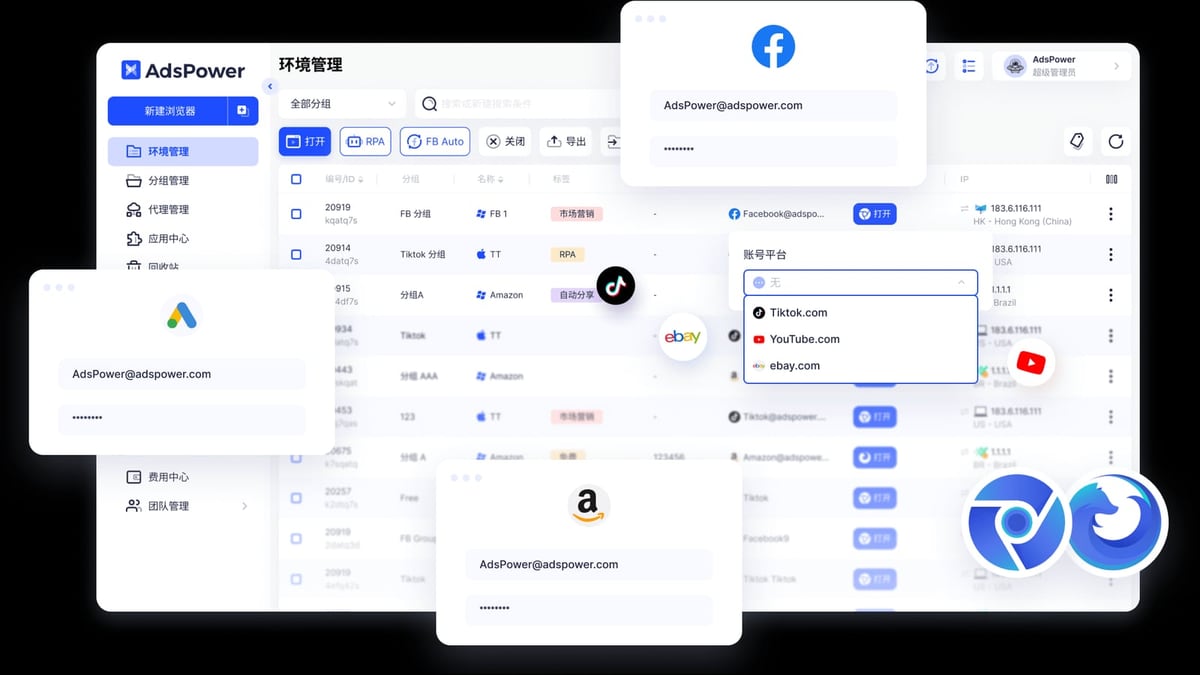
Many businesses operate multiple brand profiles, regional accounts, or client pages simultaneously. Doing this from a single device can trigger platform security checks, leading to account bans or restrictions. That’s where complementary tools come into play, even though they aren’t social platforms themselves.
For marketers and e‑commerce sellers juggling multiple social accounts, an anti‑detect browser like AdsPower creates isolated environments with unique digital fingerprints for each profile. This approach significantly reduces the risk of cross‑account flagging when managing, for example, several Facebook pages or TikTok Shop fronts. Our step‑by‑step guide on how to set up AdsPower with BrowserScan walks you through verifying your fingerprint configurations to stay safe. For large‑scale operations, pairing these tools with residential proxies from a reliable provider (see our 2026 Proxy Network review) adds an extra layer of location‑based authenticity. These aren’t replacements for a solid social strategy, but they ensure your infrastructure supports scale without the headaches of banned accounts.
Related reading
- How to Use AdsPower Fingerprint Browser with BrowserScan (Setup Guide) - Learn to set up AdsPower fingerprint browser profiles and verify them with BrowserScan to prevent IP leaks, WebRTC leaks, and fingerprint mismatches. Step-by-step workflow.
- Proxy Network Review 2026: Our Honest Verdict - Evidence-based Proxy Network review: explore its residential IP pool, rotating & static proxies, speed, pricing, setup, and ideal use cases. See if it’s right for you.
- Incogniton Review 2025: Features, Pricing & Honest Verdict - Evidence-based Incogniton review: see how this anti-detect browser handles multi-account management, fingerprinting, proxy setup, and whether it's right for you in 2025.
Sources and further reading
- Which social media platforms are worth sticking with for 2026? : r/socialmedia - With so many platforms changing fast (algorithms, monetization, communities, AI everywhere…), I’m curious:
Frequently Asked Questions
Which social media platform has the most users in 2026?
Facebook still leads with an estimated 3.07 billion monthly active users, followed closely by YouTube and Instagram (both often reported around 2.5‑3 billion, depending on the metric). However, raw user counts don’t tell the whole story—engagement and demographic fit are equally important.
Is TikTok still growing in 2026?
Yes. TikTok continues to post double‑digit growth in many markets and now attracts a broader age range. Its integrated e‑commerce features and AI discovery engine make it one of the highest‑potential platforms for brands.
Should my business use both Instagram and Facebook?
In most cases, yes. Facebook’s Groups and Marketplace complement Instagram’s visual storytelling. Running both through Meta’s unified ads manager is also very efficient. The two platforms serve overlapping but distinct use cases, so a dual presence is often worthwhile.
How can I avoid getting banned when running multiple social media accounts?
Platforms enforce strict one‑identity‑per‑person rules. Using a dedicated anti‑detect browser like AdsPower to separate profiles, combined with reliable proxies, is the most effective method used by professional marketers. Always follow each platform’s terms of service as well.
What is the best platform for B2B marketing in 2026?
LinkedIn remains the top choice for B2B, thanks to its professional audience and precise targeting. However, YouTube for case studies and Reddit for industry‑specific communities can significantly amplify your reach and credibility.
Conclusion: Where to Focus Your Social Strategy in 2026
The top 10 social media platforms of 2026 each offer unique advantages. YouTube and TikTok drive discovery through video; Facebook and Instagram remain unmatched for broad‑audience advertising; WhatsApp and Telegram excel at private, high‑trust communication; Reddit and LinkedIn deliver authenticity and authority to niche and professional audiences. Meanwhile, WeChat dominates the Chinese digital economy. Your winning mix will depend on your specific audience and content strengths, but this ranking provides a reliable foundation for your planning.
At AdsPower, we stay on top of these shifts so you don’t have to. Whether you’re fine‑tuning your social presence or scaling to multiple accounts, the tools and insights you need are evolving—and we’ll keep mapping them out for you.