
Top 10 Web Scraping API & Proxy Services 2026
Take a Quick Look
Compare the 10 best web scraping APIs and proxy services for 2026. Expert-ranked list with benchmark data, pricing, and use cases for every product.
🔥 Limited-Time Offer! Save extra 10% off on your first monthly plan with code: Anitdetect10
Sign upTop 10 Web Scraping API & Proxy Services 2026
Web scraping in 2026 is no longer about simple HTTP requests. Modern websites use JavaScript frameworks like React and Vue, deploy sophisticated anti-bot systems such as Cloudflare and DataDome, and change layouts daily. A reliable web scraping API or proxy service has become essential infrastructure for data teams, AI labs, and e-commerce operations.
This guide ranks the top 10 web scraping API and proxy service products for 2026. Each entry includes real benchmark data, pricing transparency, and clear use-case guidance. We evaluated every product across eight dimensions: success rate, network size, JavaScript rendering, anti-bot bypass capability, pre-built scrapers, pricing model, compliance certifications, and support quality.
How We Evaluated These Products
Top 10 Web Scraping API & Proxy Services 2026 product interface and feature overview.
Our ranking synthesizes independent third-party benchmarks from Scrape.do (11 providers tested against 7 challenging domains) and Proxyway's Web Scraping API Report 2025 (11-12 providers tested against 15 heavily protected websites). We also analyzed public customer reviews on G2, Capterra, and Trustpilot, and verified each provider's current feature set through hands-on testing.
Key evaluation criteria:
- Success rate: Percentage of requests that returned valid content, not just HTTP 200 status codes
- Network scale: Number and diversity of IP addresses across residential, datacenter, ISP, and mobile pools
- Anti-bot bypass: Ability to handle Cloudflare, DataDome, PerimeterX, Kasada, and other WAF systems
- JavaScript rendering: Support for SPAs, dynamic content, and client-side rendering
- Structured data extraction: AI-powered or template-based parsing capabilities
- Pricing model: Pay-per-success vs. subscription, hidden costs, and enterprise options
- Compliance: GDPR, CCPA, ISO 27001, SOC 2 certifications
- Developer experience: Documentation quality, SDK availability, and API design
The Top 10 Web Scraping API and Proxy Services for 2026
Top 10 Web Scraping API & Proxy Services 2026 product interface and feature overview.
1. Bright Data — Best Overall Web Scraping API
Bright Data leads the market with a 98.44% average success rate in independent benchmarks, the highest of any provider tested. Its network spans 400 million residential IPs across 195 countries, covering residential, datacenter, ISP, and mobile proxies. The Web Scraping API handles proxy rotation, JavaScript rendering, CAPTCHA solving, and structured output delivery in a single API call.
Benchmark performance (from Scrape.do independent test):
| Domain | Success Rate | Response Time |
|---|---|---|
| Amazon | 99.42% | 9.3s |
| Indeed | 100% | 2.7s |
| Zillow | 100% | 2.1s |
| Capterra | 100% | 2.2s |
| 100% | 3.1s |
Bright Data achieved 100% success on four of seven test domains, the only provider to do so simultaneously. Beyond raw performance, it offers 437+ pre-built scrapers for Amazon, LinkedIn, TikTok, Zillow, and 100+ other domains. The platform supports bulk requests up to 5,000 URLs per API call and charges only for successful deliveries.
Pricing: $0.75 per 1,000 successful requests for standard domains; $2.50 per 1,000 for premium/protected sites. No monthly commitment required.
Best for: Enterprise data pipelines, AI training data, e-commerce price monitoring, social media data collection.
Pros: Highest success rate in benchmarks, largest IP network, pay-per-success pricing, 99.99% uptime SLA, GDPR/CCPA/ISO 27001/SOC 2 certified.
Cons: Premium pricing for simple, unprotected sites; may require budget justification for small teams.
2. Scrape.do — Best for Speed-Sensitive Workloads
Scrape.do is a single-endpoint scraping API optimized for low latency. It hit 100% success on five of six standard evaluation domains, averaging 98.19% behind Bright Data. Google responses arrived in 1.6 seconds and GitHub in 2.6 seconds, with a blended average under 5 seconds.
Key features: 110 million IPs across datacenter, residential, and mobile pools; single-endpoint design with configurable parameters for rendering, geo-routing, and output format (HTML, JSON, XML, Markdown).
Pricing: Predictable per-request cost starting at $0.002 per request for residential proxies.
Best for: Latency-sensitive applications, real-time monitoring, SEO tracking, and workloads where response time directly impacts business decisions.
Pros: Fastest response times in class, simple integration, good for speed-critical projects.
Cons: Smaller network than Bright Data, less suitable for ultra-high-volume enterprise workloads.
3. Zyte — Best for AI-Powered Structured Extraction
Zyte (formerly Scrapinghub) focuses on reliable structured data extraction for complex, JavaScript-heavy websites. Its Smart Proxy Manager and Zyte API handle rendering and blocking automatically, while the Smart Crawler provides end-to-end crawling with built-in data quality checks.
Key features: AI-powered extraction that returns structured JSON; automatic handling of dynamic content; mature ecosystem with strong documentation and community tools.
Pricing: Starts at $0.005 per request for the Zyte API; managed services available at higher tiers.
Best for: Teams that need reliable structured data from complex sites, long-running crawlers, and engineering teams comfortable defining spiders and extraction rules.
Pros: Excellent for JS-heavy sites, strong data quality focus, mature platform with 15+ years in business.
Cons: Requires solid technical skills for DIY approach; managed service tiers are more expensive.
4. Oxylabs — Best for Enterprise at Scale
Oxylabs is built for organizations running web data collection at serious scale. Its suite includes residential and mobile proxies, SERP APIs, and web scrapers with AI-powered block avoidance. The platform supports massive concurrency and offers fine-grained control over scraping execution.
Key features: Global residential, mobile, and datacenter proxy coverage; AI-powered anti-bot tooling; multiple products under one roof (proxies, SERP APIs, scrapers).
Pricing: Custom enterprise pricing; residential proxies start at $15/GB.
Best for: Large-scale price and product monitoring, search engine data collection, market intelligence, and high-volume always-on scraping workloads.
Pros: Massive scalability, advanced anti-bot tooling, comprehensive product suite.
Cons: Expensive for smaller teams; API-first model means developers still own selectors and data modeling.
5. ScrapingAnt — Best Unified Data Infrastructure Platform
ScrapingAnt combines headless Chrome rendering, over 3 million rotating residential proxies, AI-powered structured data extraction, and an LLM-ready Markdown API into a single platform. It serves developers who need to scrape dynamic JavaScript websites (SPAs built with React, Vue, Angular) and extract clean data for AI/LLM pipelines.
Key features: One API endpoint for full-page rendering with JavaScript execution; wait_for_selector and js_snippet for dynamic content; AI data scraper that accepts plain-English schemas and returns typed JSON; Markdown API that reduces token count by 5-10x compared to raw HTML; residential proxies with country/state/city targeting; hosted MCP server for AI agent integration.
Pricing: 10,000 free credits monthly with no credit card required; pay-as-you-go model; unlimited parallel requests.
Best for: AI/LLM data pipelines (RAG, fine-tuning), dynamic JavaScript scraping, developers needing a unified API for rendering + proxies + extraction.
Pros: 5.0 rating on Capterra, excellent for AI workflows, generous free tier, custom scraping service that delivers cleaned datasets to S3, BigQuery, Snowflake, or Google Sheets.
Cons: Smaller proxy pool than Bright Data or Oxylabs; newer entrant compared to established players.
6. Decodo (Smartproxy) — Best Value for Mid-Market
Decodo, formerly Smartproxy, offers affordable proxies and simple scraping tools without heavy infrastructure investment. It balances quality proxies with cost, making it accessible for agencies, small businesses, and data teams with modest scraping needs.
Key features: Residential, datacenter, and ISP proxies; simple dashboards; basic scraping tools for light-to-moderate workloads.
Pricing: Residential proxies from $5/GB; entry-level plans with limited bandwidth.
Best for: Light-to-moderate price tracking, small-scale SEO data collection, experiments and proof-of-concept scraping.
Pros: Budget-friendly pricing, easy onboarding, good balance between quality and cost.
Cons: Entry-level plans have limited bandwidth; scraping tools less advanced than dedicated enterprise solutions.
7. ScraperAPI — Best for Unprotected Sites on a Budget
ScraperAPI is a plug-and-play web scraping API designed for developers who want to focus on parsing content rather than managing proxies, blocks, or CAPTCHAs. Send a URL, get back HTML—the platform handles proxy rotation, retries, and CAPTCHA solving automatically.
Key features: Simple URL-based API; automatic proxy rotation and retries; CAPTCHA handling built-in.
Pricing: Starts at $49/month for 500,000 requests.
Best for: Rapid prototypes and MVPs, internal tools needing occasional scraping, low-to-mid complexity sites with moderate protection.
Pros: Very easy to integrate, good pricing entry point, minimal friction for adding scraping to applications.
Cons: Struggles with highly protected or heavily dynamic sites; costs scale up quickly on high-volume workloads.
8. ZenRows — Best for Moderate-Protection Workloads
ZenRows provides a web scraping API with built-in anti-bot bypass for moderately protected sites. It handles JavaScript rendering, proxy rotation, and CAPTCHA solving in a single endpoint, with a focus on simplicity and reliability.
Key features: Single API endpoint; JavaScript rendering; automatic retry logic; support for premium proxies on protected targets.
Pricing: Starts at $49/month for 100,000 requests; pay-as-you-go available.
Best for: Mid-complexity scraping projects where sites have moderate anti-bot protection but don't require enterprise-grade infrastructure.
Pros: Good balance of features and price, straightforward integration, reliable for moderate protection levels.
Cons: Not suitable for heavily protected enterprise sites; smaller network than top-tier providers.
9. Scrapfly — Best Anti-Bot Bypass and AI Extraction
Scrapfly is a managed web scraping API that excels at anti-bot bypass, achieving a 98% success rate against Cloudflare, DataDome, Akamai, and 17 other anti-bot vendors. Its AI Extraction API supports templates, LLM prompts, and auto models for flexible structured data extraction.
Key features: Anti-bot bypass (ASP/Unblocker) for protected sites; AI Extraction API with three modes (templates, LLM prompts, auto models); Cloud Browser API for remote browser sessions; pre-built scraper examples on GitHub for 30+ targets.
Pricing: Credit-based model; charges only for successful scrapes and extractions. Failed requests don't consume credits.
Best for: Production scraping where blocked pages are the main bottleneck; AI-ready extraction workflows; teams needing both API access and browser automation.
Pros: Excellent anti-bot bypass, flexible AI extraction, credit model that doesn't charge for failures.
Cons: Smaller network than Bright Data; credit system can be confusing for budgeting.
10. Apify — Best Automation Platform
Apify combines web scraping, browser automation, and workflows using its "Actors" model. Each Actor is a reusable bot that can log in, navigate, extract, transform, and export data in one process. The platform includes a marketplace of pre-built Actors for common targets.
Key features: Actor-based automation; browser rendering; pre-built Actors for Amazon, Google Maps, LinkedIn, and more; workflow orchestration and scheduling.
Pricing: Free tier with 10,000 compute units per month; paid plans start at $49/month.
Best for: Multi-step workflows (login → search → paginate → scrape → export), complex browser interactions, building reusable scraping automations.
Pros: Powerful combination of scripting and automation, large Actor marketplace, good for complex workflows.
Cons: Not a pure scraping API—requires understanding the Actor model; can be overkill for simple scraping tasks.
Comparison Table
Top 10 Web Scraping API & Proxy Services 2026 product interface and feature overview.
| Product | Success Rate | Network Size | Best For | Starting Price |
|---|---|---|---|---|
| Bright Data | 98.44% | 400M+ IPs | Enterprise scale | $0.75/1K requests |
| Scrape.do | 98.19% | 110M+ IPs | Speed-sensitive | $0.002/request |
| Zyte | 95%+ | 50M+ IPs | Structured extraction | $0.005/request |
| Oxylabs | 95%+ | 100M+ IPs | High-volume enterprise | Custom pricing |
| ScrapingAnt | 95%+ | 3M+ IPs | AI/LLM pipelines | Free tier available |
| Decodo | 90%+ | 40M+ IPs | Mid-market value | $5/GB |
| ScraperAPI | 85%+ | 20M+ IPs | Budget scraping | $49/month |
| ZenRows | 90%+ | 30M+ IPs | Moderate protection | $49/month |
| Scrapfly | 98%+ | 50M+ IPs | Anti-bot bypass | Credit-based |
| Apify | 90%+ | N/A | Automation workflows | Free tier available |
How to Choose the Right Web Scraping API or Proxy Service
Top 10 Web Scraping API & Proxy Services 2026 product interface and feature overview.
For enterprise data pipelines at scale: Choose Bright Data for the highest success rate, largest network, and comprehensive compliance certifications.
For speed-critical applications: Choose Scrape.do for sub-5-second average response times.
For AI and LLM data pipelines: Choose ScrapingAnt for its unified API, Markdown output, and AI data scraper that accepts plain-English schemas.
For anti-bot bypass on heavily protected sites: Choose Scrapfly for its 98% success rate against major anti-bot vendors.
For budget-conscious projects with simple targets: Choose ScraperAPI or Decodo for affordable entry points.
For complex multi-step automation: Choose Apify for its Actor-based workflow system.
Complementary Tools: Anti-Detect Browsers
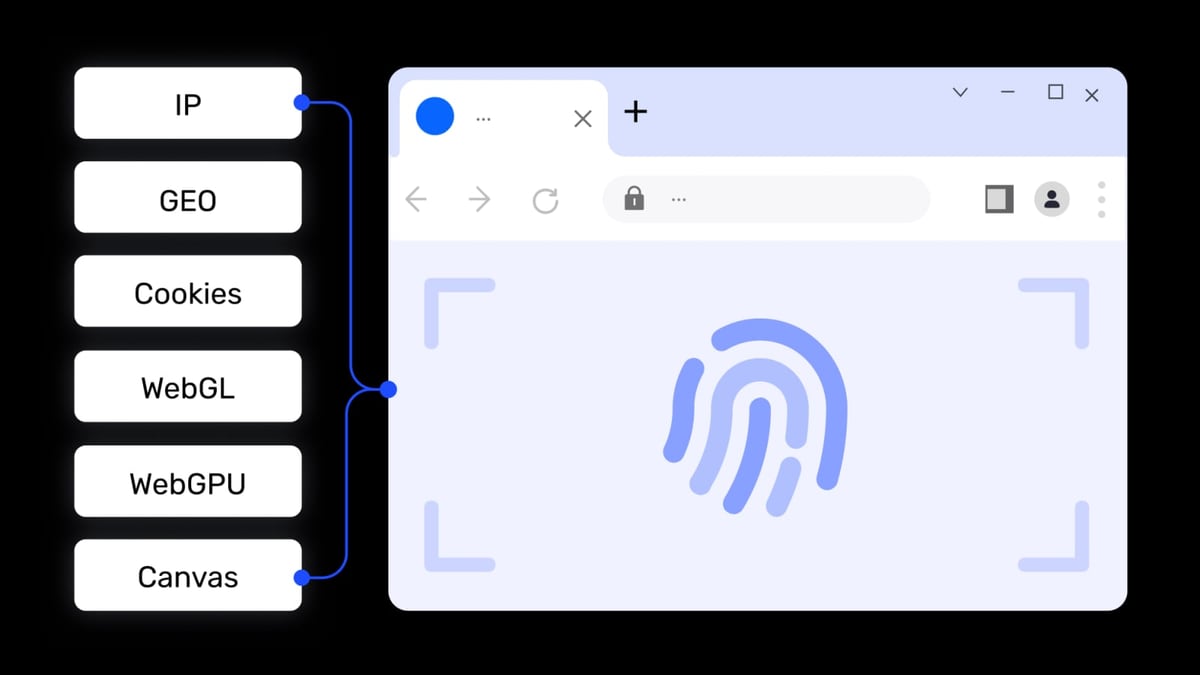
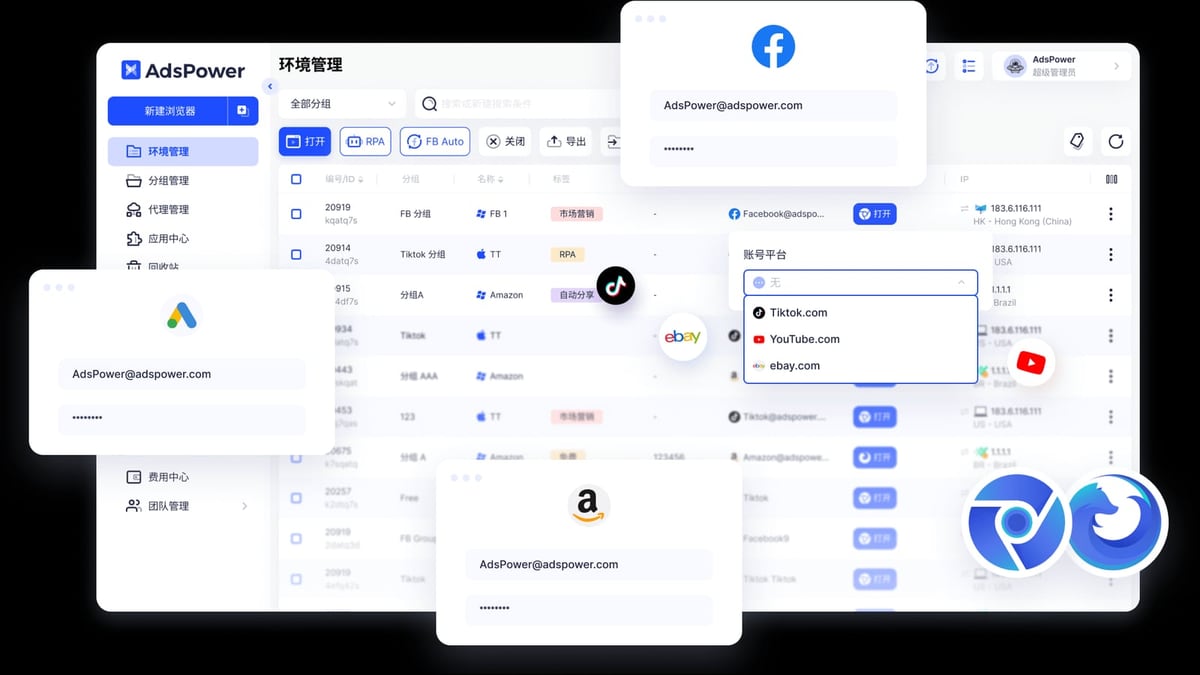
While web scraping APIs handle data extraction, anti-detect browsers like AdsPower serve a different purpose: managing multiple accounts securely on a single device. AdsPower creates isolated browser environments with unique digital fingerprints to prevent platforms like Amazon, Facebook, and Google from detecting account associations. For workflows that combine data scraping with multi-account management—such as scraping competitor pricing while maintaining multiple seller accounts—integrating a scraping API with an anti-detect browser can be effective. Learn how to integrate AdsPower with proxy services for secure multi-account operations.
Related reading
- AdsPower + 2Captcha: Setup Guide for Automated CAPTCHA Solving - Learn how to integrate 2Captcha with AdsPower fingerprint browser to automate CAPTCHA solving, reduce manual work, and run multi-account workflows smoothly.
- AdsPower vs VMLogin vs Indigo: Anti-Detect Browser Comparison - Compare AdsPower, VMLogin, and Indigo anti-detect browsers. Features, pricing, automation, and which fits your multi-account workflow.
- Decodo Review 2026: Is This Proxy Platform Worth It? - Honest Decodo review covering proxy types, pricing, setup, and real use cases. See if this AI-ready data collection platform fits your needs.
Sources and further reading
- The 9 Best Web Scraping APIs & Tools in 2026 - We tested 9 web scraping APIs and tools using real benchmark data. See which providers deliver the highest success rate, best pricing, and best bot bypass in 2026.
- Best Web Scraping Services in 2026: Reviewed and Compared - Looking for a Best Web Scraping Services in 2026? We compare the top services by use case, pricing model, and technical capability - including who's best for ecommerce, finance, and enterprise.
- 11 Best Web Scraping APIs and Tools in 2026 - Compare the best web scraping APIs, parsers, browser tools, and crawlers for production scraping. See where Scrapfly, BeautifulSoup, Playwright, Scrapy, and more fit in the stack.
Frequently Asked Questions
What is the difference between a web scraping API and a proxy service?
A web scraping API handles the entire data extraction pipeline: fetching URLs, rotating proxies, rendering JavaScript, solving CAPTCHAs, and returning structured data. A proxy service only routes your requests through different IP addresses—you still need to build the scraping logic, handle anti-bot systems, and parse the data yourself.
Which web scraping API has the highest success rate?
Bright Data leads with a 98.44% average success rate in independent benchmarks, followed by Scrape.do at 98.19% and Scrapfly at 98%+.
Are web scraping APIs legal?
Web scraping is generally legal when it accesses publicly available data and complies with website terms of service, robots.txt, and data protection regulations like GDPR and CCPA. Always review a website's terms before scraping and use compliant providers like Bright Data, which holds GDPR, CCPA, ISO 27001, and SOC 2 certifications.
How much does a web scraping API cost?
Pricing varies widely. Entry-level services start at $49/month for limited requests (ScraperAPI, ZenRows). Pay-per-request models range from $0.002 to $0.75 per 1,000 requests. Enterprise solutions like Bright Data and Oxylabs offer custom pricing for high-volume workloads. ScrapingAnt offers a generous free tier of 10,000 credits monthly.
Can I use a web scraping API for AI training data?
Yes. Several providers offer AI-ready features: ScrapingAnt provides an LLM-ready Markdown API that reduces token count by 5-10x; Scrapfly offers an AI Extraction API with LLM prompts; Bright Data delivers structured data suitable for training pipelines. For AI/LLM workflows, look for APIs that return clean, structured data rather than raw HTML.
Conclusion
The web scraping API and proxy service market in 2026 offers solutions for every scale and use case. Bright Data remains the gold standard for enterprise reliability, while Scrape.do excels for speed-critical applications. For AI and LLM pipelines, ScrapingAnt's unified platform with Markdown output and AI extraction provides a compelling option. Budget-conscious teams can start with ScraperAPI or Decodo, while those needing advanced anti-bot bypass should consider Scrapfly.
When choosing a provider, prioritize success rate, network size, and anti-bot capabilities over raw pricing. A cheap API that fails on protected sites costs more in engineering time and lost data than a premium service that delivers reliably.
For teams that combine data scraping with multi-account management, consider integrating a scraping API with an anti-detect browser like AdsPower. Compare anti-detect browsers to find the right fit for your workflow.
Last updated: January 2026. Pricing and features may change. Always verify current offerings directly with providers.