
Top 10 Open Source Web Scraping Frameworks 2026
Take a Quick Look
Expert-ranked list of the 10 best open source web scraping frameworks for 2026. Compare Scrapy, Crawlee, Playwright, Crawl4AI, and more. Honest pros, cons, and use cases.
🔥 Limited-Time Offer! Save extra 10% off on your first monthly plan with code: Anitdetect10
Sign upTop 10 Open Source Web Scraping Frameworks 2026
Web scraping in 2026 is a landscape of mature, battle-tested frameworks and innovative newcomers. Whether you're building a production-scale data pipeline, feeding an LLM, or automating a one-off extraction, choosing the right open source framework can save months of development time and countless headaches.
This list ranks the top 10 open source web scraping frameworks based on five transparent criteria: maintenance health, license permissiveness, production capability, anti-bot ceiling, and documentation quality. We excluded any tool that primarily serves as a client library for a paid API or has an archived repository. Every entry is independently maintained and genuinely open source.
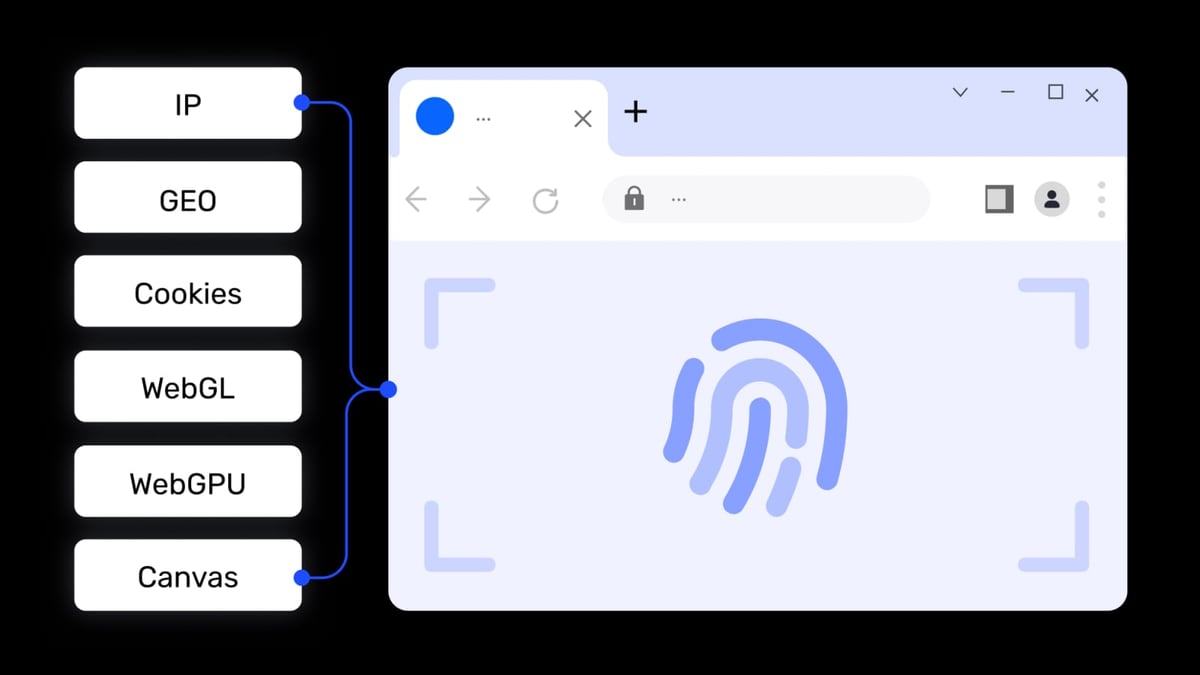
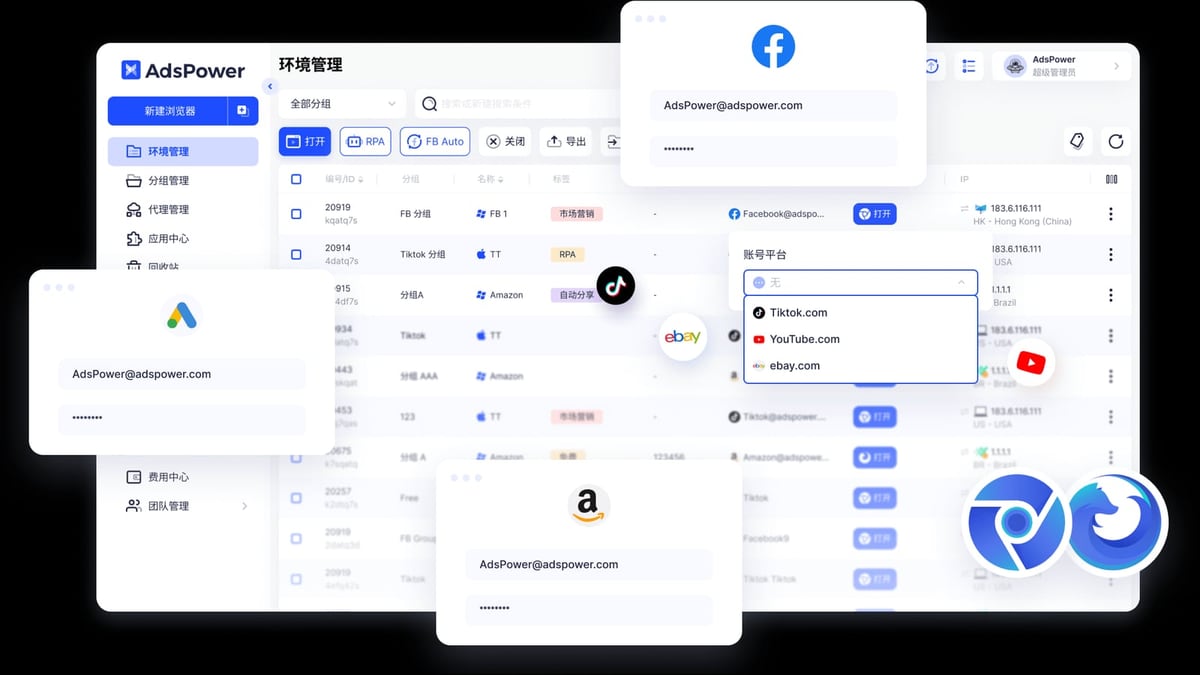
If your workflow involves managing multiple scraping accounts or avoiding platform bans, you may also need an anti-detect browser like AdsPower to isolate browser fingerprints and proxy configurations. We'll touch on that where it fits naturally.
How We Ranked These Frameworks
Top 10 Open Source Web Scraping Frameworks 2026 product interface and feature overview.
| Criterion | Weight | What We Checked |
|---|---|---|
| Maintenance Health | 30% | Recent commits, contributor count, issue response time |
| License | 20% | Permissive (BSD, MIT, Apache) preferred over copyleft (AGPL) |
| Production Capability | 25% | Scalability, middleware, queue management, export formats |
| Anti-Bot Ceiling | 15% | Built-in fingerprint handling, proxy rotation, stealth features |
| Documentation & Community | 10% | Tutorials, examples, forum activity, GitHub stars (as a secondary signal) |
The Top 10 Open Source Web Scraping Frameworks for 2026
Top 10 Open Source Web Scraping Frameworks 2026 product interface and feature overview.
1. Scrapy – Best for Production Python Crawls
Stars: ~63k · License: BSD-3-Clause · Language: Python
Scrapy remains the gold standard for large-scale, structured web scraping in Python. Maintained by the community for over 15 years with contributions from Zyte and 500+ developers, it provides a complete project scaffold: spiders, item pipelines, middlewares, and feed exports. Its built-in AutoThrottle extension automatically adjusts request rate to respect server limits.
Strengths:
- Mature, battle-tested in production across industries
- Extensible via middlewares and pipelines
- Feed exports to JSON, CSV, XML, S3, and more
- Large ecosystem of add-ons (scrapy-playwright for JS rendering, scrapy-zyte-api for anti-ban)
Limitations:
- HTTP-only by default; JavaScript-heavy sites require integration with Playwright or Splash
- Steeper learning curve than writing ad-hoc scripts
- No built-in proxy management or CAPTCHA solving
Best for: Structured, recurring, high-volume crawls in Python teams.
import scrapy

class ProductSpider(scrapy.Spider):
    name = "products"
    start_urls = ["https://web-scraping.dev/products"]

    def parse(self, response):
        for product in response.css("div.product"):
            yield {
                "title": product.css("h3 a::text").get(),
                "price": product.css(".product-price::text").get(),
                "url": response.urljoin(product.css("h3 a::attr(href)").get()),
            }
        next_page = response.css("a[rel=next]::attr(href)").get()
        if next_page:
            yield response.follow(next_page, callback=self.parse)
2. Crawlee – Best All-in-One Scraper for Node.js
Stars: ~24k · License: Apache-2.0 · Language: JavaScript/TypeScript, Python (beta)
Crawlee is the most batteries-included open source scraping framework for Node.js. It unifies HTTP crawling (CheerioCrawler) and headless browser crawling (PlaywrightCrawler, PuppeteerCrawler) under a single API, with built-in request queues, session pools, and proxy rotation hooks.
Strengths:
- Auto-scaling concurrency and persistent queues
- Fingerprint-aware browser contexts
- Apache-2.0 licensed, independently maintained
- Python port in active development
Limitations:
- Python version is less mature than Scrapy
- Browser mode is resource-intensive
Best for: Node.js teams that want a production-ready framework without assembling components from scratch.
import { CheerioCrawler } from "crawlee";

const crawler = new CheerioCrawler({
    async requestHandler({ $, request }) {
        const books = [];
        $("article.product_pod").each((_, el) => {
            books.push({
                title: $(el).find("h3 a").attr("title"),
                price: $(el).find(".price_color").text(),
            });
        });
        console.log(`Scraped ${books.length} books from ${request.url}`);
    },
});
await crawler.addRequests(["https://books.toscrape.com"]);
await crawler.run();
3. Playwright – Best for JavaScript-Heavy Sites
Stars: ~92k · License: Apache-2.0 · Language: Python, Node.js, Java, .NET
Playwright, maintained by Microsoft, is the premier browser automation library for scraping single-page applications and dynamic content. It supports Chromium, Firefox, and WebKit, with auto-waiting, network interception, and mobile emulation.
Strengths:
- Handles any JavaScript-rendered page
- Cross-browser support
- Excellent documentation and active development
- Can intercept and modify network requests
Limitations:
- Resource-heavy (each browser instance consumes significant memory)
- Slower than HTTP-only scraping
- Default configurations are easily detected by anti-bot systems; requires stealth patches
Best for: Scraping pages where content only exists after JavaScript executes.
4. Crawl4AI – Best for LLM and RAG Pipelines
Stars: ~70k · License: Apache-2.0 · Language: Python
Crawl4AI is purpose-built for feeding AI models. It outputs clean Markdown (67% fewer tokens than raw HTML), supports structured extraction with Pydantic schemas, and integrates natively with LangChain and LlamaIndex.
Strengths:
- LLM-ready Markdown output
- AI-powered extraction that adapts to site changes
- Fast (sub-3-second responses on most pages)
- SOC 2 Type II compliant
Limitations:
- Relatively young; smaller ecosystem than Scrapy
- Best suited for AI pipelines, not general-purpose crawling
Best for: Teams building RAG systems, AI agents, or data feeds for LLMs.
from firecrawl import Firecrawl
from pydantic import BaseModel, Field
from typing import List

class Repository(BaseModel):
    name: str = Field(description="The name of the repository")
    stars: int = Field(description="The number of stars")

class RepoList(BaseModel):
    repos: List[Repository]

app = Firecrawl(api_key="fc-YOUR_API_KEY")
result = app.scrape(
    url="https://github.com/trending",
    formats=["json"],
    json_options={"schema": RepoList.model_json_schema()}
)
print(result.json())
5. Camoufox – Best for Fingerprint-Heavy Protected Targets
Stars: ~9.7k · License: MPL-2.0 · Language: Python
Camoufox is a Firefox-based browser automation tool designed to evade fingerprinting detection. It randomizes Canvas, WebGL, Audio, and WebRTC fingerprints, making it effective against sites that block headless browsers.
Strengths:
- Built-in fingerprint randomization
- Handles JavaScript rendering
- Lightweight compared to full browser automation suites
Limitations:
- Smaller community and fewer integrations
- MPL-2.0 license may require compliance attention
Best for: Scraping targets protected by browser fingerprinting (e.g., ticket platforms, social media).
Note: For multi-account management at scale, pairing Camoufox with an anti-detect browser like AdsPower can provide additional fingerprint isolation and proxy rotation. See our guide on How to Use AdsPower with SOAX for a step-by-step workflow.
6. Puppeteer – Best for Chrome-First Node.js Scraping
Stars: ~95k · License: Apache-2.0 · Language: Node.js
Puppeteer, developed by Google, provides a high-level API to control Chrome/Chromium. It excels at automating browser interactions, taking screenshots, and crawling SPAs.
Strengths:
- Deep integration with Chrome DevTools Protocol
- Network interception and request blocking
- Large ecosystem of higher-level frameworks (e.g., Crawlee)
Limitations:
- Chrome-only (no Firefox or Safari support)
- Resource-intensive
- Stealth configuration required for protected sites
Best for: Chrome-first Node.js scraping and testing.
7. Selenium – Best Language Coverage
Stars: ~34k · License: Apache-2.0 · Language: Python, Java, C#, Ruby, JavaScript
Selenium is the most language-agnostic browser automation framework. It supports all major browsers and has the largest ecosystem of drivers and integrations.
Strengths:
- Broadest language support
- Works with any browser
- Extensive documentation and community
Limitations:
- Slower and more resource-heavy than Playwright
- No built-in auto-waiting (requires explicit waits)
- Default configurations are easily detected
Best for: Multi-language teams or projects that must support legacy browsers.
8. Scrapling – Best Modern Python Scraping Library
Stars: ~67k · License: BSD-3-Clause · Language: Python
Scrapling is a modern Python library that combines HTTP fetching with intelligent parsing. It features auto-detection of pagination, adaptive selectors, and built-in retry logic.
Strengths:
- Clean, modern API
- Auto-pagination detection
- Lightweight and fast
Limitations:
- No built-in JavaScript rendering (requires external fetcher)
- Younger project with fewer community resources
Best for: Python developers who want a simpler alternative to Scrapy for medium-scale projects.
9. Colly – Best Open Source Scraper for Go
Stars: ~25k · License: Apache-2.0 · Language: Go
Colly is the leading web scraping framework for Go. It provides a clean API for parallel crawling, caching, and URL filtering, and compiles to a single binary with no runtime dependencies.
Strengths:
- Blazing fast performance
- Single binary deployment
- Built-in caching and rate limiting
Limitations:
- No JavaScript rendering
- Smaller ecosystem than Python/Node.js frameworks
Best for: Go teams building high-performance scraping pipelines.
10. Maxun – Best No-Code Open Source Scraper
Stars: ~16k · License: AGPL-3.0 · Language: TypeScript
Maxun is a self-hosted, no-code scraping platform. You train a robot by demonstrating clicks and selections in your browser, and it generates a reusable scraper.
Strengths:
- True no-code interface
- Self-hosted (data stays on your infrastructure)
- Handles JavaScript rendering
Limitations:
- AGPL license may restrict commercial use
- Less flexible than code-based frameworks for complex logic
- Smaller community
Best for: Non-developers or teams that need quick, visual scraping without writing code.
Comparison Table
Top 10 Open Source Web Scraping Frameworks 2026 product interface and feature overview.
| Framework | Language | License | Stars | JS Rendering | Best For |
|---|---|---|---|---|---|
| Scrapy | Python | BSD-3 | ~63k | Plugin | Production Python crawls |
| Crawlee | JS/TS, Python | Apache-2 | ~24k | Yes | All-in-one Node.js scraping |
| Playwright | Multi | Apache-2 | ~92k | Yes | JavaScript-heavy sites |
| Crawl4AI | Python | Apache-2 | ~70k | Yes | LLM/RAG pipelines |
| Camoufox | Python | MPL-2 | ~9.7k | Yes | Fingerprint-heavy targets |
| Puppeteer | Node.js | Apache-2 | ~95k | Yes | Chrome-first scraping |
| Selenium | Multi | Apache-2 | ~34k | Yes | Broadest language coverage |
| Scrapling | Python | BSD-3 | ~67k | Fetcher-dep. | Modern Python scraping |
| Colly | Go | Apache-2 | ~25k | No | Go scraping |
| Maxun | TypeScript | AGPL-3 | ~16k | Yes | No-code self-hosted |
When Open Source Frameworks Hit Their Limits
Top 10 Open Source Web Scraping Frameworks 2026 product interface and feature overview.
No open source framework ships residential IP pools, CAPTCHA solving, or managed anti-bot bypass at scale. That operational layer is the real cost. For targets protected by Cloudflare, DataDome, or Akamai, you'll need to pair your framework with proxy services and fingerprint management.
If you're managing multiple scraping accounts or need to rotate browser fingerprints, an anti-detect browser like AdsPower can provide isolated environments with unique fingerprints. For a deeper comparison, see our AdsPower vs VMLogin vs Dolphin Anty article.
For proxy needs, check our IPBurger Proxy Services Review and PROXYS.IO Review.
Related reading
- AdsPower Fingerprint Browser vs Hidemyacc vs Genlogin: 2026 Comparison - Compare AdsPower, Hidemyacc, and Genlogin anti-detect browsers for multi-account management. See strengths, weaknesses, and which tool fits your workflow.
Sources and further reading
- Best Open-Source Web Scraping Libraries in 2026 - Comprehensive comparison of leading web scraping tools including Firecrawl, highlighting AI-powered solutions, traditional methods, and how to choose the right library for your data extraction needs.
- 10 Best Open-Source Web Scrapers in 2026 - The 10 best open-source web scrapers in 2026 ranked by maintenance, license, and anti-bot ceiling. Covers Scrapy, Crawlee, Playwright, Camoufox, Crawl4AI, Colly
- Top 10 Web Scraping Tools in 2026 — And When None of Them Are Enough - Honest review of the 10 most popular web scraping tools in 2026 — real pros, real cons, pricing, and when off-the-shelf tools fail, and you need a custom scraper.
FAQ
Which open source web scraping framework is best for beginners?
Scrapling (Python) or Crawlee (Node.js) offer the gentlest learning curves with modern APIs. For no-code, Maxun is the best entry point.
Can I use Scrapy with JavaScript-rendered pages?
Yes, by integrating scrapy-playwright or scrapy-splash. See the Scrapy documentation for setup.
What is the best framework for feeding data into an LLM?
Crawl4AI is purpose-built for this, outputting clean Markdown with minimal tokens. It integrates directly with LangChain and LlamaIndex.
Do I need an anti-detect browser for web scraping?
Only if your target uses browser fingerprinting to block automation. Camoufox handles basic fingerprint randomization. For multi-account workflows, AdsPower provides more robust isolation.
Are there any frameworks to avoid in 2026?
Avoid any project whose GitHub repo has been archived or is primarily a client for a paid API. Always check the last commit date and license before adopting.
Conclusion
The best open source web scraping framework for 2026 depends on your language, scale, and target complexity. Scrapy remains unbeatable for production Python crawls. Crawlee is the strongest all-in-one choice for Node.js. Playwright handles dynamic content reliably. Crawl4AI leads the AI era with LLM-ready output. And Camoufox fills the fingerprint-evasion niche.
No single tool solves every problem. Combine frameworks with proxy services, anti-detect browsers, and monitoring to build a complete data pipeline. Start with the table above, match your primary requirement, and iterate from there.
For further reading, see our Scrapestack Review and ScrapingBee Review for managed API alternatives.