
Similarweb Review 2026: Features, Pricing & Real-World Accuracy
Take a Quick Look
Honest Similarweb review: See how this competitive intelligence tool stacks up for traffic analysis, SEO, and ecommerce. Includes pricing, pros & cons, and who should use it.
🔥 Limited-Time Offer! Save extra 10% off on your first monthly plan with code: Anitdetect10
Sign upSimilarweb Review 2026: Features, Pricing & Real-World Accuracy
Choosing a digital intelligence platform is rarely straightforward—especially when the tool promises to uncover your competitors’ traffic, engagement, and growth secrets. Similarweb has become a household name for competitive benchmarking, but hype doesn’t always match reality. This evidence‑based review unpacks what the platform actually delivers, who benefits most, how much it costs, and where it stumbles, so you can decide if it’s worth your investment.
What Is Similarweb?

Similarweb Review 2026: Features, Pricing & Real-World Accuracy product interface and feature overview.
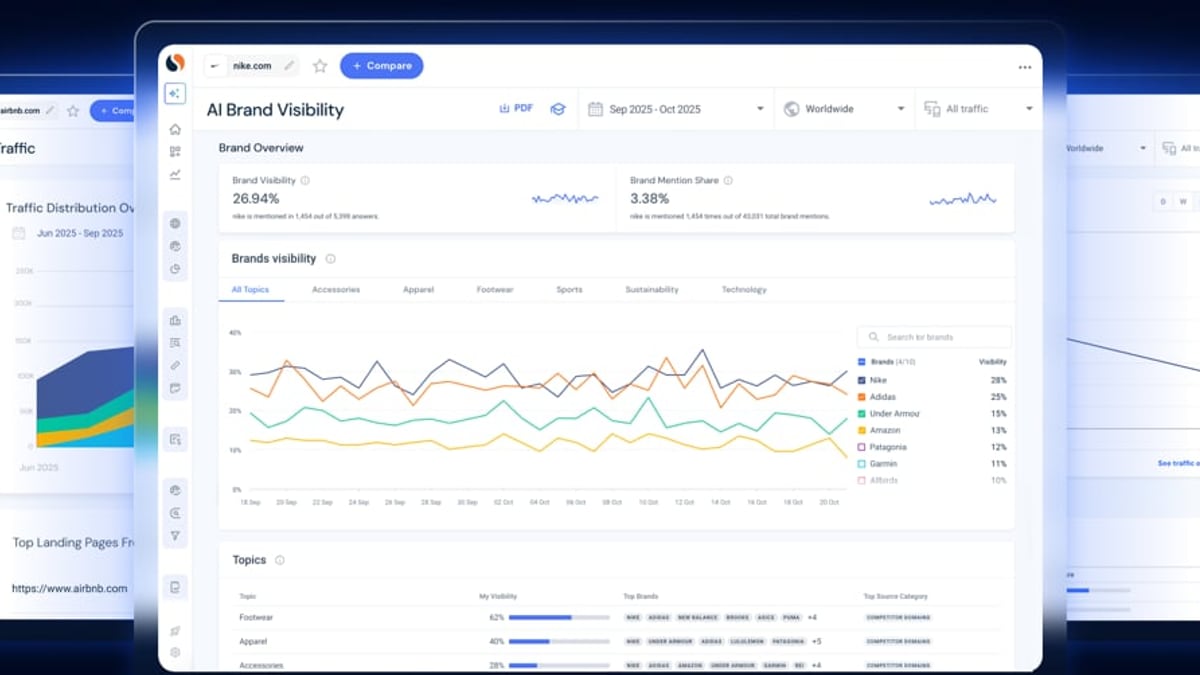
Similarweb is an AI‑powered digital intelligence platform that estimates website traffic, traffic sources, audience demographics, and competitive positioning for any domain. Originally a website‑analytics tool, it has expanded into four product lines: Web Intelligence, Sales Intelligence, App Intelligence, and Shopper Intelligence. The platform leverages a mix of browser‑extension panels, ISP partnerships, and algorithmic modeling to produce estimates, rather than relying solely on direct access to a site’s analytics. This makes it especially valuable for seeing what competitors are doing before they see you.
Crucially, Similarweb is not an SEO tool in the traditional sense—it focuses on traffic visibility, not keyword rankings or backlinks. For marketers, investors, and sales teams, it fills a gap that platforms like Google Analytics can’t address: the ability to benchmark against dozens of rivals without needing their consent.
Who Should Use Similarweb?
Similarweb Review 2026: Features, Pricing & Real-World Accuracy product interface and feature overview.
Similarweb’s sweet spot is professionals who need an outside‑in view of digital performance. Ideal user profiles include:
- Marketing heads & growth teams who must track competitor traffic trends, discover new referral sources, and build board‑ready market reports.
- Investors and analysts performing due diligence on a company’s web presence; Similarweb data is regularly cited in earnings calls and investment theses.
- E‑commerce strategists monitoring category leaders, affiliate traffic, and retail media performance—especially with the Shopper Intelligence add‑on.
- Sales & BDR teams that use traffic signals for prospecting and account prioritisation.
- Media buyers needing audience overlap and demographic data to refine programmatic spending.
If your primary need is keyword research or backlink analysis, tools like Ahrefs or SEMrush deliver far more value for a similar price. Small businesses with limited budgets may find the entry cost prohibitive and the data less accurate for low‑traffic sites.
Key Features and Real‑World Use Cases
Website Traffic Estimation and Source Breakdown
Enter any domain and Similarweb generates estimated monthly visits, country‑level distribution, and a breakdown by traffic source: direct, organic search, paid search, social, referral, and display ads. In practice, this allows a B2B SaaS company to see that a competitor receives 40% of its traffic from paid search, prompting a shift in their own ad budget. Several user testimonials highlight the platform’s value during high‑stakes events like Black Friday, where precise channel recommendations rely on this visibility.
Industry Benchmarking and Market Sizing
The tool lets you compare your site’s performance against an industry average, making it invaluable for board presentations. For example, a mid‑sized retailer can quickly demonstrate that its bounce rate outperforms the vertical benchmark, even if absolute traffic lags.
SEO and AI Engine Optimization (AEO)
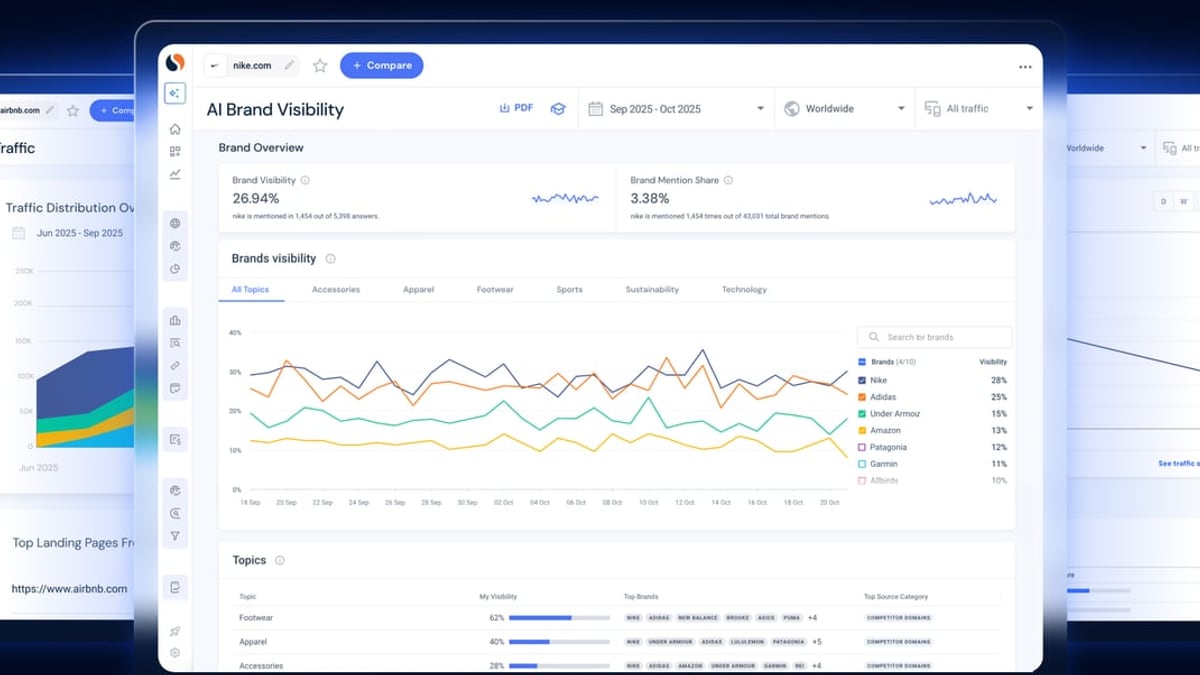
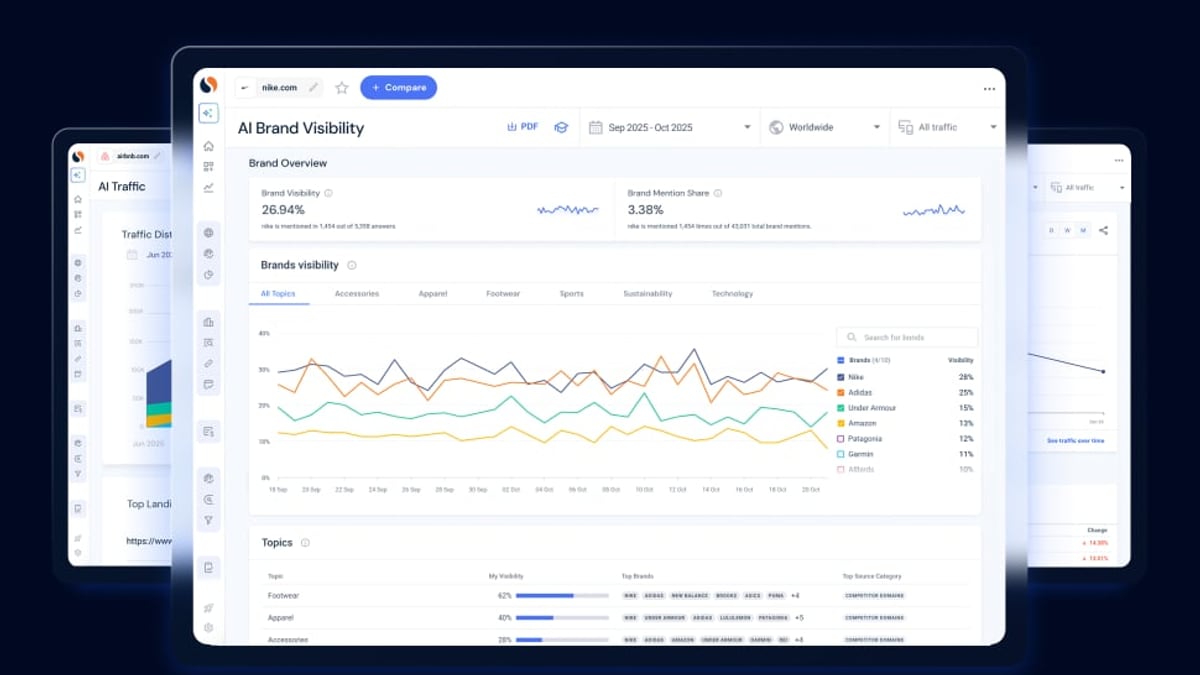
Similarweb’s newer AI‑powered modules track traffic from AI search engines like ChatGPT and Perplexity. This is a forward‑looking capability that traditional SEO tools have yet to master. For a content‑driven brand, spotting an increase in AI‑search referrals can justify investment in structured data and AI‑ready content.
App Intelligence
If your competitors have mobile apps, Similarweb provides download estimates, store rankings, and engagement metrics. A gaming studio, for instance, can monitor a rival’s daily active users and retention trends without earning a single cent from that app.
E‑commerce & Retail Analytics
Shopper Intelligence adds Amazon category analysis, product‑level insights, and cross‑retailer benchmarking. E‑commerce managers often combine this with platform‑specific guides—like AdsPower’ Top 10 Ecommerce Platforms for 2026—to align their technology stack with competitive realities.
Similarweb Pricing and Plans
Similarweb Review 2026: Features, Pricing & Real-World Accuracy product interface and feature overview.
Similarweb’s pricing is tiered and, for higher plans, deliberately opaque. Here’s what independent monitoring shows:
- Free plan: 5 results per metric, 1‑month data window. Enough for quick sanity checks, but useless for ongoing tracking.
- Starter: $125/month (annual billing) or $149 month‑to‑month. Includes full traffic estimates, up to 10 competitor comparisons, industry benchmarks, 15 months of history, and CSV export.
- Professional: $333/month (annual) or $399 monthly. Adds extended data ranges, custom reporting, limited API access, and priority support.
- Team & Enterprise: Custom quotes only. Enterprise contracts typically start around $16,000/year and can exceed $50,000/year when multiple product lines are included.
Critical hidden costs: monthly billing adds a 20‑25% premium; each product line (Web, Sales, App, Shopper) is priced separately, so cross‑module usage multiplies bills fast. Before subscribing, test the free version on similarweb.com with 2‑3 competitor domains you know well. If estimates look plausible, the paid plan will deliver deeper insight; if not, the paid version won’t magically improve accuracy for those sites.
Strengths That Make Similarweb Stand Out
Similarweb Review 2026: Features, Pricing & Real-World Accuracy product interface and feature overview.
- Unique traffic estimation data: No other competitor (including Ahrefs or SEMrush) offers estimated visit counts, source splits, and geographic data for any domain at scale.
- Institutional credibility: Publicly traded (NYSE: SMWB), its data powers investor notes, media reports, and market research, lending weight when you cite it internally.
- AI‑powered features: The Triple Effect framework promises traffic, visibility, and efficiency gains. Real customers report results like a 30% traffic increase with a 20% budget reduction.
- Broad competitive picture: Unlike SEO‑only tools, Similarweb captures paid, social, and referral traffic, giving a holistic view of a competitor’s digital footprint.
Limitations and What to Watch Out For
- Accuracy drops for smaller sites: Similarweb’s models rely on panel data. For domains with fewer than 100K monthly visits, estimates can be off by 30‑50%. User forums are full of threads noting that data is “very limited” or that some sites show inflated numbers.
- High entry cost: At $125‑149/month minimum, the platform costs as much as full‑suite SEO tools, yet doesn’t replace them. Budget‑conscious teams might blend free tools, SEMrush, and ad libraries instead.
- Opaque enterprise pricing: Team and Enterprise plans require a sales call and often escalate into five‑figure contracts—a barrier for smaller organisations.
- Multiple product lines create upsell pressure: The need for Web, Sales, and App Intelligence can quickly turn a “simple” $125/month investment into a multi‑thousand‑dollar commitment.
For users who only need their own site analytics, Google Analytics remains free and far more precise. If you must collect raw competitor data beyond what Similarweb provides, pairing the platform with a reliable proxy service—like the one reviewed in AdsPower’ SSL Proxies Review—can enable safe, respectful data gathering for deeper custom analysis.
How Similarweb Compares to Alternatives
| Capability | Similarweb | Ahrefs / SEMrush | SparkToro |
|---|---|---|---|
| Estimated traffic numbers | Yes, with source splits | No | No (audience intelligence, not traffic) |
| Keyword & backlink data | Basic keyword overview | Comprehensive | None |
| Audience demographics | Yes | Limited | Yes (follower & readership) |
| App & retail intelligence | Yes, separate modules | No | No |
| Institutional trust | High (used by analysts) | High | Medium |
The choice hinges on your primary job: if you need to show “our competitor gets 2M visits/month, 60% from social,” Similarweb is irreplaceable. If your day revolves around content gap analysis and link building, Ahrefs or SEMrush are better investments.
Getting Started with Similarweb
- Sign up for the free tier at similarweb.com. Enter 2‑3 sites you know well and check the traffic overview.
- Validate the numbers by comparing with any internal benchmarks or public statements (earnings calls, press releases).
- Define your use case: Decide whether you need Web Intelligence alone, or if you’ll eventually need Sales or App Intelligence.
- Start with annual billing if you commit—it saves 20% and includes the necessary historical data window.
- Integrate insights into your workflow: Export reports to CSV, connect to BI tools, or use the API (Professional tier) to push data into your dashboards.
Similarweb’s official customer reviews page showcases how diverse teams activate the platform, from publisher alliances to sports analytics. Meanwhile, independent pricing trackers like SaaS Price Pulse confirm that the $125/month Starter plan has remained stable, helping you budget with confidence.
Decision Criteria: Is Similarweb Worth It?
Ask yourself these three questions before buying:
- Do I need to understand competitor traffic—not just keywords? If yes, Similarweb fills a gap no SEO tool addresses.
- Are my target domains likely to have substantial traffic (100K+ visits/month)? Accuracy improves dramatically with scale.
- Can I justify at least $1,500/year for a single module? If the answer is yes and competitive intelligence drives real revenue, the investment often pays for itself. Proof points from Similarweb include a 167% YoY revenue boost for an SEO client, and teams regularly cite the tool as their “most trusted lead‑gen” asset.
However, if you operate on a tight budget, or your competitors are all low‑traffic niche sites, start with free options, SEMrush, or the Facebook Ad Library. The free version of Similarweb will still give you a taste, but you’ll likely need to supplement it with other data sources.
Related reading
- How to Use AdsPower with NetNut Proxies: Step-by-Step Setup - Learn to integrate NetNut proxies into AdsPower fingerprint browser for flawless multi-account management and web scraping. Step-by-step guide with tips.
- AdsPower vs Hidemyacc vs Indigo: Anti-Detect Browser Comparison - Compare AdsPower, Hidemyacc, and Indigo antidetect browsers for privacy, automation, and multi-account security. Find which fingerprint browser fits your workflow.
Sources and further reading
- Thoughts On SimilarWeb? : r/analytics - I use it for general reference, but I don't trust any data that I didn't take/fake myself 😉
- Similarweb Pricing 2026: Free vs $149/mo+ Paid Plans - Similarweb pricing 2026: Free plan with limited data, Starter $149/mo, Professional $399/mo. Enterprise custom. Pricing history tracked since 2020.
Frequently Asked Questions
Is Similarweb’s data accurate?
For high‑traffic sites (100K+ monthly visits), estimates are generally reliable for relative trends and source splits. For smaller domains, treat numbers as directional; errors of 30‑50% are common.
Does Similarweb offer a free trial?
Yes, the free version on similarweb.com provides limited access (5 results per metric, 1 month of data). No credit card is required for this tier, making it a practical trial.
Can Similarweb replace Google Analytics?
No. Similarweb estimates external competitor data, while Google Analytics gives you precise, first‑party data for your own site. They serve complementary purposes.
What’s the main difference between Similarweb and Ahrefs?
Similarweb focuses on traffic estimation and digital benchmarking. Ahrefs specialises in SEO metrics like keyword rankings, backlinks, and content analysis. Many teams use both.
Why is enterprise pricing hidden?
Similarweb’s higher plans bundle multiple product lines, user seats, and custom integrations, so pricing varies widely. This is typical for enterprise‑grade SaaS, but it can frustrate smaller buyers.
Conclusion
Similarweb remains the go‑to platform for competitive traffic intelligence—no other tool delivers the breadth of visit estimates, source splits, and market benchmarks. Its AI advancements are pushing into emerging channels like AI search, and the platform is trusted by analysts, marketers, and investors alike. That said, the high entry price, limited accuracy on small sites, and opaque enterprise tiers are real drawbacks.
For teams that depend on competitor traffic insights to shape strategy and justify marketing spend, Similarweb more than earns its seat at the table. For everyone else, starting with the free tier and exploring alternatives will prevent an expensive mismatch. At AdsPower, we believe the right tool always depends on the job to be done—so test it against your own benchmarks before committing.