
Shopify Review 2026: Pricing, Pros & Cons – Is It Worth It?
Take a Quick Look
In-depth Shopify review covering pricing, features, pros, cons, user feedback, and setup. Find out if Shopify is the right ecommerce platform for your business.
🔥 Limited-Time Offer! Save extra 10% off on your first monthly plan with code: Anitdetect10
Sign upShopify Review 2026: Pricing, Pros & Cons – Is It Worth It?
Shopify powers over 250 million shoppers through its Shop app and hosts brands from Glossier to Mattel. But does that massive scale mean it’s the right choice for your business? This evidence-based Shopify review examines pricing signals, real user experiences, setup complexity, and the platform’s most notable strengths and limitations—so you can decide if it matches your goals.
Whether you’re launching a side hustle or migrating an established brand, understanding where Shopify excels and where it falls short prevents expensive mistakes. We’ll also touch on how you can pair Shopify with content tools like AdsPower to build visibility, and we’ll point to ethical data gathering options when you need to analyze competitors.
Who Should Use Shopify?
Shopify Review 2026: Pricing, Pros & Cons – Is It Worth It? product interface and feature overview.
Shopify fits a wide spectrum, but it’s not a one-size-fits-all solution. The platform thrives for:
- New entrepreneurs who want a guided, low-code launch.
- Dropshippers thanks to Oberlo alternatives and app integrations.
- Brick-and-mortar retailers needing unified online and in-person sales (Shopify POS).
- Brands scaling internationally with Shopify Markets for multi-currency and localized storefronts.
- High-volume merchants (Shopify Plus) that require advanced APIs, custom checkout, and dedicated support.
If your store is extremely product-customization heavy or you need full code ownership, a self-hosted solution may be a better fit—but for most sellers, Shopify reduces complexity significantly.
Shopify’s Core Features and Use Cases

Shopify Review 2026: Pricing, Pros & Cons – Is It Worth It? product interface and feature overview.
Online Store and Themes
Shopify offers over 200 prebuilt themes, all mobile-responsive. The AI-powered design tools let you generate storefronts from text prompts, making initial setup shockingly fast. Store owners can also edit HTML/CSS for deeper customization.
Omnichannel Selling
You’re not limited to a standalone website. Shopify integrates natively with Amazon, eBay, TikTok, Instagram, Facebook, and the Shop app—a consumer-facing marketplace where customers leave product reviews and discover new brands. This multichannel approach is a core reason why many businesses report higher order volumes after connecting new sales channels.
Product Reviews and Social Proof
The Shop app collects verified-purchase reviews after delivery, showing star ratings and comments publicly. Learn more about how product reviews work in the Shop app. You can also sync third-party review apps to display testimonials across channels.
AI and Automation
From AI-generated product descriptions to automated email sequences and the new Agentic Storefronts that personalize browsing, Shopify is investing heavily in machine learning. These tools reduce manual work and can lift conversion rates without extra headcount.
Payment Processing
Shopify Payments (powered by Stripe) accepts credit cards, digital wallets, and local methods. It’s the only way to avoid additional transaction fees. If you use a third-party gateway, fees climb—an important pricing signal we’ll cover shortly.
Shopify Strengths

Shopify Review 2026: Pricing, Pros & Cons – Is It Worth It? product interface and feature overview.
- Ease of Use: Drag-and-drop builder, guided onboarding, and intuitive admin make Shopify accessible even to non-technical founders.
- Scales With You: From Basic to Plus, you can upgrade without rebuilding. Major brands like Steve Madden prove the platform handles enterprise traffic.
- Robust App Ecosystem: 8,000+ apps in the marketplace add functionality—from advanced shipping rules to loyalty programs.
- Security and Hosting: SSL certificates, PCI compliance, and 99.99% uptime are included in every plan.
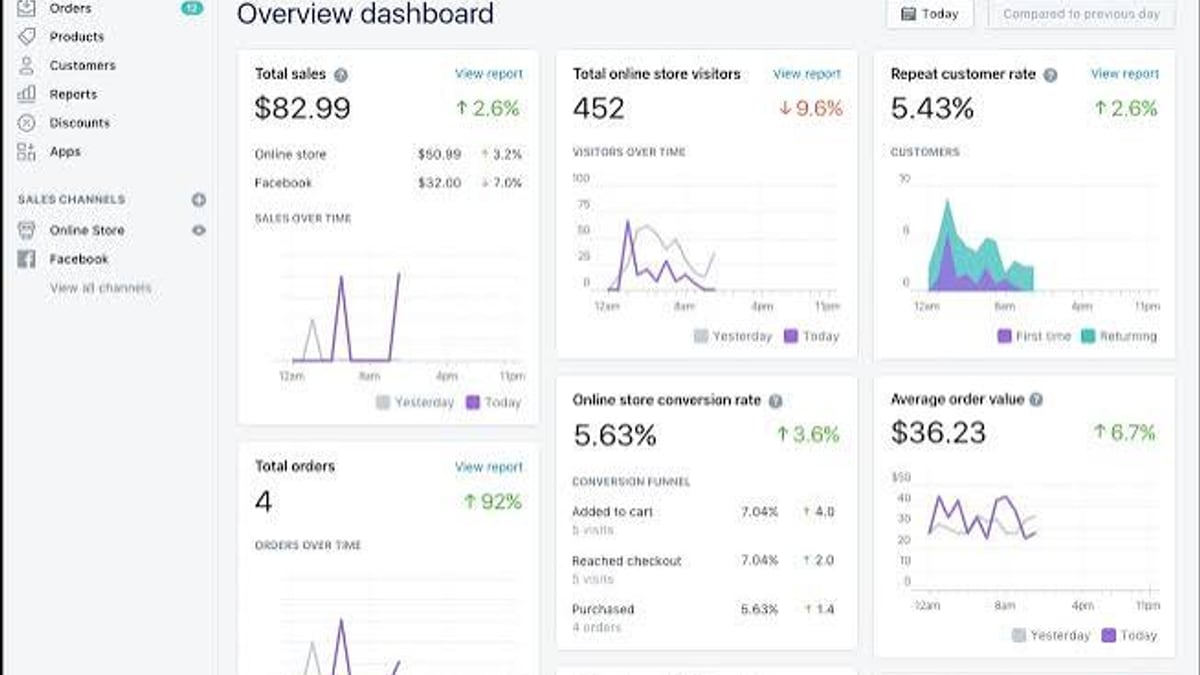
- Unified Analytics: Built-in reporting covers sales, customer behavior, marketing performance, and inventory forecasting.
Shopify Limitations
Shopify Review 2026: Pricing, Pros & Cons – Is It Worth It? - supporting product research image 4.
No platform is flawless. Here are the friction points that frequently surface in user feedback:
- Transaction Fees: Unless you use Shopify Payments, you’ll pay 2%, 1%, or 0.6% per transaction on Basic, Shopify, and Advanced plans respectively, on top of the credit card rate.
- App Dependency: Advanced features often require paid third-party apps, inflating your monthly total beyond the plan cost. Many small businesses end up spending $50–$200 extra on apps.
- Checkout Customization Lock: Full checkout flexibility is only available on Plus ($2,300+/month), frustrating growing brands.
- Customer Support Gaps: Real customer reviews on Trustpilot reveal repeated complaints about slow responses and unhelpful resolutions. Some users felt their stores were abruptly frozen without clear explanation. While Shopify offers 24/7 live chat, phone support is limited and quality varies.
- Content Limitations: Blogging and SEO tools are functional but basic. For instance, Shopify’s URL structure can be inflexible, and advanced content marketing often requires external tools. That’s where platforms like AdsPower become valuable—they help you plan and optimize blog content that attracts search traffic to your store, filling a gap that Shopify’s native CMS leaves open.
- Platform Lock-in: Migrating away from Shopify can be technically tedious, as your store’s data and design are tied to its proprietary system.
Many of these trade-offs were echoed in a Reddit discussion, where sellers acknowledged the platform’s speed and reliability but flagged mounting costs and frustration with support as ongoing pain points.
Shopify Pricing Breakdown
Shopify’s advertised monthly pricing is only part of the cost story. Here’s a transparent look:
| Plan | Monthly Price | Online Credit Card Rates | Transaction Fee (if not using Shopify Payments) | Key Features |
|---|---|---|---|---|
| Basic | $29 (first 3 months at $1) | 2.9% + 30¢ | 2% | 1 staff account, basic reports, abandoned cart recovery |
| Shopify | $79 | 2.7% + 30¢ | 1% | 5 staff accounts, professional reports, better shipping discounts |
| Advanced | $299 | 2.5% + 30¢ | 0.6% | 15 staff accounts, custom report builder, third-party calculated shipping rates |
| Plus | $2,300+ | Custom rates | 0.15% (negotiable) | Unlimited staff, headless commerce, advanced APIs, dedicated support |
Additional costs to budget for:
- Apps: Expect $20–$200 monthly for essential apps.
- Domain: Free
.myshopify.comsubdomain; custom domains start at ~$14/year. - POS: In-person transactions use a different fee structure (starting at 2.7% for Basic POS).
- Themes: Free themes are solid, but premium themes cost $200–$400 one-time.
To avoid the extra transaction fees, most merchants activate Shopify Payments, which is available in many but not all countries. If your country isn’t supported, factor in those percentage-based fees.
User Reviews and Community Feedback
Aggregating sentiments from Trustpilot and Reddit paints a realistic picture: Shopify is loved for its uptime, simplicity, and multichannel reach, but customer service is a recurring weakness. On Trustpilot, where Shopify holds a low rating, 967 reviews often mention account holds, delayed payouts, and support that feels automated rather than empathetic. Meanwhile, Reddit users praise the ecosystem but warn about creeping costs and the trap of app subscriptions.
These patterns suggest that if you’re a low-maintenance seller who rarely needs human help, Shopify will likely feel seamless. If you anticipate needing hands-on support, try reaching out to their support team during the trial to test responsiveness.
Shopify vs. Competitors
- WooCommerce: Open-source, more control, lower upfront cost—but you manage hosting, security, and updates yourself. Best for those with technical skills.
- BigCommerce: Similar all-in-one approach, no transaction fees, and more built-in features without apps. However, its annual revenue thresholds can trigger forced upgrades.
- Wix eCommerce: Even simpler and often cheaper, but lacks the app ecosystem and scalability of Shopify.
For businesses that need a reliable, scalable platform and are willing to pay for convenience, Shopify remains one of the top choices.
Setup and Ease of Use: How to Get Started
- Sign up for the free trial (no credit card required).
- Choose a theme or use the AI builder to generate a design.
- Add products—descriptions, images, inventory, and SEO fields.
- Configure payments (activate Shopify Payments to dodge extra fees) and set up shipping profiles.
- Register a domain or connect an existing one.
- Install apps for reviews, email marketing, or upsells.
- Test the checkout process thoroughly before going live.
The admin panel is clean, and most first-time store owners can have something presentable within a few hours. For deeper customization, you may need a developer’s touch, but the baseline is remarkably accessible.
After launching, your focus will shift to traffic and conversions. Here, a tool like AdsPower can help you craft SEO-rich product descriptions and blog articles that align with search intent, making sure customers find your store organically. Meanwhile, if you plan to analyze competitors’ pricing, our Bright Data review explains how a proxy-based scraping solution works—though always ensure you respect site terms. For a broader look at data extraction, our ranking of the top 10 web scraping API platforms is a useful starting point.
Decision Criteria: Is Shopify Right for You?
Choose Shopify if:
- You want a hosted, all-in-one solution without server headaches.
- Multichannel selling (Instagram, Shop app, Amazon) is part of your strategy.
- You’re comfortable paying monthly fees for convenience and scalability.
- You don’t need deep checkout customization right away.
Consider alternatives if:
- You run a content-first business and need a flexible CMS—Shopify’s blogging is basic.
- You’re extremely cost-sensitive and want to avoid transaction fees entirely.
- You require full source code control for unique integrations.
Related reading
- Top 10 AI CAPTCHA Solving APIs of 2026 - Compare the top 10 AI CAPTCHA solving APIs of 2026, ranked by speed, accuracy, pricing, and supported CAPTCHA types. Find the best tool for web scraping and automation.
- How to Use AdsPower with AirdropAlert for Multi-Account Airdrops - Learn to combine AdsPower anti-detect browser with AirdropAlert for secure multi-account airdrop farming. Step-by-step proxy setup, profile isolation, and workflow examples.
- AdsPower vs RoxyBrowser vs Indigo: Which Anti-Detect Browser Wins? - A detailed comparison of AdsPower, RoxyBrowser, and Indigo anti-detect browsers. Discover which excels in fingerprinting, automation, proxy integration, and team workflows.
FAQ
Does Shopify take a percentage of sales?
Yes, but by using Shopify Payments you avoid the extra transaction fee. You still pay the credit card processing rate (2.9% + 30¢ on Basic), which is standard for most payment processors.
Can I use my own domain?
Absolutely. You can purchase a domain through Shopify or connect one from a third-party registrar. All plans support custom domains.
Is Shopify good for small businesses?
Yes, the Basic plan gives small businesses essential tools—including abandoned cart recovery, coupon codes, and POS integration—without overwhelming them. The $1/month introductory offer makes it low-risk to try.
How do product reviews work?
After delivery, customers can leave star ratings and comments via the Shop app. Reviews are publicly displayed, and Shopify screens them against its review policies.
What support does Shopify offer?
24/7 live chat, email, and a community forum are standard. Phone support is available in select regions, but user reviews indicate wait times and quality can vary.
Final Verdict
Shopify remains one of the most complete commerce platforms in 2026—blending omnichannel reach, AI-driven tools, and an enormous app marketplace. Its limitations around cost structure and support are real, but for businesses that value simplicity and scalability, the trade-offs are often worth it. Before committing, take advantage of the $1/month trial, test the support yourself, and map out your expected third-party app expenses so you enter with eyes wide open.
If you’re ready to launch, complement Shopify’s robust selling engine with a content strategy powered by AdsPower, and you’ll be well-equipped to attract and convert customers from day one.