
Bright Data Review: Is It Right for Your Web Data Needs?
Take a Quick Look
Evidence-based Bright Data review—explore features, pricing, proxy types, ideal use cases, limitations, and user feedback to see if it fits your data collection workflow.
🔥 Limited-Time Offer! Save extra 10% off on your first monthly plan with code: Anitdetect10
Sign upBright Data Review: A Deep Dive Into the #1 Web Data Platform
Welcome to this AdsPower review of Bright Data. If you’re serious about web data collection—whether for SEO monitoring, e‑commerce price tracking, or training AI models—you’ve probably encountered Bright Data. It positions itself as the world’s most comprehensive web data platform, granting access to over 400 million IPs, ready‑to‑use datasets, and a suite of scraping APIs. But does the enterprise‑grade price tag justify the performance? In this hands‑on evaluation, we’ll break down what makes Bright Data stand out, where it stumbles, and who should actually invest in it.
Who Should Use Bright Data?
Bright Data Review: Is It Right for Your Web Data Needs? product interface and feature overview.
Bright Data isn’t a one‑size‑fits‑all tool. Its infrastructure is built for operations that demand scale, reliability, and compliance. Here’s where it shines:
- Large‑scale e‑commerce & travel companies that need to monitor millions of product pages, prices, or flight itineraries without being blocked.
- SEO and marketing agencies that rely on real‑time, geo‑targeted search engine results pages (SERPs) to track keyword rankings and competitor ads across countries.
- Data scientists & AI developers who require clean, structured datasets for model training or market research—and would rather buy ready‑made data than build scrapers from scratch.
- Compliance‑conscious enterprises (finance, cybersecurity, brand protection) that must source data ethically and prove IP provenance.
Small teams or solo developers who only need a few hundred requests a month may find the platform overwhelming and over budget. But for those operating at petabyte scale, Bright Data delivers a rare combination of breadth, control, and legal peace of mind.
Core Features Breakdown
Bright Data Review: Is It Right for Your Web Data Needs? - supporting product research image 3.
Residential, ISP, Datacenter & Mobile Proxies
Bright Data’s core is its proxy network, and the numbers are staggering: more than 400 million IPs from 195 countries. Residential proxies come from real devices (ethically sourced via opt‑in programs), giving you IPs that look like genuine users. ISP proxies provide static residential addresses that are even more trusted by websites, while datacenter and mobile proxies round out the portfolio.
- Residential: Rotating IPs ideal for bypassing geo‑restrictions and scraping without footprint patterns. The pool is deep enough that you can target specific cities or ASNs.
- ISP Proxies: Dedicated static residential IPs that never rotate. Perfect for accounts that require a consistent identity (e.g., social media management or sneaker copping). With over 1.3 million IPs, the US coverage is particularly strong.
- Datacenter Proxies: High‑speed, low‑cost options hosted in Bright Data’s own infrastructure. Best for un‑protected sites or high‑bandwidth, low‑risk scraping.
- Mobile Proxies: Rotating 3G/4G IPs that are extremely hard to detect, though pricier and meant for the most stringent anti‑bot environments.
All proxy types support automatic rotation, country/city/state targeting, and unlimited concurrent requests. You manage everything through the Control Panel or a RESTful API.
Web Unblocker – Automated CAPTCHA & Anti‑Bot Bypass
The Web Unblocker is Bright Data’s secret weapon. It dynamically handles browser fingerprinting, CAPTCHA solving, and header rotation so that you don’t need to orchestrate multiple tools. If you’ve ever integrated a standalone CAPTCHA‑solving API, you’ll appreciate the seamless automation here. For a side‑by‑side look at individual CAPTCHA services, check out our Top 10 AI CAPTCHA Solving APIs of 2026.
Scraper & SERP APIs
Rather than building custom crawlers, you can call Bright Data’s instant APIs:
- Web Scraper API: Send a URL and receive parsed, structured JSON. Built‑in JavaScript rendering handles modern single‑page apps, and you pay only for successfully delivered records.
- SERP API: Real‑time search results from Google, Bing, and DuckDuckGo with full geo‑location, device, and language targeting. Essential for rank tracking that must mirror what searchers actually see.
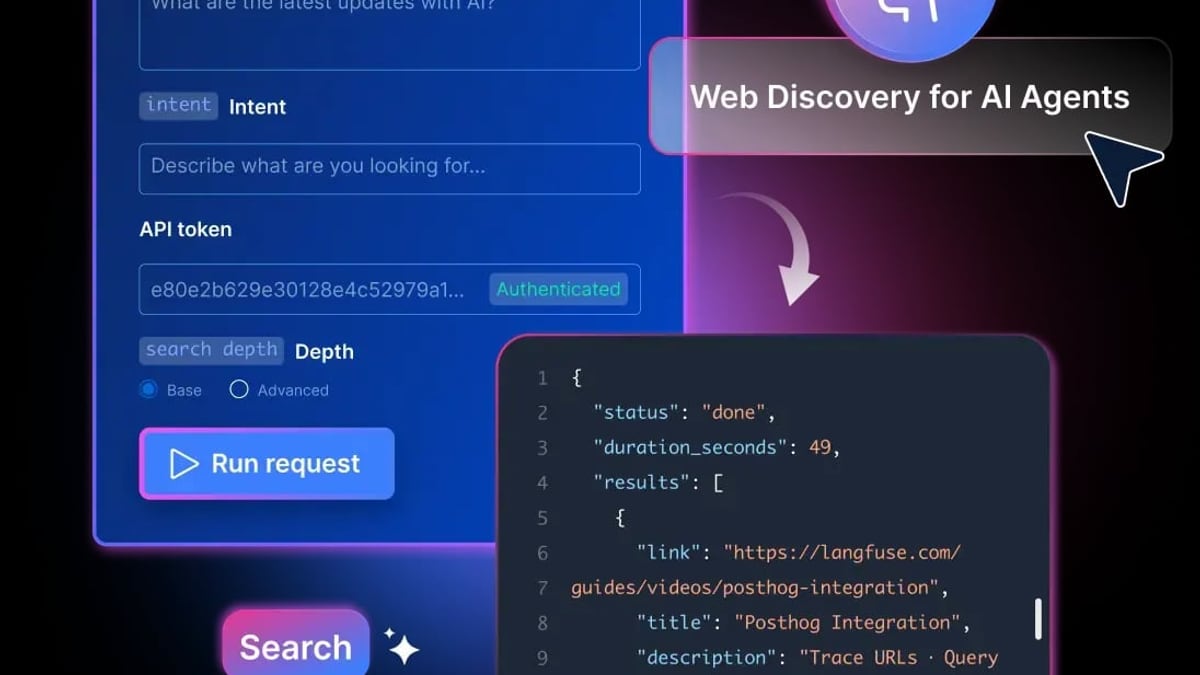
- Discovery API: Lets AI agents discover data sources on the public web, making it a forward‑looking tool for generative AI applications.
Pre‑built Datasets
A standout feature missing from many competitors: you can subscribe to regularly updated datasets covering Amazon products, LinkedIn profiles, Zillow listings, Yahoo Finance data, and more. Instead of burning GBs of bandwidth to scrape these sites over and over, you simply download cleansed CSV or JSON files. Pricing starts at a flat fee for a set number of records per month, which can be far more cost‑effective than building and maintaining your own pipelines.
Browser API
For interaction‑heavy sites, the Browser API gives you a full headless GUI browser that mimics human actions—scrolling, clicking, and waiting for AJAX loads. It’s like having a remote, programmable Chrome instance optimized for scraping. Bandwidth consumption is similar to mobile proxies, so it’s best used for critical, dynamic flows.
Pricing Signals – What You’ll Actually Pay
Bright Data Review: Is It Right for Your Web Data Needs? - supporting product research image 4.
Let’s be upfront: Bright Data is a premium platform. If your monthly scraping budget is under $500, you’ll need to lean heavily on the pay‑as‑you‑go options and keep volume tight.
Here’s a snapshot of entry‑level costs (with no long‑term commitment):
- Residential proxies: $4 per GB of traffic.
- ISP proxies: $1.8 per IP per month ($18 for 10 IPs).
- Datacenter proxies: $0.60 per GB (or $14/month for 10 IPs).
- Mobile proxies: $8 per GB.
- Web Unblocker API: $1.5 per 1,000 results.
- Web Scraper / SERP API: $1.5 per 1,000 records.
- Browser API: $8 per GB.
- Datasets: From $250/month for 100,000 records.
Monthly plans cut the per‑unit price by roughly 10‑30% and are invoiced at $499, $999, and $1,999 tiers for most products. All APIs operate on a pay‑only‑for‑successful‑delivery model, meaning you’re not charged for failed or blocked requests—a huge cost saver when targeting tough sites.
New users get a small trial credit, and registered companies can qualify for a 7‑day free trial. Still, the lack of an always‑free tier for hobbyists is a barrier for some.
Setup & Developer Experience
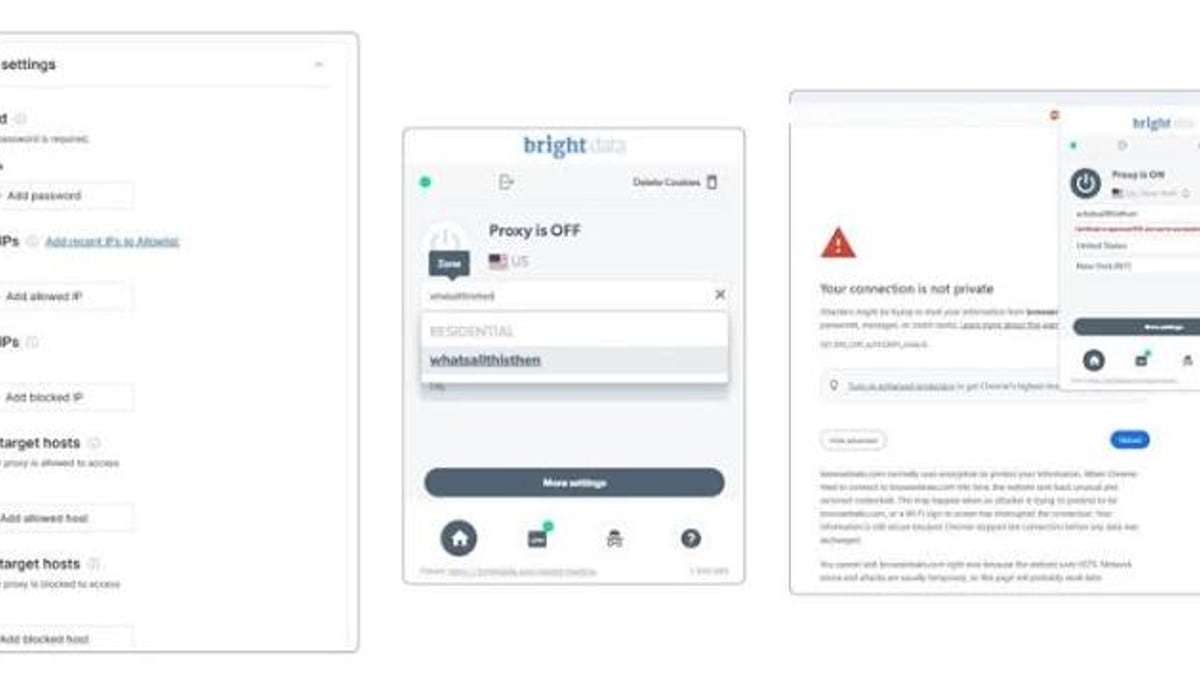
Creating an account requires a work email or login via Google/GitHub. After verification, you land in a polished dashboard that exposes every product in a unified interface. The learning curve is moderate: you’ll need to understand whitelisted IPs, zone configurations, and proxy sub‑domains, but the documentation and video guides are thorough.
Developers can interact with all services via a central API, while non‑technical users can use the browser extension or Copy & Paste JSON commands. We found the residential and SERP API integrations particularly quick—with just an API key and a target URL, you can pull live data in minutes.
Performance & Reliability
During test runs, residential proxies consistently routed requests through clean IPs with sub‑1‑second response times, even when rendering JavaScript‑heavy pages. The network’s size means you very rarely see the same IP twice, reducing the risk of bans. Web Unblocker lived up to its name on tricky e‑commerce and travel sites, solving CAPTCHAs and emulating real browser fingerprints without manual intervention.
TechRadar’s in‑depth evaluation found the ISP and residential proxies delivered “excellent speed and reliability,” a sentiment echoed by the 4.4‑star rating on Trustpilot from over 1,000 reviews. Large enterprise clients like Deloitte, McDonald’s, and NBC Universal underscore platform stability, but it’s the successful delivery rate on stubborn targets that marks the real difference from budget proxy providers.
Strengths & Limitations
Why Choose Bright Data
- Massive, ethically sourced IP pool spanning every continent.
- All‑in‑one platform: proxies, APIs, datasets, and the Web Unblocker reduce tool sprawl.
- Pay‑for‑success model reduces waste on blocked requests.
- Granular selection: fine‑tune by city, state, ISP, or carrier—critical for localized scraping.
- Enterprise‑grade compliance: clear audit trails and opt‑in IPs keep legal teams happy.
- Rich dataset marketplace that can replace in‑house scrapers entirely.
Beware of These Limitations
- High entry cost: plans start at $499/month for residential proxies; small-scale projects will feel the pinch.
- Limited free tier: only a modest testing credit unless you’re a verified company.
- Pricing complexity: with different billing units for every product (GB, IPs, records, compute hours), forecasting total cost requires careful math.
- Not for casual users: the toolset is overkill if you simply need a lightweight VPN or single‑threaded scraper.
Bright Data vs. Competitors: How to Decide
Bright Data Review: Is It Right for Your Web Data Needs? product interface and feature overview.
Bright Data competes with the likes of Oxylabs, Smartproxy, Zyte (formerly Scrapinghub), and Apify. Here’s a quick framework:
- If you need the absolute largest proxy pool and built‑in unblocking with zero additional tools → Bright Data edges out most rivals.
- If you want a simpler interface with lower starting prices → Smartproxy or Oxylabs might feel more accessible, though they can’t match the dataset and API breadth.
- If you’re an AI‑centric team that needs pre‑packaged, structured data for LLM training → Bright Data’s datasets and Discovery API are unique.
- If you’re an open‑source enthusiast who prefers DIY scrapers with residential proxy add‑ons → you might combine a proxy network with a scraper like Scrapy, but prepare to manage failures and CAPTCHAs yourself.
For a broader side‑by‑side comparison across leading tools, see our Top 10 Web Scraping API Platforms in 2026 guide, where we rank platforms by success rate, speed, and pricing flexibility.
What Real Users Say
Monitoring Trustpilot and community forums reveals strong satisfaction with uptime and data quality, though the price is a recurring theme. Professionals repeatedly praise the Trustpilot rating (4.4 stars from over 1,000 reviews) for responsive customer support and robust documentation. On Reddit, a seasoned scraper noted that after months of using Bright Data for SEO tracking, price monitoring, and competitor research, “most proxy services just don’t cut it when you need reliable, legal data collection.” The TechRadar review calls it “expensive, but worth it for high‑volume proxy users,” highlighting the extensive third‑party integrations and premium support.
Related reading
- How to Use AdsPower with AirdropAlert for Multi-Account Airdrops - Learn to combine AdsPower anti-detect browser with AirdropAlert for secure multi-account airdrop farming. Step-by-step proxy setup, profile isolation, and workflow examples.
- AdsPower vs RoxyBrowser vs Indigo: Which Anti-Detect Browser Wins? - A detailed comparison of AdsPower, RoxyBrowser, and Indigo anti-detect browsers. Discover which excels in fingerprinting, automation, proxy integration, and team workflows.
- FastestVPN Review 2026: Is This Budget VPN Safe & Fast? - We tested FastestVPN's speed, streaming, security, and privacy. Find out if this cheap VPN is trustworthy or if its low price hides serious flaws.
Sources and further reading
- Reviewing Bright Data after a few months using : r/tdmofficial - So, I've been scraping at scale recently. SEO tracking, price monitoring, competitor research - you name it, I've done it.
Frequently Asked Questions
Is Bright Data only for enterprises? No—individual developers and small teams can use pay‑as‑you‑go pricing, but the overall cost structure suits companies with consistent, medium‑to‑high data needs.
Are the proxies ethically sourced? Yes. Bright Data requires explicit consent from device owners who join the network in exchange for rewards, and it publishes a detailed compliance checklist.
Can I get a free trial? All new users receive a small credit. Registered businesses can apply for a 7‑day full‑feature trial.
Does Bright Data work with anti‑detect browsers? Absolutely. You can feed Bright Data proxies into tools like AdsPower or Octo Browser for multi‑account management, fingerprint isolation, or anonymous browsing workflows.
What’s the difference between Web Unblocker and a regular proxy? Web Unblocker is a smart layer on top of the proxy network that automatically rotates IPs, evades anti‑bot detection, and solves CAPTCHAs, whereas a standard proxy leaves those tasks to you.
Conclusion
Bright Data earns its reputation as the world’s leading web data platform through a combination of sheer scale, technical sophistication, and a compliance‑first philosophy. Its integrated ecosystem—proxies, APIs, datasets, and unblocking technology—removes nearly every obstacle from large‑scale web scraping. The trade‑off is a premium price point that makes sense when data is mission‑critical, but excludes hobbyists and cash‑strapped startups.
If your operation demands reliable, structured data from any public website and you can justify the investment, Bright Data is the benchmark against which other platforms are measured. For lighter needs, you might be better served by the alternatives highlighted in our Top 10 Web Scraping API Platforms in 2026 roundup. At AdsPower, we’ll keep testing the newest tools to help you navigate the ever‑evolving data landscape.