
Top 10 End-to-End Testing Frameworks in 2026 (Ranked)
Take a Quick Look
Compare the 10 best end-to-end testing frameworks of 2026. Playwright, Cypress, Selenium, and more ranked for browser support, speed, reliability, and AI features.
🔥 Limited-Time Offer! Save extra 10% off on your first monthly plan with code: Anitdetect10
Sign upTop 10 End-to-End Testing Frameworks for 2026, Ranked & Compared
End-to-end (E2E) testing has never been more critical. As applications grow more complex, simulating real user journeys across UI, APIs, and backend systems is the only way to verify that everything works together. But choosing the right framework can make or break your testing strategy. In this guide, we rank the top 10 E2E testing frameworks for 2026 based on real-world performance, community support, language flexibility, browser coverage, and ease of integration with modern CI pipelines.
At AdsPower, we benchmarked dozens of frameworks, analyzed GitHub activity, and tested their capabilities across multiple projects to give you an unbiased, up-to-date comparison. Whether you’re a QA engineer, a full-stack developer, or a team lead, you’ll find the right tool for your next project.
How We Scored Each Framework
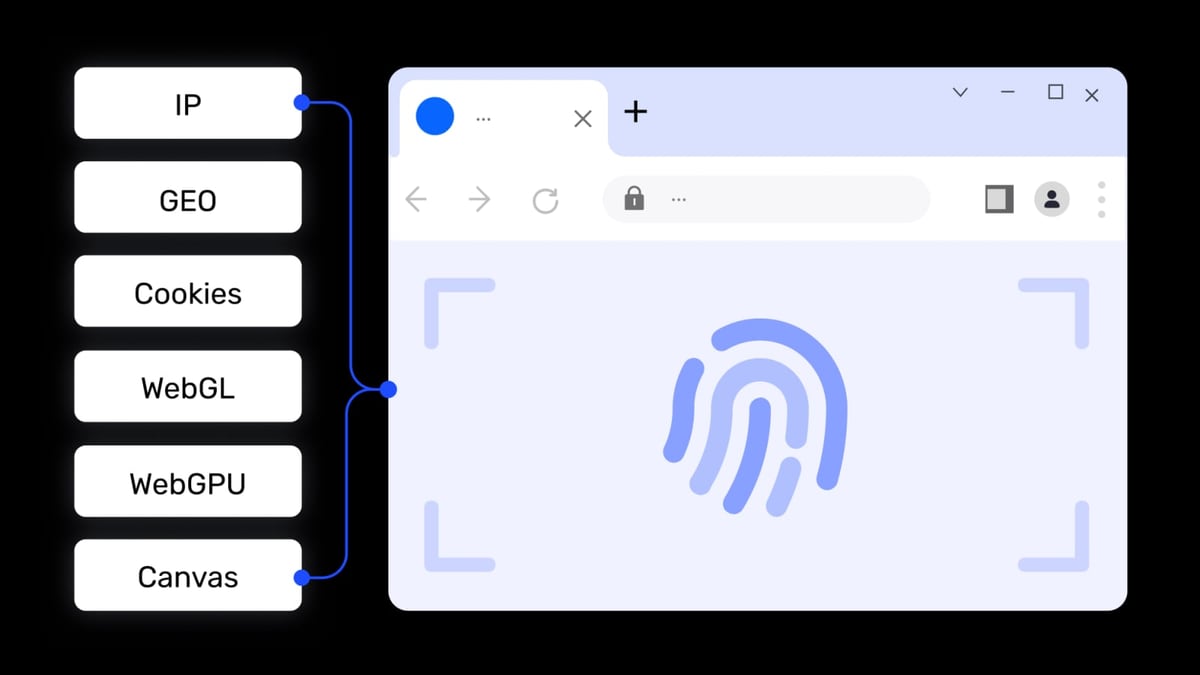
Top 10 End-to-End Testing Frameworks in 2026 (Ranked) product interface and feature overview.
Our ranking rests on six pillars that matter most in 2026:
- Cross‑browser & platform support – Chromium, Firefox, WebKit, and mobile browsers.
- Language and ecosystem flexibility – JavaScript, TypeScript, Python, Java, C#, and more.
- Auto‑waiting & flakiness resilience – Built-in mechanisms that eliminate brittle tests.
- Parallel execution & CI/CD readiness – Sharding, containerisation, and cloud‑native execution.
- Community & documentation – GitHub stars, active maintainers, and thorough guides.
- AI & next‑generation features – MCP servers, AI-assisted debugging, and self‑healing capabilities.
Note: We focused on developer‑centric frameworks—libraries that require code to write tests. Complete codeless platforms (like Virtuoso QA or testRigor) are a different category and were excluded to keep this list purely about actual frameworks.
The Top 10 E2E Testing Frameworks

Top 10 End-to-End Testing Frameworks in 2026 (Ranked) product interface and feature overview.
1. Playwright
Microsoft’s modern powerhouse for cross‑browser E2E testing.
Playwright tops the list for good reason. It offers a unified API to control Chromium, Firefox, and WebKit with a single codebase. Auto‑waiting and web‑first assertions mean you rarely need manual sleep calls or waitForSelector hacks. Each test runs in an isolated browser context, giving you true test isolation without tears. The framework also shines with built‑in parallelism and sharding for CI, a powerful Trace Viewer, and a CLI for AI agents—including an MCP server that lets tools like VS Code and Claude Desktop interact with the browser.
Evidence: Over 70k GitHub stars, multi‑language support (Node.js, Python, Java, .NET), and a rapidly growing community. Microsoft’s commitment ensures continuous innovation, and the Playwright 2026 review from our team dives deeper into its AI readiness.
Best for: Teams that need reliable, fast, and programmable cross‑browser testing with multi‑language freedom.
Learn more: Playwright documentation
2. Cypress
The developer‑friendly framework that runs directly in the browser.
Cypress brought a fresh approach to E2E testing with its real‑time Test Runner, automatic waiting, and easy debugging. It executes tests in the same run‑loop as your application, giving you instant feedback. The chainable API and excellent documentation make it a favourite for front‑end developers working with React, Angular, or Vue.
Evidence: Over 47k GitHub stars, 1,500+ contributors, and a mature paid Dashboard service for CI. However, its inability to test multiple tabs natively and its JavaScript‑only language support keep it just behind Playwright.
Best for: Single‑page web applications where JavaScript is the team’s primary language and a polished developer experience is a priority.
Learn more: Cypress docs
3. Selenium
The veteran that still powers the web.
Selenium WebDriver remains the most flexible and battle‑tested automation tool. It works with virtually every browser and language (Java, Python, C#, Ruby, JavaScript), and the Selenium Grid allows distributed execution at scale. While it lacks the modern auto‑wait features of newer frameworks, its vast plugin ecosystem and W3C standard compliance ensure it stays relevant.
Evidence: Used by thousands of enterprises, 32k GitHub stars, and continuous updates with Selenium 4 improving relative locators and window management. It’s still the go‑to when you need the broadest compatibility.
Best for: Large organisations with heterogeneous tech stacks and those running tests across many legacy and modern browsers.
Learn more: SeleniumHQ
4. WebdriverIO
Next‑gen Selenium with a modern developer experience.
WebdriverIO builds on top of the WebDriver protocol (and now Chrome DevTools) to deliver a feature‑rich framework with a familiar Node.js interface. It offers custom commands, extensive reporters, and integrated services for seamless CI integration. Its large community and official support for Appium also make mobile testing straightforward.
Evidence: Over 8k GitHub stars, 200+ community plugins, and the ability to switch between WebDriver and DevTools protocols for speed.
Best for: JavaScript/TypeScript teams that want the flexibility of Selenium but with a modern, opinionated structure.
Learn more: WebdriverIO docs
5. TestCafe
Server‑side Node.js testing without browser plugins.
TestCafe’s unique approach injects the testing script into the page via a proxy, which means no browser extensions are needed. It works on any modern browser, including mobile Safari and Android browsers, and handles parallel execution out of the box. The framework also includes a built‑in visual test recorder.
Evidence: 9k+ GitHub stars, free open‑source core, and strong stability for projects that avoid WebDriver complexity. It can be slightly slower than Playwright but is exceptionally easy to set up.
Best for: Teams that prioritise zero‑config setup and need to test across many browsers quickly.
Learn more: TestCafe docs
6. Maestro
YAML‑driven simplicity for mobile and web.
Maestro takes a declarative YAML approach to E2E testing, making it incredibly accessible for both developers and non‑technical testers. It handles flakiness automatically and supports native Android (Views, Jetpack Compose), iOS (UIKit, SwiftUI), React Native, Flutter, and web apps. Its cloud execution platform scales effortlessly.
Evidence: Over 7k GitHub stars, free open‑source CLI, and a growing cloud offering. While younger than the top three, it’s already powering testing at companies like Udemy and Glovo.
Best for: Mobile‑first projects and teams where simplicity and cross‑platform coverage trump language choice.
Learn more: Maestro docs
7. Nightwatch.js
Full‑featured Node.js testing, now with visual regression.
Nightwatch has evolved from a simple Selenium wrapper to a complete testing solution with components testing, mobile app testing, and built‑in visual assertions. Its declarative API and integrated test runner make it a solid choice for teams migrating away from old Selenium setups.
Evidence: 11k+ GitHub stars, dedicated community forum, and a cloud service (Nightwatch Cloud). It runs on both WebDriver and Chrome DevTools protocols.
Best for: Engineers who want an all‑in‑one framework with minimal external dependencies and a familiar Node.js stack.
Learn more: Nightwatch.js docs
8. Puppeteer
Google’s headless Chrome automation, extended for testing.
Puppeteer started as a browser automation library but can be used as a capable E2E testing tool when combined with a test runner like Jest or Mocha. It gives you fine‑grained control over Chrome/Chromium instances, including network interception, performance metrics, and PDF generation.
Evidence: 88k+ GitHub stars, extensive API, and it’s the foundation for projects like Lighthouse. However, its limitation to Chromium‑based browsers and lack of a built‑in assertion library keep it lower in this ranking.
Best for: Projects that only need Chromium coverage and want to leverage Chrome DevTools Protocol features directly.
Learn more: Puppeteer docs
9. Appium
The mobile E2E testing standard.
Appium remains the de facto tool for automating native, hybrid, and mobile web apps on iOS and Android. It uses the WebDriver protocol and supports multiple languages. While it doesn’t directly address desktop web E2E testing, it’s often paired with frameworks like Selenium or Playwright for complete cross‑platform coverage.
Evidence: 19k+ GitHub stars, backed by the JS Foundation, and extensive cloud device farm integrations (BrowserStack, Sauce Labs).
Best for: Teams that need a dedicated mobile automation framework that works across both platforms without code changes.
Learn more: Appium docs
10. Robot Framework
Keyword‑driven acceptance testing for the whole team.
Robot Framework uses a human‑readable, tabular syntax to define test cases. Its extensive standard libraries and the SeleniumLibrary plugin make it a viable E2E testing solution for web apps. It’s particularly popular in acceptance‑test‑driven development (ATDD) and behavior‑driven development (BDD) environments.
Evidence: 10k+ GitHub stars, large corporate adoption (Nokia, Cisco), and a rich ecosystem of libraries for databases, APIs, and SSH.
Best for: Projects where business analysts and QA collaborate on test cases and readability is paramount.
Learn more: Robot Framework docs
Quick Comparison Table

Top 10 End-to-End Testing Frameworks in 2026 (Ranked) product interface and feature overview.
| Framework | Browser Support | Languages | Auto‑wait | CI Parallelism | Mobile Support | AI Features | License |
|---|---|---|---|---|---|---|---|
| Playwright | Chromium, Firefox, WebKit | JS/TS, Python, Java, .NET | ✅ | ✅ (built-in) | Mobile web | MCP server, agents | Free (Apache 2.0) |
| Cypress | Chrome, Firefox, Edge, Electron | JavaScript/TypeScript only | ✅ | ✅ (via Dashboard) | No native mobile | No | Freemium |
| Selenium | All major browsers | Java, Python, C#, Ruby, JS, Kotlin | ❌ | ✅ (Grid) | Via Appium | No | Free (Apache 2.0) |
| WebdriverIO | All via WebDriver/DevTools | JavaScript/TypeScript | ❌ | ✅ (via services) | Via Appium | No | Free (MIT) |
| TestCafe | All modern browsers (headless/headful) | JavaScript/TypeScript | ✅ | ✅ | Limited to mobile web | No | Free (MIT) |
| Maestro | Android, iOS, Web | YAML (declarative) | ✅ | ✅ (cloud) | Full native | No | Free (Apache 2.0) |
| Nightwatch.js | Chrome, Firefox, Edge, Safari | JavaScript/TypeScript | ❌ | ✅ | Via Appium | No | Free (MIT) |
| Puppeteer | Chromium‑based only | JavaScript/TypeScript | ❌ | ❌ (manual) | No | No | Free (Apache 2.0) |
| Appium | Mobile browsers/native apps | Java, Python, JS, C#, Ruby | ❌ | ❌ (requires Grid) | Full native/hybrid | No | Free (Apache 2.0) |
| Robot Framework | All via SeleniumLibrary | Keyword‑driven, Python extensible | ❌ | ✅ (via integrations) | Via AppiumLibrary | No | Free (Apache 2.0) |
When E2E Testing Requires Anti‑Detect Environments
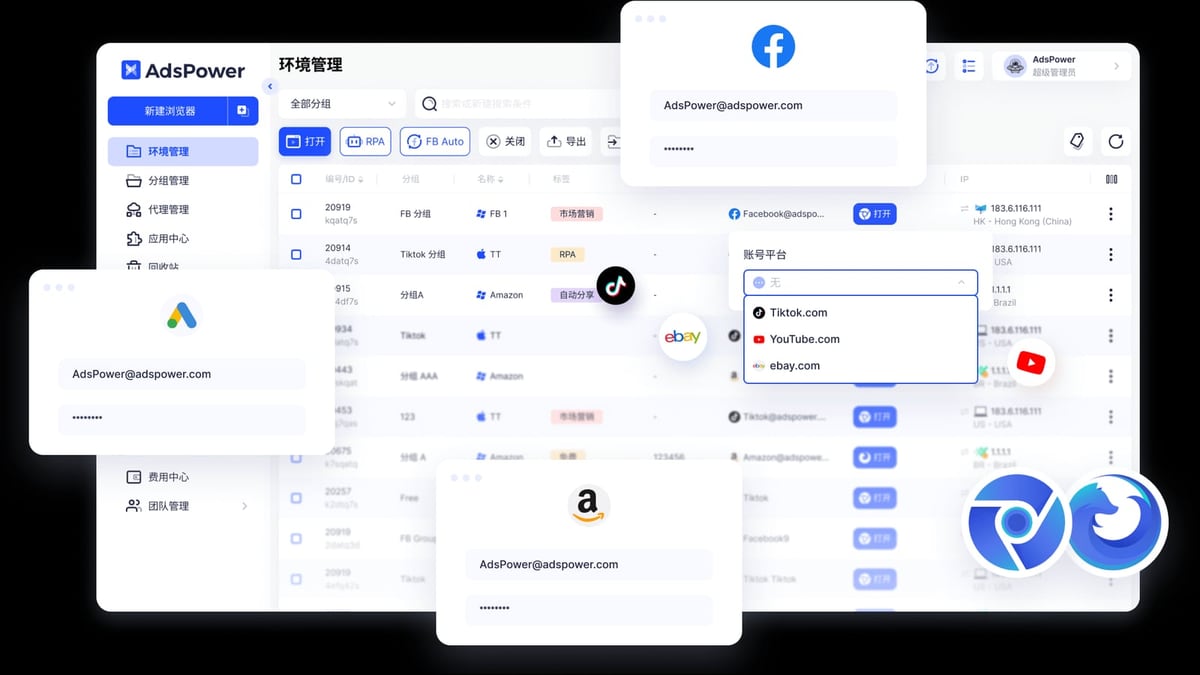
Top 10 End-to-End Testing Frameworks in 2026 (Ranked) product interface and feature overview.
Not every E2E scenario runs on a vanilla browser. Teams testing multi‑account platforms, social media automations, or web scraping pipelines often need to verify that their workflows function inside isolated, fingerprint‑masked environments. This is where an anti‑detect browser like AdsPower becomes a complementary tool.
AdsPower creates isolated browser profiles with unique digital fingerprints, and its local API works with Playwright and Selenium. So you can script your E2E test to launch an AdsPower profile, execute the user journey, and tear down the environment—all without risking account bans. We’ve documented the integration with WebRTC and DNS leak checks in our guide to using AdsPower with Whoer.net, and our head‑to‑head comparison of AdsPower, Multilogin, and BitBrowser helps you pick the right anti‑detect companion for your test stack.
Related reading
- How to Use AdsPower with Whoer.net for Leak-Free Multi-Accounting - Step-by-step guide to combining AdsPower fingerprint browser with Whoer.net to detect WebRTC, DNS, and IP leaks, verify browser fingerprints, and secure your multi-account management.
- AdsPower vs Multilogin vs BitBrowser: 2026 In-Depth Comparison - Which anti-detect browser is right for multi-account management? We compare AdsPower, Multilogin, and BitBrowser on pricing, fingerprints, mobile support, automation, and security.
- Playwright Review 2026: Features, Strengths & Limitations - Evidence-based Playwright review covering speed, cross-browser testing, auto-waiting, AI integration, limitations, and decision criteria for QA teams.
Sources and further reading
- 15 Best End-to-End Testing Tools and Frameworks in 2026 - Compare the best end-to-end testing tools for 2026. See which E2E platforms and frameworks deliver faster coverage, lower maintenance, and better ROI.
- Top 5 E2E Testing Frameworks in 2026: Ranked & Compared - Compare the top 5 E2E testing frameworks in 2026 — Maestro, Cypress, Playwright, Selenium & Appium. Ranked by platform support, ease of use, and pricing to help you choose the right one.
- Top 10 Test Automation Frameworks in 2026 Compared - Explore the top 10 test automation frameworks of 2026, their key features & use cases to pick a scalable framework for reliable, maintainable automation.
Frequently Asked Questions
Which is the best end‑to‑end testing framework in 2026? Playwright leads the pack for its cross‑browser support, auto‑waiting, language flexibility, and AI readiness. Cypress remains a close second for JavaScript‑only teams, while Selenium still dominates legacy enterprises.
Is Playwright better than Cypress? For most new projects, yes. Playwright does everything Cypress does while adding support for multiple browsers (including Safari) and multiple languages. Cypress still wins on debugging speed and a more mature Dashboard service.
Can I use these frameworks for mobile E2E testing? Yes—Maestro and Appium are dedicated mobile frameworks. Playwright can emulate mobile browsers, and WebdriverIO/Appium pairings cover native mobile apps.
What’s the difference between a framework and a codeless platform? Frameworks require coding skills (JavaScript, Python, etc.) and give you full control over test logic. Codeless platforms use visual interfaces or natural language and are typically faster to adopt but less flexible for complex scenarios.
Do I need to pay for these frameworks? All ten listed frameworks are open‑source and free to use. Some offer paid cloud services (Cypress Dashboard, Maestro Cloud, Nightwatch Cloud) for advanced reporting and parallel execution.
Choosing the Right Framework for Your Team
Your final decision should be driven by your application’s tech stack, your team’s expertise, and the browsers you must support. At AdsPower, we’ve seen that Playwright fits the sweet spot for most modern web projects, while Maestro and Appium remain essential for mobile‑first teams. If you’re maintaining a large legacy suite, Selenium or WebdriverIO might be the practical path forward.
No matter which framework you choose, the 2026 landscape proves that reliability and speed come built‑in—no more flaky tests, no more endless manual waits. The best time to adopt these tools is now.