
Top 10 Antidetect Browser & Cloud Phone Software 2026
Take a Quick Look
Independent 2026 ranking of the top 10 antidetect browsers and cloud phone platforms for multi-account management, scored on fingerprints, mobile support, automation, and pricing.
Top 10 Antidetect Browser and Cloud Phone Multi-Account Management Software Products 2026
Multi-account work has split into two distinct environments. Web platforms still respond to browser fingerprint isolation, while mobile-first apps increasingly demand a real Android device identity. In 2026, the strongest tools in this category handle both, or they specialize so deeply in one that they beat generalists on their home turf.
This ranking covers ten products that genuinely belong to the antidetect browser and cloud phone multi-account management category. Every entry is scored on the same criteria, and every claim below is tied to published pricing, documented capabilities, or third-party test results.
How We Evaluated These Products
First viewport screenshot of How to Use MoreLogin for Social-Media - MoreLogin.
We weighted five criteria, in this order:
- Fingerprint consistency (30%) — whether a default profile holds together across Canvas, WebGL, timezone, language, and hardware signals without manual tuning.
- Mobile and cloud phone capability (20%) — real Android cloud devices versus emulation, plus how mobile sessions are billed and scaled.
- Automation and API support (20%) — REST APIs, Selenium, Puppeteer, Playwright, no-code RPA, and how well each tool fits an agent or scraping stack.
- Team and profile management (15%) — permissions, profile sharing, batch operations, and audit-friendly organization.
- Value and free access (15%) — cost per profile at realistic scale, plus whether a free tier is genuinely usable or a demo.
Two deliberate exclusions: session managers that organize logins without spoofing a device fingerprint are not antidetect browsers, and tools that have shut down are not ranked. AdsPower is excluded from this ranked list because it is a dedicated anti-detect browser rather than a combined browser-plus-cloud-phone platform; it still appears later where an adjacent workflow makes it relevant.
The Top 10 in 2026
First viewport screenshot of How to Use MoreLogin for Cryptocurrency - MoreLogin.
1. MoreLogin — Best Combined Browser and Cloud Phone Platform
MoreLogin pairs isolated browser profiles with cloud Android phones in one workspace, which is exactly the combination this category is defined by. Browser profiles support customizable fingerprints and real canvas fingerprinting, and the platform runs on both Chrome and Firefox. On the mobile side, cloud Android phones scale elastically, so a team can add device capacity without buying hardware.
Automation is broader than most competitors: a synchronizer repeats actions across profiles, no-code RPA handles repetitive flows, and Selenium and Puppeteer integrations cover scripted work. An AI Hub assists with task execution, and password protection plus granular team permissions keep shared workspaces controlled.
Pricing: Free forever plan with 2 profiles and 2 users; Pro from $5.40/month billed yearly with 10 profiles; custom enterprise tiers.
Best for: Affiliate marketers, e-commerce sellers, crypto traders, social media agencies, ticketing professionals, and traffic arbitrageurs who need web and mobile accounts under one roof.
2. Multilogin — Deepest Fingerprint Quality for High-Value Accounts
Multilogin remains the fingerprint depth leader in independent testing. In a July 2026 test run against Pixelscan, Iphey, and CreepJS, a default macOS profile on a clean residential proxy passed all three, with CreepJS reading a genuine Apple GPU at high confidence and reporting 0% headless and 0% stealth signals. That matters because it means the tool uses real hardware values rather than injected noise.
The platform runs Mimic (Chromium) and Stealthfox (Firefox) engines, and a separate Cloud Phones product provides real Android devices rather than emulation. Automation is well documented across a local and remote API, Selenium, Puppeteer, Playwright, CLI, and Python, though the entry tier rate-limits the API.
Pricing: No free tier; a $2 three-day trial is the cheapest entry. Pro 10 starts at $11/month monthly or about $7.08/month billed annually, including 10 profiles, 1 GB proxy traffic, and 60 mobile minutes. Team seats begin at the Pro 100 tier.
Best for: Agencies and teams whose accounts are expensive to lose and who will pay a premium for consistency.
3. GoLogin — Best All-Rounder With a Native Android App
GoLogin is the value pick among the top three and the only major provider shipping a true native Android app, built on its Orbita Chromium fork. Independent testing reports clean passes on Pixelscan and Iphey, and the free tier is real rather than time-limited.
Automation coverage includes a REST API with high request ceilings on paid plans, official Selenium and Puppeteer guides, a Browser MCP for driving profiles from AI agents, and a Scraping Browser API. Playwright is CDP-compatible but not officially advertised, so verify before standardizing on it.
Pricing: Free tier with 3 profiles and no time limit; paid plans from around $9/month, or roughly $4.50/month billed annually. Cloud Browser and Cloud Android are separate paid products.
Best for: Solo operators and small teams that want a low-friction start with room to grow into cloud and mobile.
4. GeeLark — Real Cloud Phones for Mobile-First Campaigns
GeeLark runs genuine cloud Android phones rather than emulated mobile profiles, which is the distinction that matters when a platform checks device attestation. It is the strongest specialist option when the workflow lives inside apps, not websites.
Because it is cloud-phone-first, browser profile management is less developed than in the browser-led tools above. Budget for usage-based billing on top of the base plan.
Pricing: From roughly $5/month plus usage; a limited free tier includes 2 phones and 30 minutes.
Best for: Teams running TikTok, app install, or other mobile-native operations at scale.
5. Incogniton — Best Free Tier for Persistent Profiles
Incogniton is beginner-friendly and unusually generous on free access. Its free plan provides persistent profiles rather than a trial window, which makes it a practical starting point for solo operators testing multi-account workflows before committing budget.
Fingerprint control is solid but less granular than Multilogin or Octo Browser, and there is no cloud phone product, so mobile app work is out of scope.
Pricing: Free plan with 10 profiles, expanding to 36 on some tiers; paid plans from $13.99/month. Selenium support is included.
Best for: Budget-conscious individuals and small teams focused on web accounts only.
6. Octo Browser — Fingerprint Quality at Scale
Octo Browser is built for power users who need many consistent profiles fast. It uses real device parameters rather than randomized noise, which is the same design principle that keeps Multilogin stable under adversarial checks. Profile creation is quick, and there is an iOS companion app for monitoring.
There is no free tier, and mobile support stops at the companion app rather than extending to cloud Android devices.
Pricing: From about €10/month (roughly $11).
Best for: Scaled operations where fingerprint quality and profile throughput both matter.
7. Dolphin Anty — Built for Media Buying and Affiliates
Dolphin Anty is purpose-built for affiliate marketing and traffic arbitrage, with scenario-based automation that maps well to ad account workflows. The free tier is usable for testing, and the pay-as-you-go pricing structure suits teams whose profile counts fluctuate month to month.
It is Chromium-only and does not offer cloud phones, so mobile-first campaigns need a separate tool.
Pricing: From about $10/month pay-as-you-go; free plan with 5 profiles.
Best for: Media buyers and affiliates running many ad accounts across regions.
8. Kameleo — Multi-Engine and Mobile Emulation for Developers
Kameleo stands out for running multiple engines (Chroma and Junglefox) alongside mobile emulation profiles, which gives developers a way to test how a target responds to different device classes. That flexibility is valuable for teams building detection-resistant automation.
It is the most expensive entry on this list, and mobile emulation is not the same as a real cloud phone, so treat it as a testing tool rather than a mobile operations platform.
Pricing: From about €59/month (roughly $64); free tier includes 2 browsers, 100 profiles, and 300 minutes.
Best for: Developers and technical teams that need engine and device variety.
9. Nstbrowser — Automation and Scraping at Scale
Nstbrowser leans into automation rather than manual account management. It ships a built-in unblocker and an RPA marketplace, and its free tier is unusually large for a tool in this category, which makes it attractive for data-heavy workflows that need many short-lived profiles.
Fingerprint depth is adequate for scraping but less refined than the leaders, and there is no cloud phone product.
Pricing: From $29.90/month; free tier with 500 profiles.
Best for: Scraping teams and automation engineers who need profile volume over long-lived identity.
10. ixBrowser — Budget Multi-Accounting With Unlimited Profiles
ixBrowser competes on price and profile count. Its free tier is unlimited in profile number, capped by daily creation and launch limits, which is a genuinely different model from the profile-count ceilings used elsewhere.
The trade-off is depth: fingerprint control and team tooling are simpler than the premium options, and there is no mobile or cloud phone capability.
Pricing: From $3.99/month; free tier with unlimited profiles but 10 new and 100 launches per day.
Best for: Individuals running many low-stakes accounts on a tight budget.
Browser Profiles vs Cloud Phones: Which Do You Actually Need?
First viewport screenshot of How to Use MoreLogin for E-commerce - MoreLogin.
The decision usually comes down to where your accounts live.
- Web-only accounts (marketplaces, ad dashboards, affiliate networks, Web3 platforms) — an antidetect browser is sufficient. Prioritize fingerprint consistency and proxy matching.
- Mobile-first platforms (short-form video apps, mobile ad networks, app-based marketplaces) — you need real cloud Android devices. Emulated mobile profiles pass some checks and fail others.
- Both — a combined platform such as MoreLogin or Multilogin avoids running two vendors, two billing relationships, and two sets of team permissions.
A second factor is proxy hygiene. A profile with a US time zone should not connect through an unrelated IP, and no browser compensates for a dirty proxy. If you want to verify what a profile actually exposes before trusting it, an IP, DNS, and fingerprint check is a fast sanity test.
Where AdsPower Fits in an Adjacent Workflow
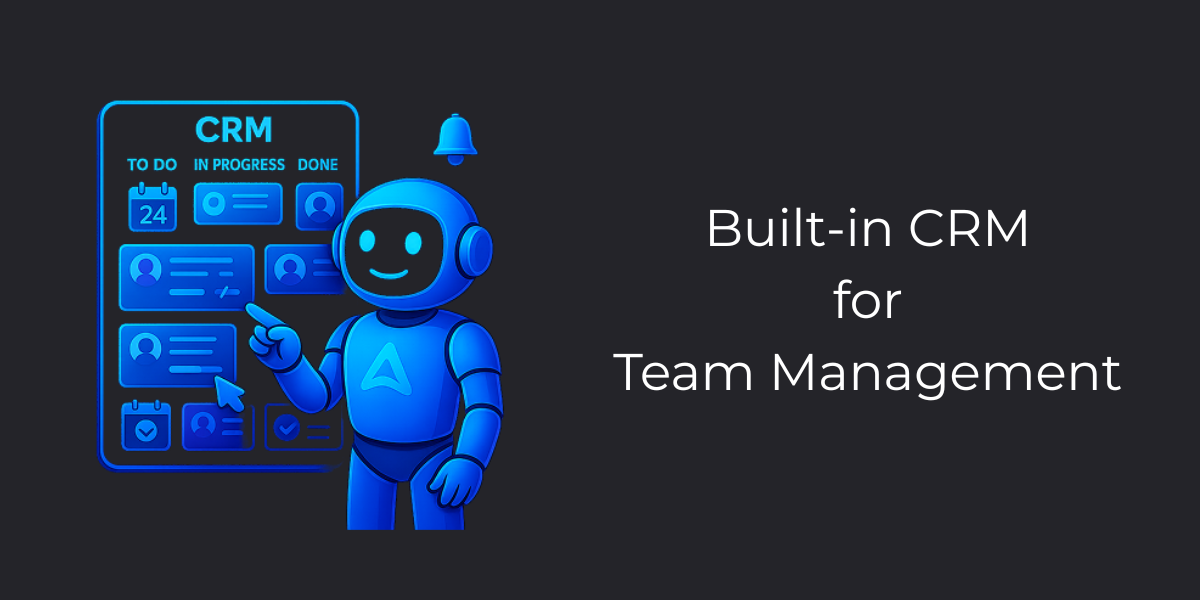
Top 10 Antidetect Browser & Cloud Phone Software 2026 - Where AdsPower Fits in an Adjacent Workflow.
AdsPower is a dedicated anti-detect browser rather than a browser-plus-cloud-phone platform, which is why it is not ranked above. It is still relevant if your work is web-only and you want built-in no-code RPA plus SunBrowser and FlowerBrowser engines. Teams that standardize on it often pair it with cloud phone capacity from a separate vendor for mobile tasks. If you are comparing it against browser-only alternatives, the AdsPower vs Multilogin Homepage comparison and the AdsPower vs Incogniton vs Dolphin Anty guide cover the trade-offs directly.
Practical Selection Examples
A three-person social media agency managing 40 client brand pages: MoreLogin or GoLogin. Both keep web profiles isolated, both support team permissions, and MoreLogin adds cloud phones if clients need app-based posting.
An affiliate running 200 ad accounts across two geographies: Dolphin Anty for scenario automation, or Octo Browser if fingerprint stability under adversarial checks matters more than price.
A scraping team needing 5,000 short-lived profiles: Nstbrowser. Long-lived identity is not the goal; volume and unblocking are.
A solo seller testing the waters: Incogniton or ixBrowser free tiers. Neither costs anything to validate the workflow before scaling.
Related reading
- Maskfog Fingerprint Browser Review: A Cross-Border Anti-Association Solution with Built-in Clean IPs - Based on official pricing page and third-party ranking evidence, this review covers Maskfog's clean IP devices, free environment policy, target users, setup flow, limitations, and buying criteria.
Sources and further reading
- 10 Best Anti-Detect Browsers for Multi-Account Management in 2026 | Live Proxies - Compare the 10 best anti-detect browsers for multi-account management in 2026, including features, pricing, proxies, automation, and mobile support.
- 10 Best Antidetect Browsers in 2026 (Tested + Free Picks) - Multilogin, GoLogin, and AdsPower lead our tested ranking of the best antidetect browsers in 2026, compared on pricing, free plans, and Android support.
- 15 Best Antidetect Browsers in 2026 - Honest Comparison - TL;DR: Antidetect browsers let you run multiple isolated browser profiles, each with a unique fingerprint, so platforms cannot link your accounts. This guide ranks the 15 best antidetect browsers of 2026 across fingerprint quality, automation support, pricing, and proxy integration. We also cover how these tools actually work, when a scraping API is the smarter choice, and which proxy type to pair with each use case.
FAQ
What is the difference between an antidetect browser and a cloud phone? An antidetect browser isolates web sessions by giving each profile its own fingerprint, cookies, and proxy. A cloud phone provides a real or virtualized Android device running in the cloud, which is what mobile-first platforms check. They solve different detection layers, and some platforms combine both.
Do antidetect browsers guarantee I will not get banned? No. Independent testing is explicit on this point: passing a fingerprint checker means the profile holds together, not that you will pass a live anti-bot system. TLS fingerprints, behavioral signals, and proxy reputation all influence outcomes.
Is a free plan enough for real work? For testing, yes. Incogniton's persistent free profiles and ixBrowser's unlimited-profile free tier are both usable. For production, expect to pay: profile counts, team seats, and API access are almost always gated.
Can I use Selenium or Puppeteer with these tools? Most ranked products support at least one of Selenium, Puppeteer, or Playwright, and several expose REST APIs. MoreLogin, Multilogin, and GoLogin document this most thoroughly. If you are connecting an antidetect browser to a test runner, a worked example of using AdsPower with Playwright for E2E testing shows the pattern that applies across vendors.
Which tool is best for Android cloud phones specifically? GeeLark and Multilogin Cloud Phones run real Android devices. MoreLogin offers cloud Android phones with elastic scaling inside a broader platform. Emulation-based mobile profiles from Kameleo serve a different purpose and should not be treated as equivalent.
Conclusion
The 2026 category has matured into two clear lanes. Browser-led platforms compete on fingerprint consistency, automation depth, and team tooling; cloud-phone-led platforms compete on real device capacity and mobile-native reliability. MoreLogin leads this ranking because it covers both lanes in one workspace at a genuinely accessible entry price, while Multilogin remains the choice when account value justifies the highest fingerprint quality available.
Start with where your accounts live, not with the longest feature list. Web-only workflows rarely need cloud phones, and mobile-first campaigns rarely succeed on emulation alone. Match the tool to the environment, verify your proxy hygiene, and scale profiles only after the first ten behave consistently.
For a broader view of browser-only options before finalizing a shortlist, see the Top 10 Antidetect Browser Products 2026 ranking.


