
How to Use AdsPower with Google Analytics (Step-by-Step)
Take a Quick Look
Learn to pair AdsPower fingerprint browser with Google Analytics for secure multi-account tracking. Step-by-step setup, practical examples, and solving fingerprint interference.
🔥 Limited-Time Offer! Save extra 10% off on your first monthly plan with code: Anitdetect10
Sign upHow to Use AdsPower with Google Analytics (Step-by-Step)
Managing multiple websites, client accounts, or regional storefronts often means juggling just as many Google Analytics properties. The challenge? Google’s tracking and account security systems can link sessions back to the same browser fingerprint, risking data inaccuracies, account restrictions, or even flagging for suspicious activity. AdsPower’s anti-detect fingerprint browser solves this by giving each Google Analytics login its own isolated digital identity—think separate devices for every property, all on one computer.
In this guide, you’ll learn exactly how to combine AdsPower with Google Analytics to keep your tracking clean, your accounts secure, and your workflow efficient. We’ll walk through step-by-step setup, practical multi-account scenarios, and the underlying problems this pairing eliminates.
Why Combine AdsPower with Google Analytics?
How to Use AdsPower with Google Analytics (Step-by-Step) product interface and feature overview.
The Fingerprint Interference Problem
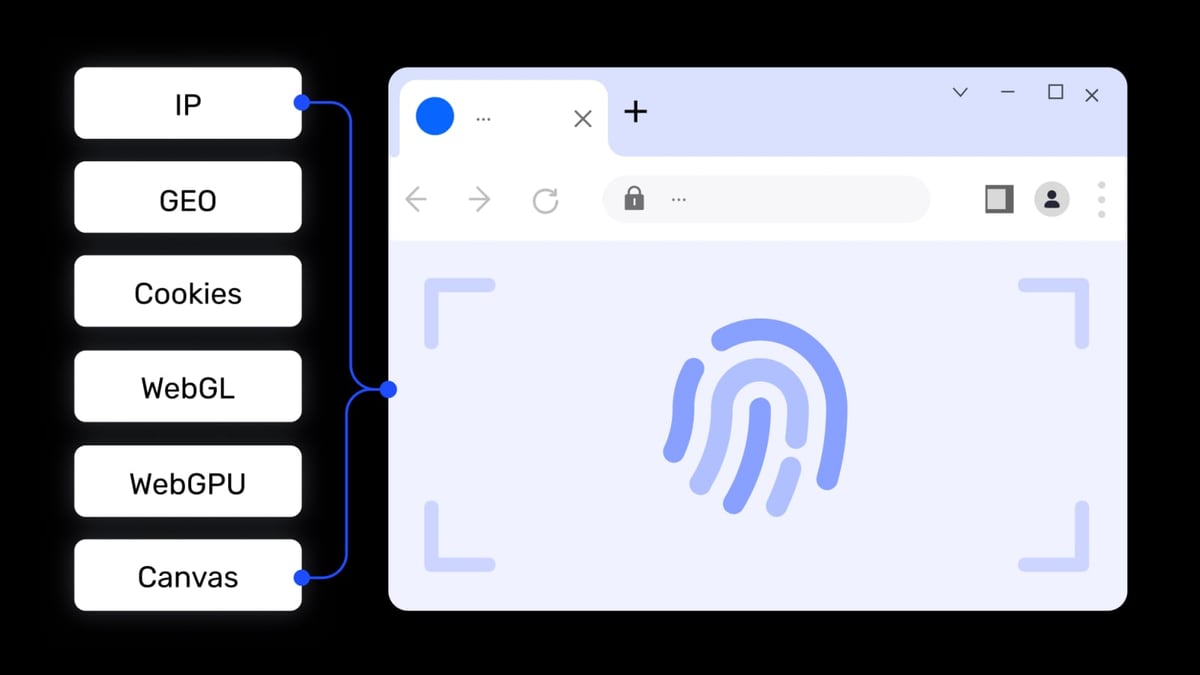
When you log into multiple Google Analytics accounts from the same browser, Google can detect identical Canvas, WebGL, Audio, and WebRTC fingerprints, as well as shared cookies and local storage. This linkage may:
- Confuse cross-domain or cross-property attribution
- Trigger security verifications (2FA requests, captchas)
- Correlate separate business profiles, potentially violating platform policies
- Lead to session overlap where one GA4 property caches data from another login
AdsPower creates independent browser environments with unique fingerprints, so each Google Analytics session appears as if it comes from a completely different machine. You get true isolation without the cost of multiple physical devices or virtual machines.
Secure Multi-Account GA Management
Whether you’re an agency handling multiple clients, an e-commerce operator with stores across regions, or a growth marketer testing localized funnels, you can:
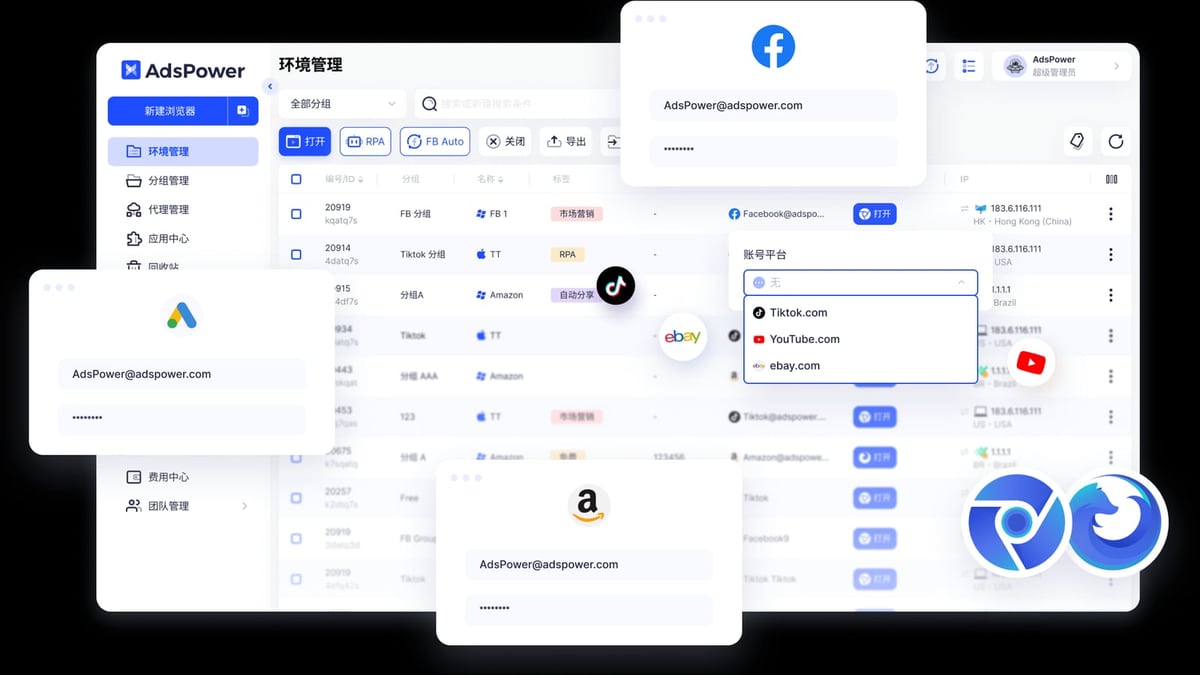
- Log into each Google Account in its own AdsPower profile
- Keep GA4 properties strictly separated
- Avoid accidental cross-contamination of UTM parameters or referral data
- Use country-specific proxies to simulate local access when analyzing geo-targeted reports
For a deeper comparison of anti-detect browsers that support such workflows, see our AdsPower vs MoreLogin vs Genlogin article.
Automating GA Data Collection
AdsPower’s built-in RPA (robotic process automation) can automate repetitive tasks like exporting standard reports, checking real-time data, or pulling audience snapshots across dozens of profiles. This turns manual screenshot-taking into a one-click operation, saving hours each week.
Prerequisites
How to Use AdsPower with Google Analytics (Step-by-Step) product interface and feature overview.
- AdsPower account – the free tier offers 2 browser environments, enough for testing. Paid plans unlock more profiles and team features.
- Google Analytics property (Universal Analytics or GA4) already set up on the target website(s).
- (Optional) Residential or mobile proxies if you need to verify geo-specific tracking or manage accounts tied to a particular country.
- The target website’s HTML source or tag manager access to add the GA tracking code if you’re setting up new properties.
Step-by-Step Setup: Linking AdsPower Environments to Google Analytics

How to Use AdsPower with Google Analytics (Step-by-Step) product interface and feature overview.
Step 1: Create Separate Browser Profiles in AdsPower
- Open AdsPower and click New Profile.
- Choose a name that clearly identifies the purpose (e.g., “Client A – GA US Store”).
- Select the browser kernel: SunBrowser (Chrome-based) is recommended for most Google services.
- Under Advanced Settings, customize the fingerprint parameters or leave them as auto-generated. Important ones for Google compatibility include WebRTC, Canvas, and Timezone.
- Create a different profile for each Google Analytics property you need to manage.
Step 2: Configure Proxies for Each Environment (Optional)
If your GA accounts are region-specific or you want to test local data collection, assign a proxy to each profile:
- In the profile’s Proxy tab, enter the IP, port, and authentication details.
- AdsPower supports HTTP, HTTPS, SOCKS5, and SSH proxies.
- After saving, you can verify the proxy by opening the environment and visiting whoer.net to confirm the IP geolocation.
Step 3: Add Google Analytics Tracking to Your Website(s)
This step happens outside AdsPower, on your actual website. Ensure the correct GA4 measurement ID or UA tracking ID is embedded in your site’s code (usually via gtag.js or Google Tag Manager). AdsPower doesn’t alter site functionality; it merely provides the browser through which you will later log into the GA dashboard.
Step 4: Access GA Dashboards Inside Isolated Profiles
- Launch the first AdsPower profile.
- Visit analytics.google.com and log in with the Google Account tied to that particular property.
- Because the profile’s fingerprint is unique, Google sees this as a fresh device. Complete any 2FA verification once, and AdsPower can save the session (with encryption).
- Repeat for each profile. You now have multiple isolated Google Analytics sessions running simultaneously, each with its own data set and no cross-session tracking.
Step 5: Automate GA Reports with AdsPower RPA (Optional)
To save time on recurring report pulls:
- Open the profile you want to automate.
- Navigate to AdsPower’s RPA section and record a workflow (e.g., log into GA, navigate to Audience > Overview, export PDF).
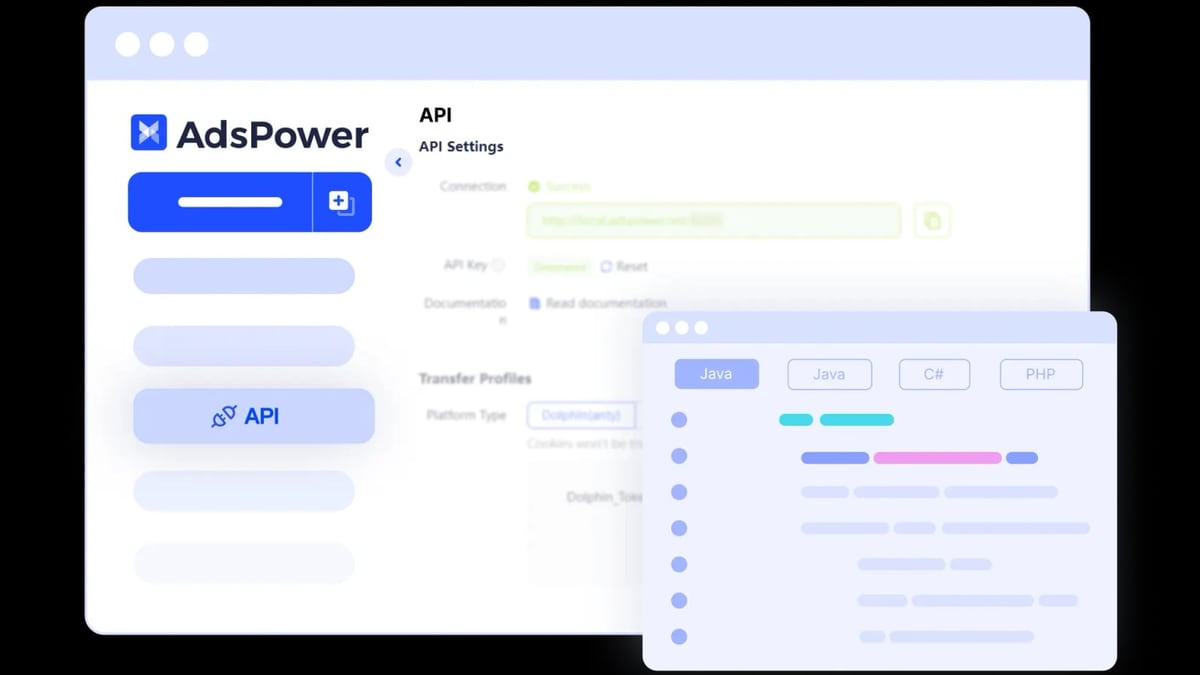
- Schedule the RPA to run at set intervals, or manually trigger it across multiple profiles using the Local API.
- This is particularly useful for agencies that must generate daily or weekly client digests.
Practical Examples
How to Use AdsPower with Google Analytics (Step-by-Step) product interface and feature overview.
Example 1: Multi-Store E-Commerce Operator
A merchant runs three Shopify stores targeting the US, UK, and Germany. Each has its own GA4 property. Using AdsPower:
- Three profiles: “US Store – GA”, “UK Store – GA”, “DE Store – GA”, each with a corresponding local proxy.
- The merchant logs into each GA account inside its profile, ensuring no cookie pollution.
- Real-time reporting shows accurate visitor counts per store without cross-geo leakage.
- If one store triggers a security flag, the other two remain completely untouched.
Example 2: Agency Managing Client GA Accounts
A digital marketing agency handles GA for 15 clients. They share a single AdsPower team account with role-based permissions. Each team member accesses only the profiles assigned to them. This prevents accidental logouts or clients’ data being mixed, while the built-in activity log lets managers audit who accessed which GA view.
Example 3: QA Testing Localized Sites
A developer needs to test whether GA event tracking fires correctly across 10 regional versions of a site. They create 10 AdsPower profiles with geographic proxies, open each site, and perform test actions. Each GA property therefore receives clean hits from the correct region, accurately simulating real user behavior without distortion from a single browser session.
Native Browser vs AdsPower for Multi-Account GA Management
| Criterion | Native Browser (Chrome/Firefox) | AdsPower Fingerprint Browser |
|---|---|---|
| Fingerprint isolation | ❌ All accounts share one fingerprint | ✅ Unique fingerprint per profile |
| Proxy per account | ❌ Requires manual switching | ✅ Permanent proxy binding |
| Session security | ⚠️ Cookies & cache mix across accounts | ✅ Fully isolated storage |
| Team collaboration | ❌ No native team controls | ✅ Role-based access, logs |
| Automation of GA reporting | ❌ Requires third-party scripts | ✅ Built-in RPA |
| Setup time for 10 accounts | High (multiple profiles or incognito chaos) | Low – create profiles in bulk |
Related reading
- NetNut Review 2025: Speed, Plans & Reliable Web Scraping - Unbiased NetNut review covering residential, ISP, datacenter & mobile proxies. See real performance tests, pricing breakdown, setup, and best use cases for business.
- IPVanish VPN Review 2026: Speed, Streaming & Privacy Tested - Honest IPVanish VPN review with real-world speed, streaming, and security tests. See who it’s for, pricing, pros, cons, and how it compares to competitors.
- Top 10 Web Scraping API & Data Extraction Platforms 2026 - Unbiased ranking of the 10 best web scraping API and data extraction platforms for 2026. Test results, pricing, and honest pros/cons from our expert review.
Frequently Asked Questions
Can I use the same Google Account across multiple AdsPower profiles for different GA properties?
Technically yes, but it defeats the purpose of isolation. It’s safer to create a separate Google Account dedicated to each GA4 property (or group of tightly related properties) and then log into each from its own AdsPower environment. If you must tie multiple properties to one master Google Account, use individual profiles for each login session to prevent cookie overlap.
Does AdsPower affect the Google Analytics tracking code on my website?
No. AdsPower only modifies the browser environment you use to access the GA dashboard. The tracking snippet embedded on your website remains untouched and records visitor data exactly as configured.
Is it against Google’s Terms of Service to manage GA with a fingerprint browser?
Using an anti-detect browser to manage your own legitimate accounts is not explicitly prohibited. Problems arise when the tool is used for fraudulent activity (e.g., ad fraud, impersonation). For standard multi-account business operations—agency work, multi-store e-commerce, localization testing—AdsPower helps maintain compliance by ensuring each account appears independent, reducing the risk of unintended cross-linking.
How can I avoid GA session overlap across AdsPower profiles?
Session overlap happens when two profiles accidentally use the same IP and device fingerprint simultaneously to access the same Google service. To avoid it:
- Always use distinct profiles with independent proxies.
- Never copy a profile’s cookies or storage to another profile.
- Enable the “Session Lock” feature in AdsPower to prevent accidental logout in one environment while the other is active.
Can I automate GA data exports using AdsPower RPA?
Absolutely. Record a workflow that opens the GA dashboard, applies a date range filter, and exports a CSV or PDF. You can run the same RPA on multiple profiles sequentially, saving hours of manual work. For advanced setups, the Local API lets you integrate these automations with external schedulers or AI agents.
Next Steps for a Cleaner Analytics Workflow
Pairing AdsPower with Google Analytics gives you the best of both worlds: ironclad account separation and deep behavioral insights. Whether you’re running an agency, managing multiple e-commerce storefronts—like our guide on using AdsPower with Ecwid for multi-store setups—or simply testing localization, this combination eliminates fingerprint noise and keeps your data trustworthy.
Ready to get started? Sign up for a free AdsPower tier, create your first isolated environment, and log into Google Analytics with confidence. For more tips on secure multi-account management, explore other practical workflows at AdsPower.