
Google Analytics Review 2026: Honest Pros, Cons & Verdict
Take a Quick Look
An evidence-based Google Analytics review covering ideal users, setup, strengths, limitations, pricing, and decision criteria for marketers and business owners.
🔥 Limited-Time Offer! Save extra 10% off on your first monthly plan with code: Anitdetect10
Sign upGoogle Analytics Review 2026: Honest Pros, Cons & Verdict
Google Analytics remains the most widely used web analytics platform on the planet, powering data-driven decisions for millions of websites. But is it still the right choice for your business in 2026? This evidence-based review examines Google Analytics from every angle—ideal users, core use cases, strengths, limitations, pricing signals, and setup—so you can decide if it fits your workflow.
What Is Google Analytics?
Google Analytics Review 2026: Honest Pros, Cons & Verdict - supporting product research image 1.
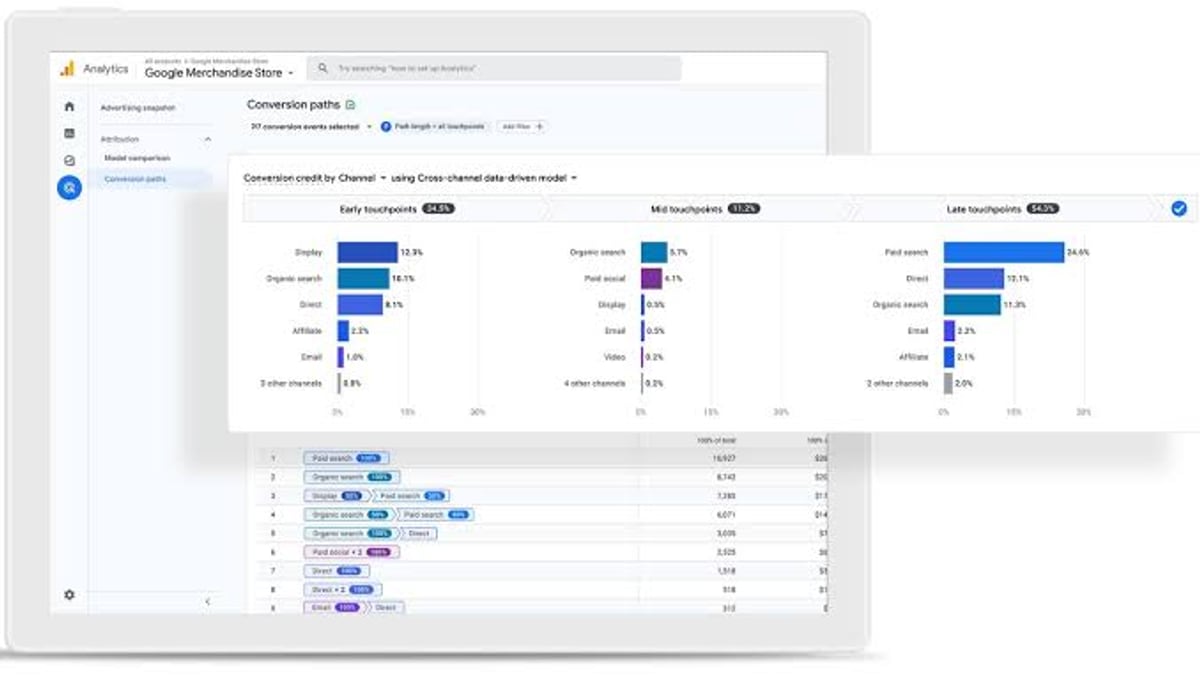
Google Analytics is a comprehensive web analytics service that tracks and reports website traffic, user behavior, and marketing effectiveness. It serves marketers, business owners, and analysts who need data-driven insights to optimize their online presence. Core use cases include understanding audience demographics, measuring campaign performance, analyzing user journeys, and improving conversion rates. Key features include real-time reporting, audience segmentation, goal tracking, e-commerce tracking, and integration with Google Ads. The platform positions itself as an essential tool for digital marketing success, offering both free (Google Analytics 4) and premium (Google Analytics 360) versions.
Who Is Google Analytics For?
Google Analytics Review 2026: Honest Pros, Cons & Verdict - supporting product research image 2.
Google Analytics is ideal for:
- Digital marketers who need to measure campaign ROI and optimize ad spend.
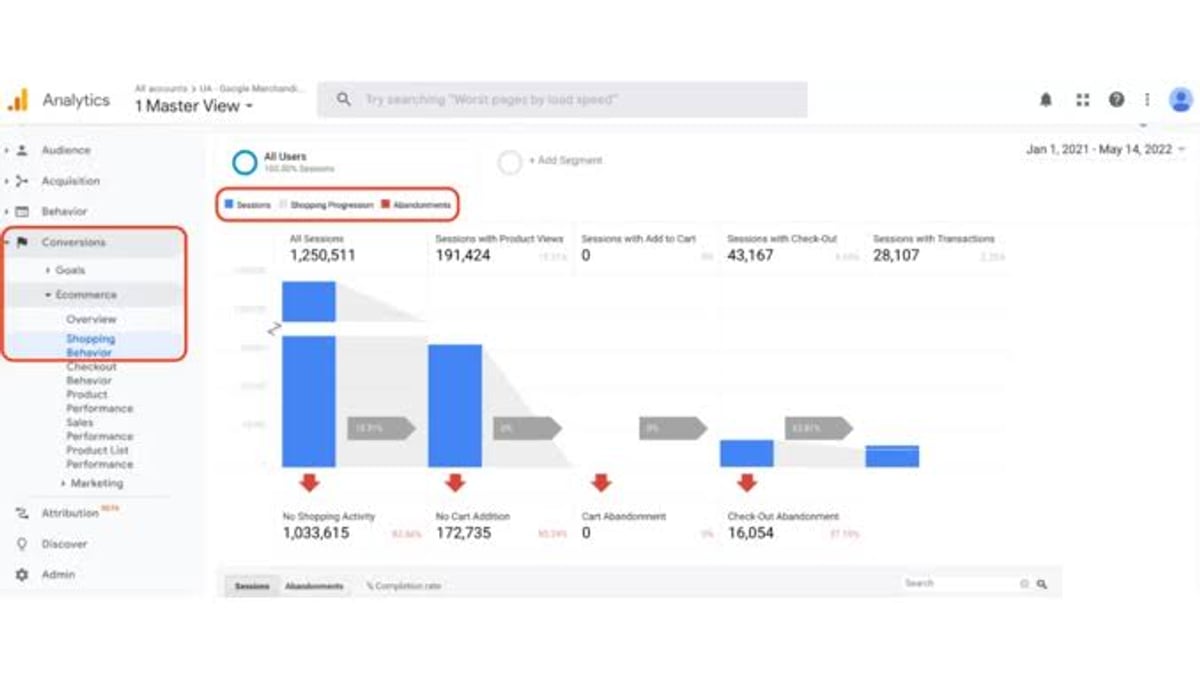
- E-commerce businesses tracking product performance, cart abandonment, and revenue.
- Content publishers analyzing audience engagement and content effectiveness.
- Small to medium business owners who want free, robust analytics without upfront costs.
- Enterprise teams that require advanced customization, SLA-backed support, and higher data limits (via Google Analytics 360).
If you need a zero-cost starting point with deep integration into Google’s ecosystem, Google Analytics is a natural fit.
Key Strengths of Google Analytics
Google Analytics Review 2026: Honest Pros, Cons & Verdict - supporting product research image 3.
1. Completely Free Tier
The standard version of Google Analytics is free for most businesses. You get access to real-time reporting, audience segmentation, goal tracking, and e-commerce analytics without paying a cent. This makes it accessible for startups, freelancers, and small teams.
2. Deep Integration with Google Ecosystem
Google Analytics connects seamlessly with Google Ads, Google Search Console, Google BigQuery, and Google Tag Manager. This integration allows you to track ad performance, organic search data, and custom events in one place.
3. Powerful Audience Segmentation
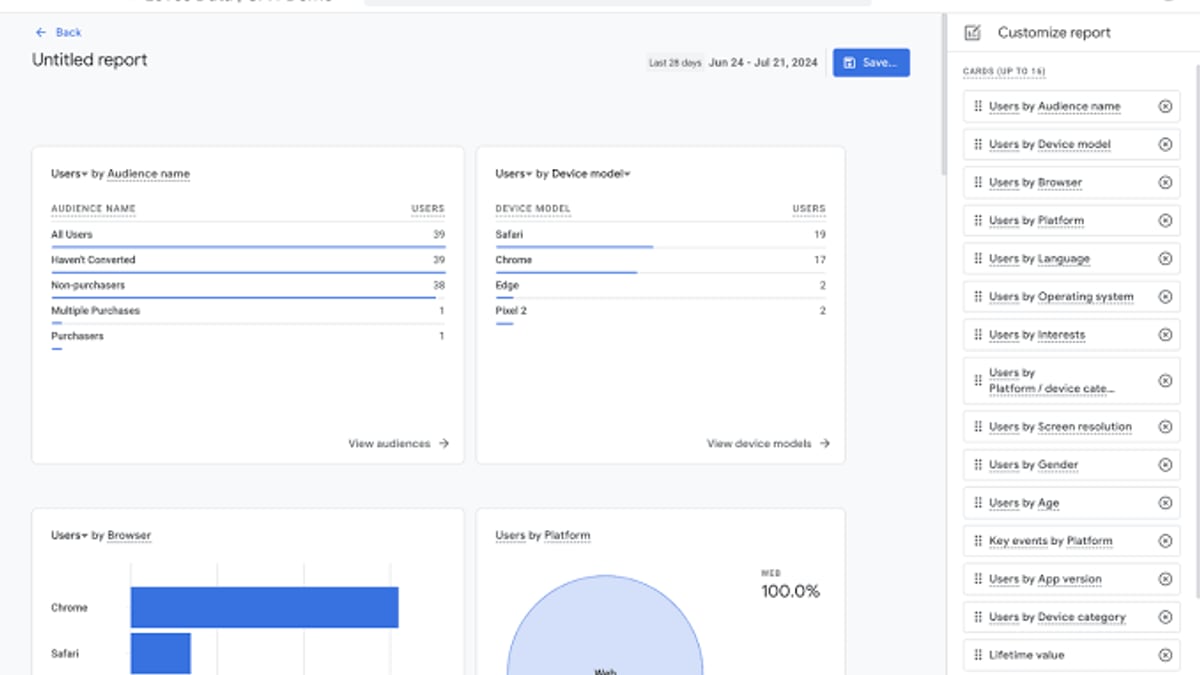
You can segment users by demographics, behavior, traffic source, device, and custom dimensions. For example, you can isolate users who visited via a specific campaign and completed a purchase, then analyze their behavior separately.
4. Real-Time Reporting
Monitor live user activity on your site—see which pages are being viewed, where traffic is coming from, and how users interact in real time. This is useful for tracking campaign launches or live events.
5. E-Commerce Tracking
Google Analytics provides detailed e-commerce reports including product performance, transaction data, and shopping behavior analysis. You can track the entire purchase funnel from product view to checkout completion.
6. Scalability with Google Analytics 360
For enterprises, Google Analytics 360 offers higher data limits, unsampled reports, dedicated support, and advanced integrations with BigQuery and Salesforce. It’s designed for organizations that need enterprise-grade analytics.
Limitations and Drawbacks
1. Steep Learning Curve
Google Analytics 4 (GA4) introduced a new event-based data model that differs significantly from Universal Analytics. Many users find the interface less intuitive, and setting up custom reports requires time and training.
2. Data Sampling on Free Tier
When you apply complex segments or filters to large datasets, Google Analytics may sample your data, leading to approximate rather than exact numbers. This can affect accuracy for high-traffic sites.
3. Privacy and Compliance Concerns
Google Analytics stores user data on Google’s servers, which raises GDPR and data privacy issues for European users. The platform has faced legal challenges in several countries over data transfer practices. You may need to implement additional consent mechanisms or use anonymized tracking.
4. Limited Customer Support
The free version offers only community forums and documentation. If you encounter a critical issue, you cannot contact Google directly unless you pay for Google Analytics 360.
5. No Built-In A/B Testing
Google Analytics does not include native A/B testing functionality. You need to integrate with Google Optimize (which is being deprecated) or use third-party tools like VWO or Optimizely.
6. Data Ownership and Portability
Your data is stored on Google’s infrastructure, and exporting large datasets can be cumbersome. While BigQuery export is available (free for GA4), it requires technical setup.
Pricing Signals: Free vs Google Analytics 360
Google Analytics Review 2026: Honest Pros, Cons & Verdict - supporting product research image 4.
| Feature | Google Analytics (Free) | Google Analytics 360 |
|---|---|---|
| Cost | $0 | Starts at $150,000/year |
| Data limits | 10 million events/month per property | Higher limits (custom) |
| Data sampling | Yes (on large queries) | Unsampled reports |
| Support | Community only | Dedicated account manager |
| Integrations | Standard | Advanced (BigQuery, Salesforce) |
| SLA | None | 99.9% uptime SLA |
For most small to medium businesses, the free tier is sufficient. Enterprise organizations with high traffic volumes and advanced reporting needs should consider Google Analytics 360.
How to Set Up Google Analytics
- Create a Google Analytics account at analytics.google.com.
- Set up a property (choose Google Analytics 4).
- Install the tracking code on your website (via Google Tag Manager, a plugin, or direct code insertion).
- Configure data streams for web, iOS, or Android.
- Define goals and conversions (e.g., form submissions, purchases, page views).
- Link Google Ads and Search Console for integrated reporting.
- Set up user permissions for your team.
Expect the initial setup to take 1–3 hours, with ongoing refinement as you learn what metrics matter most.
Real-World Use Cases
E-Commerce Store
A Shopify store owner uses Google Analytics to track product views, add-to-cart events, and checkout completions. By segmenting users by traffic source, they discover that Instagram traffic has a higher conversion rate than Facebook ads, so they reallocate ad spend accordingly.
SaaS Company
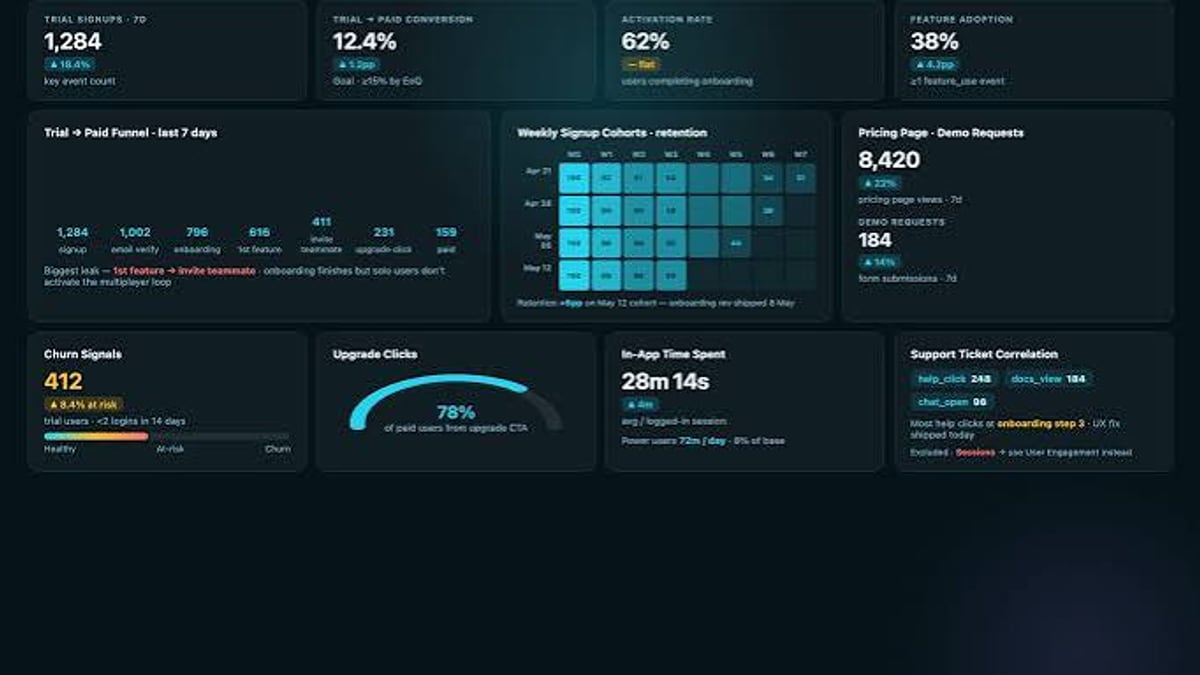
A B2B SaaS company sets up Google Analytics to track free trial sign-ups, feature usage, and churn indicators. They create a custom funnel showing the drop-off rate between sign-up and first key action, then optimize onboarding emails to improve activation.
Content Publisher
A blog uses Google Analytics to identify top-performing articles by page views, time on page, and social shares. They notice that listicles drive more engagement than opinion pieces, so they adjust their editorial calendar to produce more list-based content.
Google Analytics vs Alternatives
| Feature | Google Analytics | Matomo | Plausible |
|---|---|---|---|
| Cost | Free / $150k+/yr | Free self-hosted / paid cloud | $9/month |
| Data ownership | Google servers | Self-hosted option | Third-party servers |
| Privacy compliance | Requires consent | GDPR-friendly by default | GDPR-friendly |
| Ease of use | Moderate | Moderate | Very easy |
| Integrations | Extensive | Moderate | Limited |
If privacy and data ownership are top priorities, consider Matomo or Plausible. If you need deep integration with Google Ads and the broadest feature set, Google Analytics remains the strongest option.
Decision Criteria: Should You Use Google Analytics?
Choose Google Analytics if:
- You need a free, feature-rich analytics platform.
- You rely heavily on Google Ads and Google Marketing Platform.
- You have the time to learn GA4’s event-based model.
- You are comfortable with Google’s data handling policies.
Consider alternatives if:
- Privacy and GDPR compliance are critical (try Matomo or Plausible).
- You want a simpler, more intuitive interface (try Plausible or Fathom).
- You need self-hosted data ownership (try Matomo).
- You have limited technical resources and need quick setup (try Plausible).
Related reading
- Top 10 Cryptocurrency Exchange Platforms 2026 - Our 2026 ranking of the 10 best crypto exchange platforms. Transparent criteria, evidence-based reviews, and decision guidance for traders.
- How to Use AdsPower Fingerprint Browser with Python - Learn how to automate AdsPower fingerprint browser with Python using HTTP API, Selenium, and MCP protocol. Step-by-step guide with code examples.
- AdsPower vs Undetectable: 2026 Anti-Detect Browser Comparison - Compare AdsPower vs Undetectable anti-detect browsers. Features, automation, pricing, security, and which one fits your multi-account workflow.
Sources and further reading
- Vercel Security Checkpoint - Vercel Security Checkpoint
- Just a moment... - Google Analytics Review 2026: Pros, Cons, Features, and ...The CMO Clubhttps://thecmo.com › ToolsThe CMO Clubhttps://thecmo.com › ToolsJun 2, 2025 — Google Analytics remains the go-to for robust, free marketing insights, but its complexity and privacy concerns mean it's best for data-driven ...4.6 ·
- Is it just me, or is Google Analytics not that needed - You've been blocked by network security.
Frequently Asked Questions
Is Google Analytics free?
Yes, the standard Google Analytics 4 version is free for most websites. Google Analytics 360 is a paid enterprise version starting at $150,000 per year.
How long does it take to set up Google Analytics?
Basic setup takes 1–3 hours. Advanced configuration (custom events, goals, integrations) may take several days.
Does Google Analytics work with WordPress?
Yes. You can add Google Analytics to WordPress via plugins like MonsterInsights, Site Kit by Google, or by manually inserting the tracking code.
Is Google Analytics GDPR compliant?
Google Analytics can be used in a GDPR-compliant manner if you implement consent banners, anonymize IP addresses, and disable data sharing with Google. However, recent legal rulings in Europe have raised concerns about data transfers to the US.
Can I use Google Analytics for mobile apps?
Yes. Google Analytics 4 supports mobile app tracking via Firebase SDK for both iOS and Android.
Conclusion
Google Analytics remains the most powerful free web analytics platform available, especially for businesses already invested in Google’s ecosystem. Its strengths—cost, integration, segmentation, and e-commerce tracking—outweigh its limitations for most users. However, the learning curve, privacy concerns, and data sampling on the free tier are real drawbacks. Evaluate your privacy needs, technical capacity, and budget before committing. For many, Google Analytics is the right starting point; for others, a privacy-first alternative may be a better fit.
If you manage multiple accounts or need to analyze traffic across different platforms, consider using tools like AdsPower to streamline your workflow. For more on analytics and automation, read our SOAX Review 2026 and AdsPower vs Undetectable comparison.
For further reading, check out Google’s official GA4 documentation and Google Analytics 360 pricing.