
Scrapy Review 2026: Is This Python Framework Worth It?
Take a Quick Look
In-depth Scrapy review: how the open source Python scraping framework handles large crawls, setup, limitations, pricing, and when to choose it over alternatives.
🔥 Limited-Time Offer! Save extra 10% off on your first monthly plan with code: Anitdetect10
Sign upScrapy Review 2026: Is This Python Framework Worth It?
Scrapy is the most widely used open source web scraping framework in the Python ecosystem. Maintained by Zyte and shaped by more than 500 contributors, it turns what could be a messy pile of scripts into a structured, scalable crawling system. This review digs into what Scrapy actually does well, where it frustrates, who should use it, and how it compares with lighter alternatives like BeautifulSoup.
What Is Scrapy?
Scrapy product interface.
Scrapy is a complete Python framework for extracting data from public websites. Unlike a simple parsing library, it handles the entire scraping lifecycle: sending HTTP requests, following links, parsing responses with CSS or XPath selectors, validating extracted data, and exporting it to formats like JSON, CSV, XML, or cloud storage such as S3.
A fresh Scrapy project scaffolds a full directory structure with spiders, items, pipelines, and settings. That structure is both the framework's biggest strength and its main friction point for newcomers. You are not just writing a script; you are building a small application with defined responsibilities.
Scrapy Architecture at a Glance
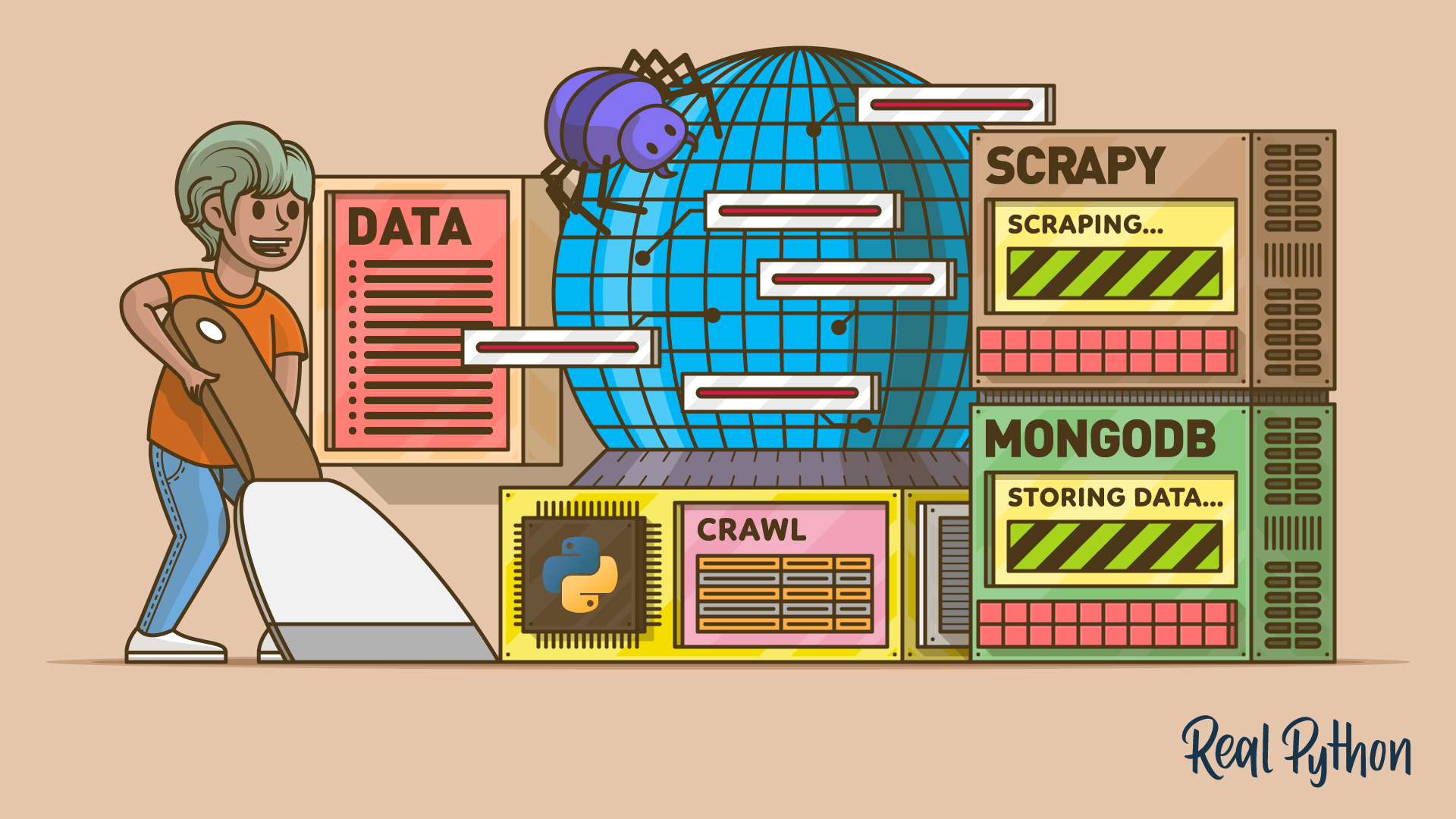
The engine sits at the center of Scrapy's architecture and coordinates four main components:
- Spiders: Python classes that define what to crawl, which links to follow, and how to extract data.
- Scheduler: Queues and orders the requests that spiders generate.
- Downloader: Fetches page content and returns response objects.
- Item Pipelines: Clean, validate, and store the extracted data.
This separation makes Scrapy predictable at scale. When a crawl grows from 100 pages to 100,000 pages, the same architecture keeps working without a rewrite.
Who Should Use Scrapy?
Scrapy Review 2026: Is This Python Framework Worth It? - Who Should Use Scrapy?.
Scrapy fits best when your project looks like this:
- Large-scale crawling: You need to extract data from hundreds or thousands of pages across multiple domains.
- Structured data pipelines: You want validation, deduplication, and storage handled systematically rather than ad hoc.
- Recurring jobs: You plan to run the same crawl on a schedule and monitor failures.
- Team projects: Multiple developers need a shared, conventional project layout.
Common real-world use cases include price monitoring, SEO auditing, market research, content aggregation, lead generation from public directories, and academic data collection.
Who Should Skip Scrapy?
If you need to scrape one page once, Scrapy is overkill. A short script using requests and BeautifulSoup will get the job done faster. The same applies if you are brand new to Python and want to learn scraping concepts without learning a framework's conventions at the same time.
Scrapy vs BeautifulSoup: A Practical Comparison
Scrapy Review 2026: Is This Python Framework Worth It? - Scrapy vs BeautifulSoup: A Practical Comparison.
Scrapy and BeautifulSoup are often mentioned together, but they solve different problems. BeautifulSoup is a parsing library. Scrapy is a full framework.
| Feature | Scrapy | BeautifulSoup |
|---|---|---|
| Type | Web scraping framework | HTML/XML parsing library |
| HTTP requests | Built in | Requires external client like requests |
| Crawling and link following | Built in | Not included |
| Concurrency | Asynchronous by design | Requires extra tooling |
| Data export | Built-in feeds for JSON, CSV, XML | Requires external libraries |
| Learning curve | Steeper | Gentler |
| Best for | Large-scale, structured crawls | Small, focused parsing tasks |
A common benchmark from the Scrapy vs BeautifulSoup comparison by ZenRows found BeautifulSoup faster for a single-page extraction task: 3.47 seconds versus Scrapy's 6.42 seconds over 100 iterations. That result makes sense. BeautifulSoup is lighter because it does less. Scrapy's overhead comes from its engine, scheduler, and pipeline machinery, which pay off when you scale to many pages and concurrent requests.
The decision is not either/or. Scrapy can import BeautifulSoup inside a spider when you prefer its parse-tree navigation for a specific page. The framework does not lock you out of other Python libraries.
Setting Up Scrapy: What to Expect

Scrapy Review 2026: Is This Python Framework Worth It? - Setting Up Scrapy: What to Expect.
Installation is straightforward with pip:
pip install scrapy
Creating a project takes one command:
scrapy startproject myproject
From there, you define a spider, run it, and export results:
scrapy crawl myspider -o output.json
The interactive shell is one of Scrapy's most useful learning tools. It lets you test selectors against a live page before committing them to a spider:
scrapy shell "https://example.com"
Inside the shell, you can experiment with CSS and XPath expressions, inspect response objects, and prototype extraction logic. This workflow reduces the trial-and-error cycle that plagues scraping projects.
The Learning Curve Is Real
Scrapy's documentation is comprehensive, but the framework assumes you understand concepts like asynchronous programming, request scheduling, and middleware. Beginners often struggle with the project structure, the role of settings, and why a spider does not behave like a linear script. Expect a few days of adjustment before Scrapy feels natural.
Strengths of Scrapy
1. Built for Concurrency and Speed
Scrapy's asynchronous engine sends multiple requests in parallel by default. This is the main reason it outperforms script-based approaches on large crawls. You can tune concurrency, download delays, and auto-throttling in settings to balance speed against politeness.
2. Powerful Selectors
Scrapy includes the Parsel library, which supports both CSS and XPath selectors. XPath is especially useful for complex conditions, such as selecting an element based on its sibling, parent, or attribute value. CSS selectors cover most everyday needs and feel familiar to anyone who has written stylesheets.
3. Item Pipelines for Clean Data
Raw scraped data is rarely clean. Item pipelines let you validate fields, drop duplicates, transform values, and write to databases or cloud storage in a consistent sequence. This turns scraping from "get the data" into "get the data in a usable form."
4. Extensible Ecosystem
Scrapy is deliberately lean, but its plugin ecosystem fills the gaps:
- scrapy-playwright: Renders JavaScript-heavy pages in a real browser.
- spidermon: Adds monitoring and alerting for production crawls.
- scrapy-zyte-api: Routes requests through Zyte's anti-ban infrastructure.
- scrapy-impersonate: Spoofs browser TLS fingerprints to reduce blocking.
This extensibility is a major reason Scrapy has stayed relevant for over a decade.
5. Managed Hosting via Scrapy Cloud
Zyte offers Scrapy Cloud, a managed platform for deploying, scheduling, and monitoring Scrapy spiders. It includes a free tier, which makes it practical for small projects and testing. For teams that do not want to manage servers, cron jobs, and retries themselves, Scrapy Cloud removes significant operational overhead.
Limitations of Scrapy
1. JavaScript Rendering Requires Add-ons
Out of the box, Scrapy downloads raw HTML. If a site renders content with JavaScript, you need scrapy-playwright or a similar integration. This adds complexity and slows down crawls. For JavaScript-heavy targets, a browser-based tool or a scraping API may be simpler.
2. Anti-Bot Defenses Are Your Problem
Scrapy provides throttling, user-agent rotation, and proxy support, but bypassing sophisticated anti-bot systems like Cloudflare still requires extra work. You may need residential proxies, TLS impersonation, or a scraping API. This is not a Scrapy flaw so much as a reality of modern web scraping, but it is an important expectation to set.
3. Steeper Learning Curve
As noted, Scrapy's structure is powerful but not beginner-friendly. The command-line workflow, project scaffolding, and asynchronous model take time to internalize. If you only need simple scraping, the setup cost may not be justified.
4. Not Ideal for Tiny Tasks
For a one-off extraction from a single page, Scrapy's overhead is unnecessary. A simple script is faster to write and easier to debug. Scrapy earns its keep when the project has scale, structure, or recurrence.
Scrapy Pricing: What Does It Cost?
Scrapy itself is free and open source under the BSD license. You can use it commercially without paying anything. The costs come from the infrastructure around it:
- Proxies: Residential or datacenter proxies are often required for large or sensitive crawls. Pricing varies widely by provider and volume.
- Hosting: Running spiders on your own servers costs compute time. Scrapy Cloud has a free tier, with paid plans for larger jobs and team features.
- Anti-ban services: If you integrate scrapy-zyte-api or a similar service, usage-based fees apply.
For a small project, total cost can be near zero. For production-scale crawling, budget for proxies and hosting as the main recurring expenses.
Decision Criteria: Is Scrapy Right for You?
Choose Scrapy if you answer yes to most of these:
- You need to crawl many pages or entire sites.
- You want structured data pipelines with validation and export.
- You plan to run crawls on a schedule.
- You are comfortable with Python and willing to learn a framework.
- You need features like link following, request scheduling, and concurrency.
Choose a simpler approach if:
- You are scraping one or a few pages.
- You are new to Python and want to learn step by step.
- Your target site is heavily JavaScript-based and you prefer browser automation.
- You need results today and do not have time for framework setup.
For teams already managing browser automation at scale, tools like AdsPower's anti-detect browser address a different layer of the scraping stack: fingerprint management and multi-account isolation. Scrapy handles the crawling logic; anti-detect browsers handle the browser fingerprint. They can complement each other in workflows where some targets require real browser sessions and others can be crawled with lightweight HTTP requests.
If your project involves residential proxies for large crawls, a dedicated proxy review such as this PacketStream review can help you evaluate whether a budget proxy network meets your needs. Scrapy integrates with any proxy provider through middleware, so proxy choice is independent of the framework.
Related reading
- How to Use AdsPower with Fingerprint: A 2026 Workflow Guide - Learn how to combine AdsPower's anti-detect browser with Fingerprint's device intelligence platform for safer multi-account management and fraud prevention.
- AdsPower vs Linken Sphere vs RoxyBrowser: 2026 Test - Compare AdsPower, Linken Sphere, and RoxyBrowser on fingerprinting, automation, team features, and pricing. Find the right anti-detect browser for your workflow.
- AdsPower vs BitBrowser: Which Anti-Detect Browser Wins in 2026? - Compare AdsPower vs BitBrowser on fingerprinting, automation, team features, pricing, and real-world reliability. See why AdsPower is the safer scaling choice.
Sources and further reading
- What are your thoughts on scrapy : r/webscraping - Reddit - Aug 27, 2022 ... Comments Section · Scrapy is fassssssst by design. · Scrapy can generate CSV, JSON, and many other files without writing a single line of code.
- Scrapy: Everything you need to know about this Python web scraping tool - During internet browsing, many websites do not allow direct saving of data for personal use. The simplest solution in this case is to manually copy and paste the data, which can quickly become tedious and time-consuming. That’s why web scraping techniques are often used to extract data from websites.
Frequently Asked Questions
Is Scrapy free?
Yes. Scrapy is open source under the BSD license and free for commercial use. You only pay for optional infrastructure like proxies, hosting, or anti-ban services.
Is Scrapy better than BeautifulSoup?
They serve different purposes. Scrapy is a full framework for large-scale crawling with built-in concurrency, link following, and data pipelines. BeautifulSoup is a lightweight parsing library better suited to small, focused tasks. Many projects use both.
Does Scrapy handle JavaScript?
Not natively. Scrapy downloads raw HTML. For JavaScript-rendered content, you need an add-on like scrapy-playwright or an external rendering service.
How long does it take to learn Scrapy?
If you already know Python, you can build a basic spider in a day. Becoming productive with pipelines, middleware, and production deployment typically takes a few weeks of practice.
Can Scrapy bypass Cloudflare or other anti-bot systems?
Scrapy alone is not designed to bypass sophisticated anti-bot defenses. You can combine it with proxies, TLS impersonation, or services like scrapy-zyte-api to improve success rates, but no open source tool guarantees access to protected sites.
What is Scrapy Cloud?
Scrapy Cloud is Zyte's managed hosting platform for Scrapy spiders. It provides scheduling, monitoring, and deployment with a free tier for small projects.
Conclusion
Scrapy remains the best choice for serious Python web scraping in 2026. Its asynchronous engine, structured project layout, powerful selectors, and extensible ecosystem make it the default framework for large-scale crawling. The trade-off is a steeper learning curve and the need to assemble your own anti-ban stack for difficult targets.
If your project is small or one-off, start with BeautifulSoup and a simple HTTP client. If you are building something that will grow, run on a schedule, or feed a data pipeline, Scrapy is worth the investment. The framework has earned its position through years of production use, and its active community and plugin ecosystem show no signs of slowing down.