
Python Review 2026: Pros, Cons, and Who Should Use It
Take a Quick Look
Evidence-based Python review covering key features, ideal users, real-world uses, limitations, pricing, and setup. See if Python is the right fit for your project in 2026.
🔥 Limited-Time Offer! Save extra 10% off on your first monthly plan with code: Anitdetect10
Sign upPython Review 2026: A No-Nonsense Look at the World’s Favorite Language
Python has been sitting at the top of popularity charts for years—and for good reason. It’s the language behind YouTube’s backend, the magic that powers Industrial Light & Magic’s visual effects, and a daily tool for Google’s engineering teams. But is it still the best choice for your next project in 2026? In this evidence-based Python review, we’ll unpack everything from real-world strengths and hidden gotchas to pricing, setup, and decision criteria, so you can decide if Python deserves a place in your toolkit.
Why Python Wins Hearts (and Codebases)
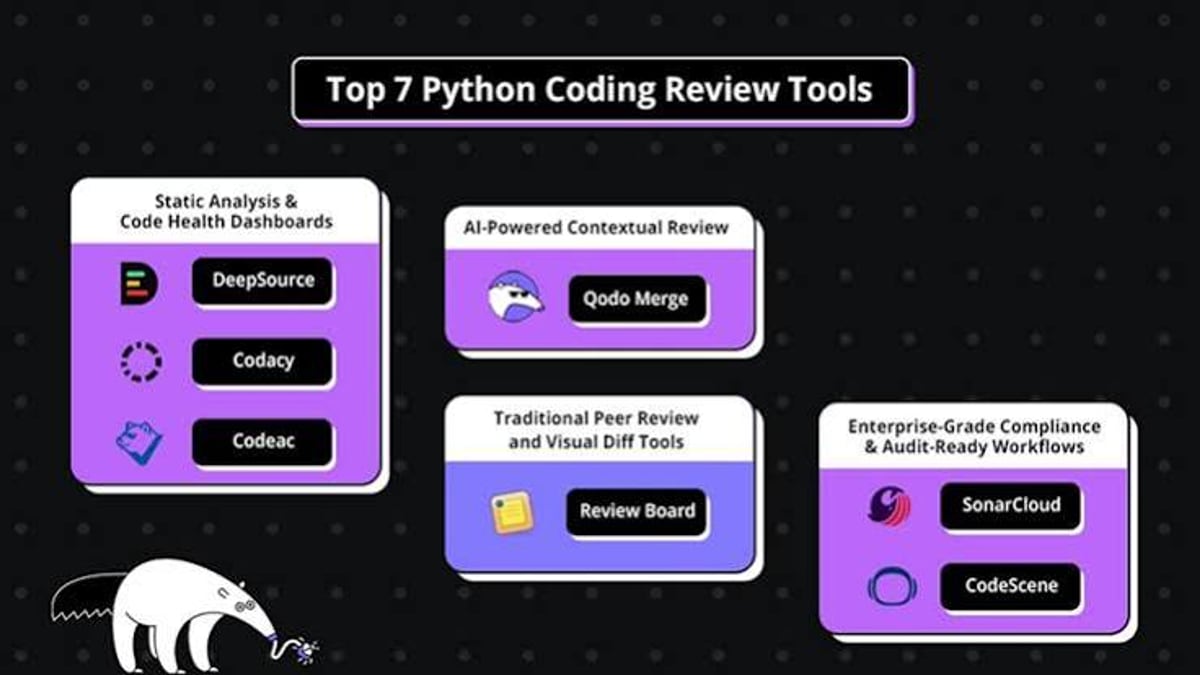
Python Review 2026: Pros, Cons, and Who Should Use It - supporting product research image 1.
If you’ve ever read a Python script and thought, “That almost looks like pseudocode,” you’ve already grasped its core superpower: readability. Python’s design philosophy emphasizes clean, logical syntax that lets developers express complex ideas with fewer lines of code—without sacrificing clarity.
Beyond readability, a few key strengths keep Python firmly in the spotlight:
- Batteries-included standard library: Built-in modules handle everything from Internet protocols to file compression, saving you from hunting down third-party tools for common tasks.
- Massive third-party ecosystem: The Python Package Index (PyPI) hosts over 400,000 projects, including data science workhorses like NumPy and pandas, machine learning frameworks like TensorFlow and PyTorch, and web frameworks like Django and Flask.
- Cross-platform portability: Python runs virtually everywhere—Windows, macOS, Linux, and even on embedded devices—without major changes to your code.
- Community and support: With millions of developers worldwide, you’ll find tutorials, forums, IRC channels, and conferences like PyCon US to help you at every skill level. The non-profit Python Software Foundation actively maintains the language and fosters this ecosystem.
These traits make Python feel less like a mere programming language and more like a productivity multiplier. As Google famously noted, “Python where we can, C++ where we must.”
Where Python Shines Brightest
Python Review 2026: Pros, Cons, and Who Should Use It - supporting product research image 2.
Not all tools fit every job, but Python’s versatility lets it thrive across domains that would otherwise require separate languages.
- Data Science & Machine Learning: Libraries like pandas, NumPy, and scikit-learn turn Python into a scientific computing powerhouse. Stanford’s own CS224n course materials describe Python as “a widely used, general purpose programming language with scientific computation functionality similar to MATLAB”—a testament to its academic and industrial adoption.
- Web Development: Frameworks like Django and Flask have powered everything from startups to enterprise APIs. Instagram’s backend famously runs on Django, handling billions of requests daily.
- Automation & Scripting: Whether you’re renaming files, scraping websites, or orchestrating cloud resources, Python’s simplicity makes it the go-to for automation. For browser-based automation, Python’s Selenium bindings remain a staple (check our Selenium Review for a deep dive). Multi-account management tools and fingerprint browsers can also be scripted with Python; see how we compare anti-detect browsers in our AdsPower vs Dolphin Anty analysis.
- Education: Python’s gentle learning curve has made it the default first language in universities and coding bootcamps around the world.
- Software Development & Prototyping: Need to test an idea quickly? Python’s rapid development cycle lets you go from concept to working prototype in hours, not days.
Where Python Shows Its Limits
Python Review 2026: Pros, Cons, and Who Should Use It - supporting product research image 3.
No review would be complete without leveling about trade-offs. While Python excels in many areas, it’s not a silver bullet.
- Execution Speed: Python is an interpreted language, meaning it can be slower than compiled languages like C++ or Rust. For CPU-bound number crunching, a pure Python loop may be 10-100x slower than a well-optimized C counterpart. However, libraries like NumPy push heavy lifting into compiled C extensions, and tools like Cython or PyPy often bridge the gap.
- Mobile Development: While frameworks like Kivy exist, Python is not a first-class citizen for native iOS or Android apps. If mobile is your primary target, Swift or Kotlin are more appropriate.
- Runtime Errors from Dynamic Typing: Python’s dynamism can hide bugs until execution. Type hints (introduced in Python 3.5) and static checkers like mypy mitigate this, but they aren’t as strict as a compile-time type system.
- Global Interpreter Lock (GIL): The GIL prevents multiple native threads from executing Python bytecodes in parallel, which limits true multi-core threading. For CPU-bound parallelism, you’ll often use multiprocessing or offload to external libraries.
- Design Constraints: Python’s “one obvious way to do it” ethos sometimes means less flexibility for certain metaprogramming styles compared to languages like Ruby.
Understanding these limitations helps you decide when Python is the right tool, not whether it’s perfect.
Python Pricing and Licensing: Truly Free?
Python Review 2026: Pros, Cons, and Who Should Use It - supporting product research image 4.
Zero dollars. No hidden costs. Python is released under the Python Software Foundation License, which allows you to use, modify, and distribute the language for commercial and non-commercial projects without paying a cent. The PSF itself is a 501(c)(3) nonprofit organization funded by donations and sponsorships, not by licensing fees.
What about enterprise support? Since Python is open source, you don’t buy a support license from a central vendor. However, many companies offer commercial Python distributions (like ActiveState) or consulting services. For most teams, the combination of community forums, Stack Overflow, and professional training resources is sufficient—and completely free.
Getting Started: Setup and First Steps
Setting up Python takes less than five minutes, even if you’ve never installed a programming language before.
- Download the installer from python.org. The official installer automatically adds Python to your system path and includes the IDLE editor.
- Choose an IDE or editor that fits your style. Beginners often start with IDLE, but many move to Visual Studio Code with Microsoft’s excellent Python extension, PyCharm (Community Edition is free), or Jupyter Notebooks for data work.
- Verify the installation by opening a terminal and typing
python --version. You should see something likePython 3.12.0(or newer). - Run a quick test to ensure everything works:
print("Hello, Python!")
From there, a few recommended next steps:
- Work through the official Python tutorial on the documentation site.
- Explore interactive platforms like Codecademy or freeCodeCamp for hands-on practice.
- Start a small project that interests you—automating a file rename, a simple web scraper, or a personal budget tracker. A quick crash course, like the one dev.to’s Python Quick Review, can refresh the basics in one sitting.
The learning curve is famously shallow. You’ll be writing useful scripts within an afternoon.
Ideal Users: Is Python Right for You?
Python’s user base spans a wide spectrum, but certain profiles benefit most:
- Absolute beginners: If you’re learning to code for the first time, Python’s readable syntax reduces frustration and lets you focus on logic, not boilerplate.
- Data analysts and scientists: With pandas and Jupyter, Python is the industry standard for data manipulation and visualization.
- AI/ML engineers: From research to production, Python’s ML ecosystem (TensorFlow, PyTorch, Hugging Face) is unmatched.
- Backend web developers: Django and FastAPI offer scalable, secure foundations for web services.
- Sysadmins and DevOps: Automating infrastructure, writing configuration tools, and gluing together APIs are where Python shines.
- Educators and students: Python’s adoption in academia means abundant learning materials and a supportive community.
If your work revolves around mobile apps, real-time game engines, or ultra-low-latency financial systems, you might supplement Python with another language or choose a different primary tool.
Decision Criteria: When to Pick Python Over Other Languages
Choosing a language often comes down to balancing trade-offs. Here’s how Python stacks up.
| Situation | Recommendation |
|---|---|
| You’re new to programming | Python – the gentlest learning curve and massive beginner resources |
| Building a data pipeline or ML model | Python – ecosystem dominance in data science |
| Developing a scalable web backend | Python (Django/FastAPI) – robust frameworks with fast development |
| Creating a cross-platform desktop app | Python (PyQt/Tkinter) – acceptable for internal tools, but consider C# or Electron for consumer apps |
| Writing high-frequency trading bots | C++ or Rust; Python for prototyping, then port critical sections |
| Shipping a mobile-first product | Swift/Kotlin; Python may help on the backend |
| Automating browser workflows | Python+Selenium, or explore fingerprint browsers for complex account management (see our AdsPower vs Dolphin Anty comparison for multi-account setups) |
In short, if your priority is developer productivity, code maintainability, and access to a huge ecosystem, Python is a safe bet. When raw performance or platform-specific constraints dominate, you’ll still find Python useful as a “glue” language orchestrating faster components.
Related reading
- Top 10 Social Media Account Marketplace Products in 2026 - Looking to buy or sell social media accounts? Discover the 10 best account marketplaces of 2026, ranked by security, account variety, and buyer protection. Find your perfect platform.
- How to Safely Use AdsPower Fingerprint Browser with Binance - Step-by-step guide to setting up AdsPower fingerprint browser for Binance safely. Learn proxy configuration, multi-account isolation, and security tips to avoid wallet hacks.
- AdsPower vs Linken Sphere vs Genlogin: 2026 Comparison - We compare AdsPower, Linken Sphere, and Genlogin on fingerprint isolation, automation, pricing, and security. Find the best anti-detect browser for multi-account management.
Sources and further reading
- Any good ways to review python? : r/learnpython - I'd say just start making fun little games and programs that will appeal to the kids. Make as many as you can, and they can vary in complexity:
- Python Review - Python ReviewStanford Universityhttps://web.stanford.edu › archive › readings › p...Stanford Universityhttps://web.stanford.edu › archive › readings › p...PDFPython is a widely used, general purpose programming language. + Easy to start working with. + Scientific computation functionality similar to
Frequently Asked Questions
Is Python suitable for complete beginners?
Absolutely. Many first-year computer science programs start with Python because its syntax mirrors plain English. You can learn the basics of variables, loops, and functions within a day, and you’ll have visible results quickly, which keeps motivation high.
Can Python handle large-scale applications?
Yes—with the right patterns. Companies like Instagram and Dropbox scaled Python to millions of users using efficient architecture, caching, and async frameworks. Python is not the bottleneck for most web and data applications; database queries and network I/O often dominate.
How does Python compare to Java or JavaScript?
Python trades some runtime speed and static typing for faster development cycles and fewer lines of code. Java remains strong in enterprise environments and Android apps; JavaScript rules the browser and Node.js backends. Python often wins when time-to-market, readability, or data-heavy work are priorities.
Is Python slow for performance-critical tasks?
Pure Python can be slow for tight loops, but most real-world performance problems are solved by moving heavy work into optimized libraries (e.g., NumPy) or by using code-inspection tools and PyPy. For extreme cases, you can write performance-critical modules in C or Rust and call them from Python.
The Verdict: Python Remains a Wise Choice
Python isn’t a trendy language riding a hype wave; it’s a mature, well-supported technology that has earned its place through decades of real-world use. Its combination of readability, massive libraries, and an inclusive community makes it one of the best investments a developer can make—whether you’re automating a daily chore or architecting the next generation of AI tools.
At AdsPower, we consistently find Python to be the first tool we reach for when a project demands flexibility, speed of development, and a thriving support network. If you haven’t given it a try, there’s never been a better moment to open a terminal and type print("Hello, opportunity!").